Who Was Abd al-Rahman III?
Abd al-Rahman III, born in 891 and ruling from 912 until his death in 961, was one of the most formidable rulers in medieval Europe. He inherited the Emirate of Cordoba at a moment when al-Andalus looked close to falling apart. Rebellious nobles controlled large stretches of the countryside, rival Muslim factions fought each other, and Christian kingdoms in the north sensed weakness like wolves sniffing at an open gate.
By the end of his reign, he had reversed nearly all of it.
He crushed internal revolts, expanded his influence across Iberia and North Africa, declared himself caliph in 929, and turned Cordoba into the richest and most sophisticated city in western Europe. While much of Europe was still arguing over who owned which muddy field, Cordoba boasted paved streets, libraries, gardens, workshops, baths and a glittering court that impressed ambassadors from as far away as Constantinople and Germany.
As a historian, I have always found Abd al-Rahman III strangely fascinating because he does not fit the simple mould of the conquering warrior. He could be cultured and calculating, generous and ruthless, often within the same week. He built palaces and ordered executions. He patronised scholars and sent armies across mountains. He was a statesman with the instincts of a siege engineer.
Early Life and Rise to Power
Abd al-Rahman III was the grandson of Emir Abdullah of Cordoba. His family background reflected the mixed world of medieval Iberia. His father was Umayyad Arab, his mother and grandmother were of Christian Iberian and Basque descent.
Contemporary descriptions suggest he had light skin, blue eyes and reddish hair. According to later chroniclers, he even dyed his beard black to appear more suitably dignified and, perhaps, slightly less like the sort of man one would expect to be selling horses in northern Spain.
When he inherited power in 912, he was only twenty-one. The emirate he received was unstable and fragmented. Large regions were controlled by rebels, particularly the powerful Umar ibn Hafsun and his followers in the south.
Abd al-Rahman moved quickly. He reorganised the army, strengthened his personal authority and began a long series of campaigns designed to bring the whole of al-Andalus back under his control.
Declaring the Caliphate
In 929, Abd al-Rahman took the boldest step of his reign and declared himself Caliph, adopting the title al-Nasir li-Din Allah, meaning “Defender of the Faith of God”.
This was not merely vanity dressed in silk and gold.
At the time, there were already caliphs in Baghdad and North Africa. The Abbasids ruled from Baghdad, while the Fatimids were expanding across North Africa. By proclaiming himself caliph, Abd al-Rahman claimed that the Umayyads of Cordoba were the true leaders of the Islamic world in the west.
It was an extraordinary act of confidence, and it worked.
The declaration elevated the prestige of Cordoba and transformed his court into one of the most important political centres in Europe and the Mediterranean.
The Political World of Abd al-Rahman III
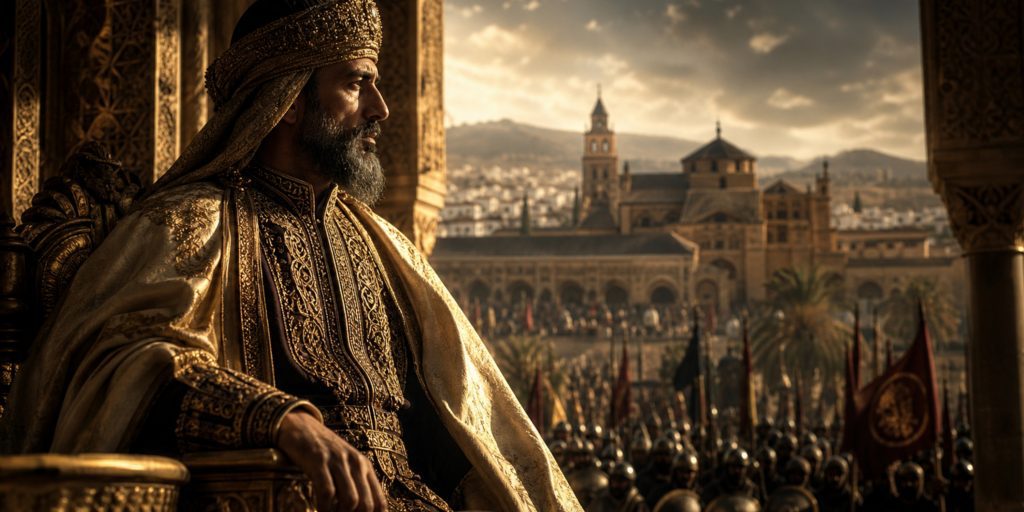
At the height of his reign, Abd al-Rahman III controlled most of Muslim Iberia and projected power well beyond it.
His influence stretched across:
- Most of modern Spain and Portugal under Muslim control
- Key ports and strongholds in North Africa
- Trade routes across the western Mediterranean
- Diplomatic relationships with Christian kingdoms, Byzantium and the Holy Roman Empire
Christian rulers such as the kings of Leon and Navarre sometimes fought him and sometimes sought his favour. Ambassadors arrived in Cordoba bearing gifts, treaties and nervous expressions.
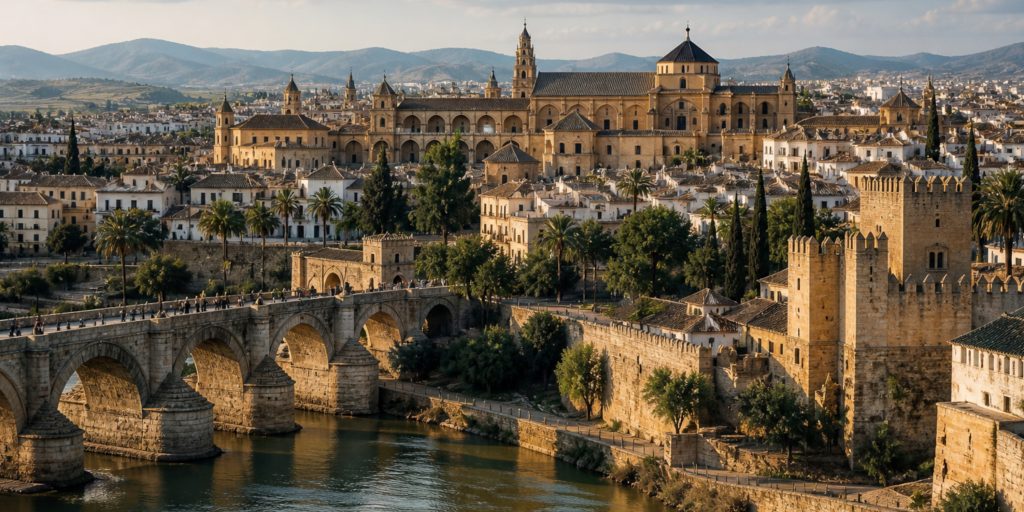
One German envoy reportedly described Cordoba with astonishment. The city contained vast markets, countless workshops and great public buildings. By the mid-10th century, it may have had several hundred thousand inhabitants, making it one of the largest cities in Europe.
Battles and Military Acumen
Abd al-Rahman III was not simply a ruler who stayed behind palace walls issuing orders from a comfortable chair. He spent much of his reign on campaign.
He understood that political power in medieval Iberia depended on military strength. Rebellion had to be crushed quickly. Rival kingdoms had to be intimidated. Borders had to be defended.
His military skill lay less in reckless battlefield brilliance and more in patience, organisation and relentless pressure.
Campaign Against Umar ibn Hafsun
His first great challenge came from Umar ibn Hafsun, the rebel lord who controlled large areas of southern Iberia from his fortress at Bobastro.
For decades, Ibn Hafsun had defied the rulers of Cordoba. Abd al-Rahman systematically dismantled his network of strongholds.
He:
- Captured town after town through sieges and negotiated surrender
- Used hostages and tribute to secure loyalty
- Cut water supplies and supply lines to rebellious fortresses
- Combined military force with political incentives
After Ibn Hafsun died in 917, Abd al-Rahman continued the campaign against his sons. Bobastro finally fell in 928.
The fall of Bobastro was one of the defining moments of his reign. It proved that the authority of Cordoba had returned.
Northern Campaigns Against the Christian Kingdoms
Abd al-Rahman also launched repeated campaigns against the Christian kingdoms of Leon, Navarre and Castile.
These campaigns were partly defensive and partly political. Victories demonstrated his strength and discouraged rebellion among his own subjects.
His most famous military setback came in 939 at the Battle of Simancas.
There, an alliance of Christian forces defeated his army. Abd al-Rahman escaped, but the battle was a serious embarrassment. According to some chroniclers, he was so furious with his commanders afterwards that he never again personally led an army into battle.
Yet the defeat did not destroy his power.
In the years that followed, he relied more heavily on diplomacy, frontier raids and carefully controlled military pressure. By the end of his reign, even his enemies often preferred negotiation to war.
As a commander, Abd al-Rahman seems to have understood an awkward truth that many rulers never learn. Winning every battle is less important than remaining in control when you lose one.
The Army of Abd al-Rahman III
The caliph’s army was one of the most powerful in Europe.
It included:
| Type | Description |
|---|---|
| Heavy Cavalry | Elite mounted troops, often armed with lances, swords and mail armour |
| Light Cavalry | Fast-moving horsemen used for raids and scouting |
| Infantry | Spearmen, swordsmen and archers drawn from across al-Andalus |
| Mercenaries | Berbers, Slavs and North African troops served in large numbers |
| Navy | A growing fleet based around Almeria and other ports |
The use of Slav and Berber troops gave Abd al-Rahman a military force that depended directly on him rather than local nobles. It was an effective method, though not one likely to make him especially popular at aristocratic dinner parties.
Arms and Armour
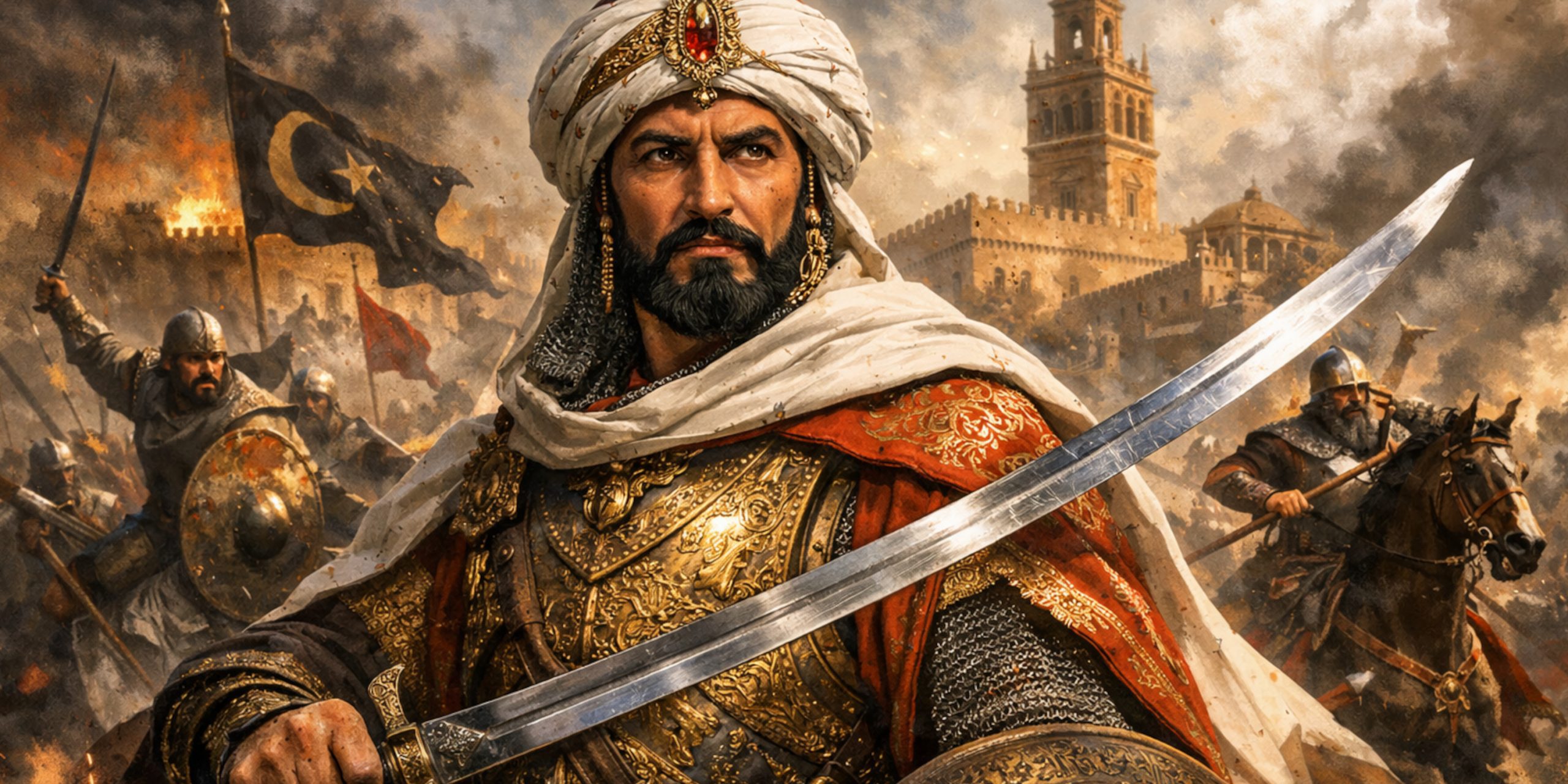
The warriors of Abd al-Rahman III fought with a mixture of Islamic, Iberian and Mediterranean equipment.
Weapons
Common weapons included:
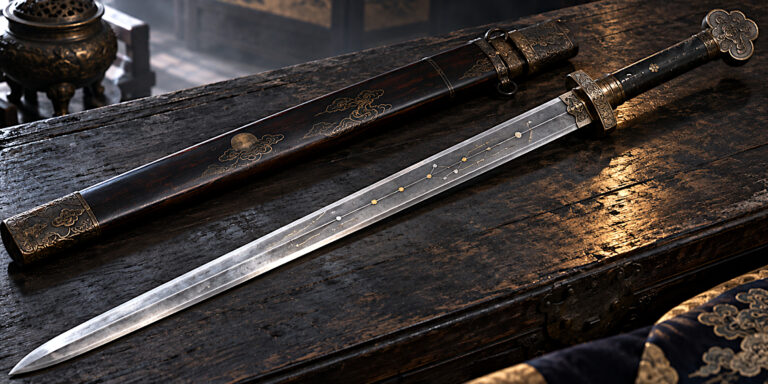
- Straight double-edged swords inspired by earlier Arab and Visigothic forms
- Curved sabres, increasingly used by cavalry
- Spears and lances
- Composite bows
- Javelins
- Axes and maces
The sword remained the symbol of status and authority.
Many elite warriors carried finely made blades with decorated hilts and scabbards. Surviving examples from the period often show intricate silverwork, gold inlay and inscriptions in Arabic.
Armour
Armour in the caliphate was varied and increasingly sophisticated.
Typical equipment included:
- Mail shirts
- Lamellar armour made from small overlapping plates
- Quilted padded coats beneath metal armour
- Conical iron helmets
- Large round or oval shields of wood and leather
Elite cavalry often wore mail from head to knee, while their horses might be protected with padded coverings.
The visual effect must have been impressive. A line of heavily armoured Andalusi cavalry advancing under banners and polished helmets would have looked every inch the army of a ruler determined to convince the world he was a caliph.
Medina Azahara: The City of Power
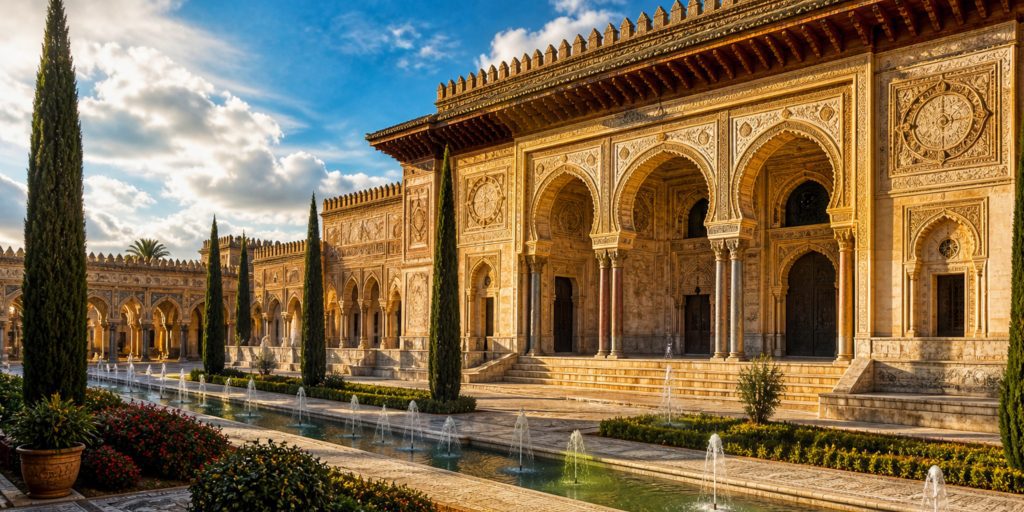
No part of Abd al-Rahman III’s legacy is more spectacular than Medina Azahara, or Madinat al-Zahra.
Construction began around 936, just outside Cordoba.
This was not simply a palace. It was an entire ceremonial city built to display the wealth and legitimacy of the new caliphate.
Medina Azahara included:
- Palaces
- Audience halls
- Barracks
- Gardens
- Administrative buildings
- Mosques
- Workshops
- Formal roads and terraces
The famous reception hall, later known as the Hall of Abd al-Rahman III or Salón Rico, was designed to overwhelm visitors. Marble columns, carved stone panels, water channels and glittering decoration created a setting in which foreign ambassadors would have felt rather small.
Which, to be fair, was very much the point.
The city symbolised the triumph of the Umayyad dynasty in al-Andalus. It also deliberately rivalled the great capitals of Baghdad and the Fatimids.
Personality and Court Life
Contemporary chroniclers describe Abd al-Rahman III as intelligent, disciplined and commanding.
He was also deeply aware of image and ceremony.
His court was carefully staged. Visitors approached him through a series of increasingly elaborate spaces until they reached the caliph himself, seated beneath rich decoration and surrounded by guards and officials.
One contemporary account claimed:
“Never was there seen a prince more majestic in appearance or more terrible in authority.”
Yet he was not merely a distant figure of grandeur. He corresponded with scholars, welcomed foreign ambassadors and patronised architecture, poetry and science.
Another chronicler described his reign as a time when Cordoba became:
“The ornament of the world and the envy of nations.”
That may sound extravagant, but then medieval writers were rarely accused of modesty.
Where to See Artefacts From His Reign
Several important artefacts from the reign of Abd al-Rahman III survive and can still be seen today.
Medina Azahara Museum, Cordoba
The museum beside the archaeological site contains:
- Marble capitals and columns from the palace city
- Decorative carved stone panels
- Coins issued during his reign
- Ceramics, glass and architectural fragments
- Inscriptions naming officials and members of the court
The Mosque-Cathedral of Cordoba
Parts of the mosque expanded under Abd al-Rahman III still survive, particularly the great minaret foundations and sections of the courtyard.
Archaeological Museum of Cordoba
This museum holds:
- Weapons and armour fragments from the caliphal period
- Coins and jewellery
- Decorative ivory and metalwork
- Architectural remains from Cordoba and Medina Azahara
The Louvre, Paris
The Louvre holds several pieces of Andalusi ivory carving from the Umayyad period, including luxury caskets and decorative objects associated with the caliphal court.
The Victoria and Albert Museum, London
The museum preserves examples of Andalusi metalwork, ceramics and decorative arts from the period of the Caliphate of Cordoba.
Latest Archaeology Findings
Archaeology connected to Abd al-Rahman III continues to reshape our understanding of his reign.
Recent excavations at Medina Azahara have revealed:
- Previously unknown residential districts outside the ceremonial core
- A mosque and road system beyond the palace complex
- Evidence that the city was much larger and more densely populated than once believed
- Fragments of carved decoration from the Hall of Abd al-Rahman III
- New evidence for how water was channelled through the city using aqueducts and reservoirs
Archaeologists are still excavating only a small portion of the site. Less than a tenth of Medina Azahara has been fully explored.
In recent years, restoration work has also uncovered more of the great reception hall, including decorative stonework and structural details that show just how sophisticated caliphal architecture had become.
Perhaps most intriguingly, new survey work around Cordoba has strengthened the case for identifying related suburbs, roads and administrative districts connected to Abd al-Rahman’s capital.
The longer archaeologists dig, the larger his world appears.
Death and Legacy
Abd al-Rahman III died in 961 after ruling for nearly fifty years.
He left behind a powerful caliphate, a prosperous capital and a dynasty at the height of its strength.
His son al-Hakam II inherited a state that was richer, more stable and more prestigious than any previous ruler of al-Andalus had possessed.
The Caliphate of Cordoba would not survive forever. Within a century it had collapsed into rival states.
Yet Abd al-Rahman III’s achievement remained remarkable.
He rebuilt a fractured realm, defeated his enemies, created one of the greatest cities in medieval Europe and left behind monuments that still shape the landscape of Spain.
Even now, walking through the ruins of Medina Azahara, one can still sense what he wanted visitors to feel: awe, admiration and perhaps the faint suspicion that this ruler expected history itself to bow politely before him.
Suggested Further Reading
- Maribel Fierro, Abd al-Rahman III: The First Cordoban Caliph
- Richard Fletcher, Moorish Spain
- Hugh Kennedy, Muslim Spain and Portugal
- Antonio Vallejo Triano, Medina Azahara
- Roger Collins, Caliphs and Kings: Spain, 796-1031