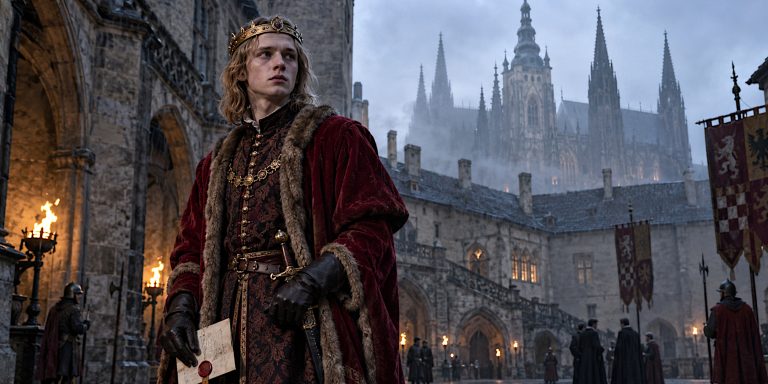
Few figures in early modern European history carry a reputation as dark as Elizabeth Báthory. Branded the “Blood Countess,” accused of torturing and murdering young women in staggering numbers, she has drifted from archival record into folklore, Gothic fiction and horror cinema.
Yet when we strip away the later embellishments, what remains is a powerful noblewoman in a violent age, entangled in politics, property disputes and a legal process that was far from transparent. As a historian, I find her case less a simple tale of cruelty and more a study in how power, fear and narrative can reshape a life long after death.
Noble Birth and Education
Elizabeth was born in 1560 into one of the most influential Protestant families in the Kingdom of Hungary, then part of the Habsburg sphere. The Báthory clan produced princes of Transylvania, high officials and military commanders. This was not a marginal family lurking at the edges of society. They were embedded in its centre.
She was well educated for a woman of her time. Surviving letters suggest literacy in Hungarian, Latin and possibly German. At the age of fifteen she married Ferenc Nádasdy, a leading magnate and soldier famed for campaigns against the Ottomans. While her husband fought on the frontier, Elizabeth managed vast estates. That alone signals competence and authority. Estate management required financial acumen, negotiation with tenants, and oversight of household staff.
The popular image of a secluded sadist does not align neatly with that administrative reality.
Hungary in Turmoil
To understand Báthory’s world, we must picture a frontier society hardened by decades of warfare. The Long Turkish War drained resources and brutalised populations. Violence was not rare. Punishments within noble households could be severe, especially toward servants, and contemporary standards were uncomfortably distant from modern ones.
This does not excuse cruelty. It does remind us that early modern justice was neither gentle nor consistent.
Her husband died in 1604, leaving her a wealthy widow with considerable property. That status could inspire resentment. A woman controlling strategic estates in Upper Hungary was not universally admired.
The Accusations
In 1610, Count György Thurzó, acting under royal authority, launched an investigation into rumours surrounding Báthory’s treatment of young female servants. Witness testimonies were gathered, often second hand. Some claimed horrific acts of torture. Numbers of alleged victims ballooned in retelling, eventually reaching into the hundreds.
Elizabeth herself was never subjected to a public trial. Instead, she was confined to her castle at Čachtice. Several servants were tried and executed, reportedly under torture.
The lack of a formal trial for Báthory is striking. Confiscation of property was avoided, which complicates arguments that the case was purely financial opportunism. Still, the process was opaque. Testimonies relied heavily on hearsay. Political motives cannot be dismissed, particularly given tensions between Hungarian nobles and the Habsburg crown.
As historians, we are left with fragments. The archival record is real. So is the atmosphere of intrigue.
The “Blood Countess” Legend
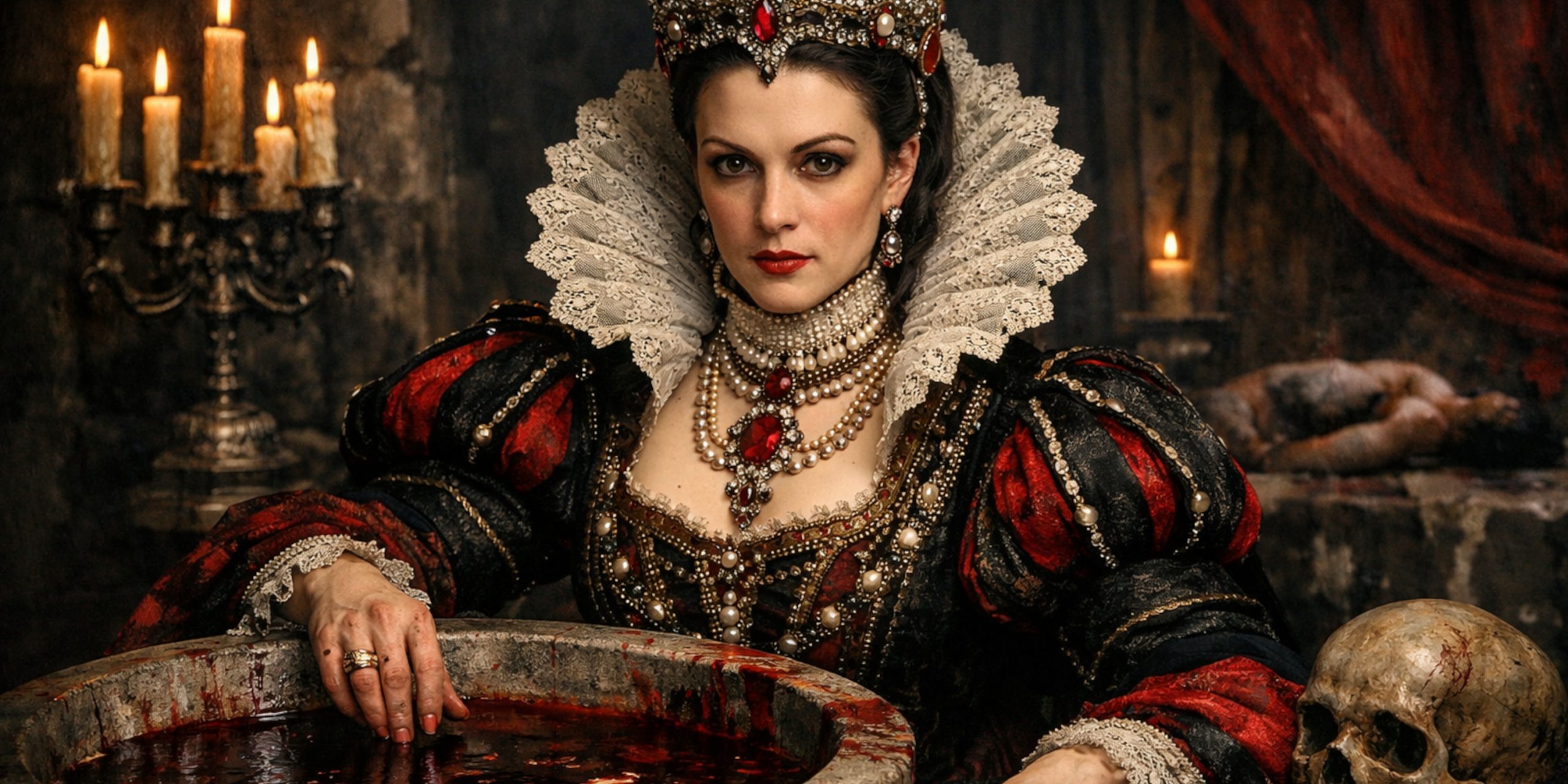
The most lurid element of her legend, bathing in the blood of virgins to preserve youth, appears to be a later invention. It gained traction in the eighteenth and nineteenth centuries, when Gothic sensibilities relished tales of aristocratic depravity.
This embellishment tells us more about later cultural anxieties than about seventeenth century Hungary. Female power unsettled many observers. A wealthy widow who commanded estates and allegedly brutalised her subordinates became an ideal vessel for moral panic.
Her story has since intertwined with vampire mythology, especially in the shadow of Vlad III Dracula. The historical connection is thin, yet the cultural pairing proved irresistible to novelists and filmmakers.
Was She a Serial Killer?
This is the central question. Some modern historians argue that she was likely responsible for genuine abuses, perhaps even multiple deaths, within a system that allowed violent discipline. Others contend that the scale of the accusations was inflated for political reasons.
The figure of over six hundred victims is almost certainly exaggerated. It originates from a contested claim attributed to a single testimony. The documented cases are far fewer, though still grim.
The absence of direct confession from Elizabeth herself, and the reliance on tortured witnesses, muddy the waters. It is possible she was guilty of cruelty typical of her rank and era, later magnified into monstrous proportions. It is also possible that she committed sustained acts of sadistic violence. The evidence does not grant us certainty.
As a historian, I resist easy answers. Ambiguity is frustrating, yet it is often honest.
Confinement and Death
Elizabeth Báthory spent her final years confined within her own residence. She died in 1614. Contemporary records suggest she maintained composure and continued correspondence during her imprisonment.
Her burial location remains debated. Some accounts place her remains in the family crypt, though documentation is incomplete. Even in death, the record is elusive.
Legacy and Cultural Afterlife
Elizabeth Báthory has inspired novels, films and scholarly debate. She appears alternately as monster, martyr and misunderstood aristocrat. Each era reshapes her to suit its fears.
In the nineteenth century she became a Gothic villain. In the twentieth, a proto feminist symbol for some writers, a warning against misogynistic persecution. In recent decades, academic studies have revisited the court records with cooler eyes, attempting to separate demonstrable fact from narrative flourish.
Her endurance in popular culture speaks to something deeper than simple fascination with violence. She embodies anxieties about gender, authority and the fragility of reputation.
A Historian’s Reflection
When I teach early modern Europe, students often arrive knowing Báthory only as a caricature soaked in blood. They leave recognising a far more complicated figure shaped by war, class hierarchy and political rivalry.
I do not dismiss the suffering of the young women whose names appear in testimony. Nor do I accept without question the more theatrical claims. The truth likely lies between bureaucratic cruelty and sensational myth.
Elizabeth Báthory stands as a reminder that history is rarely neat. It is contested ground, where documentation, memory and storytelling intersect. Her case demands caution, empathy and a willingness to sit with uncertainty.