The Battle of Wilton, fought in 871 near modern Wilton, marked one of the darkest moments in the early career of Alfred the Great. It came at the tail end of a brutal campaigning season against the Great Heathen Army, when Wessex had already endured months of fighting.
Alfred had only recently become king after the death of his brother Æthelred. He inherited not a stable throne, but a battlefield. Wilton was his attempt to halt the Danish advance into the heart of Wessex. Instead, it became a harsh lesson in overconfidence and battlefield control.
Background: Wessex on the Brink
In 871 the Danes had already won hard-fought victories and suffered setbacks of their own. The campaign around Reading and Ashdown had been bloody and indecisive. Æthelred’s death left Alfred in command at a moment when experience mattered.
The Vikings, led by figures such as Halfdan Ragnarsson and Bagsecg earlier in the campaign, were aggressive and mobile. Their strategy combined fortified bases with sudden offensives. Wessex, by contrast, relied on the fyrd, a militia system that could not remain in the field indefinitely.
Wilton was not simply another clash. It was a test of whether Alfred could impose order on a fragile kingdom.
Foces
The sources are sparse, yet the main narrative comes from the Anglo-Saxon Chronicle. Later medieval writers, including Asser in his Life of King Alfred, add interpretation though not much tactical detail.
Both agree on the essentials. Alfred fought the Danes near Wilton. The English line initially held. The Danes counterattacked. Alfred’s forces broke. The Danes remained masters of the field.
Leaders and Troop Composition
Precise numbers are unknown, but we can outline the likely structure of each force.
Anglo-Saxon Forces
| Element | Details |
|---|---|
| Supreme Commander | Alfred, King of Wessex |
| Core Troops | Household thegns, mounted retainers |
| Main Body | Fyrd militia from Wiltshire and neighbouring shires |
| Estimated Strength | Likely several thousand |
- Heavily armed noble retainers formed the front ranks
- Fyrd infantry provided mass and depth
- Limited cavalry, mostly mounted mobility rather than shock action
Viking Forces
| Element | Details |
|---|---|
| Commanders | Danish jarls, possibly Halfdan |
| Core Troops | Professional warriors, seasoned from years of campaigning |
| Support | Shield wall infantry |
| Estimated Strength | Comparable or slightly larger than the West Saxons |
- Experienced raiders accustomed to coordinated manoeuvres
- Strong shield wall discipline
- Tactical flexibility, including feigned retreats
The Chronicle suggests Alfred held the field for much of the day. That implies parity, at least initially.
Arms and Armour
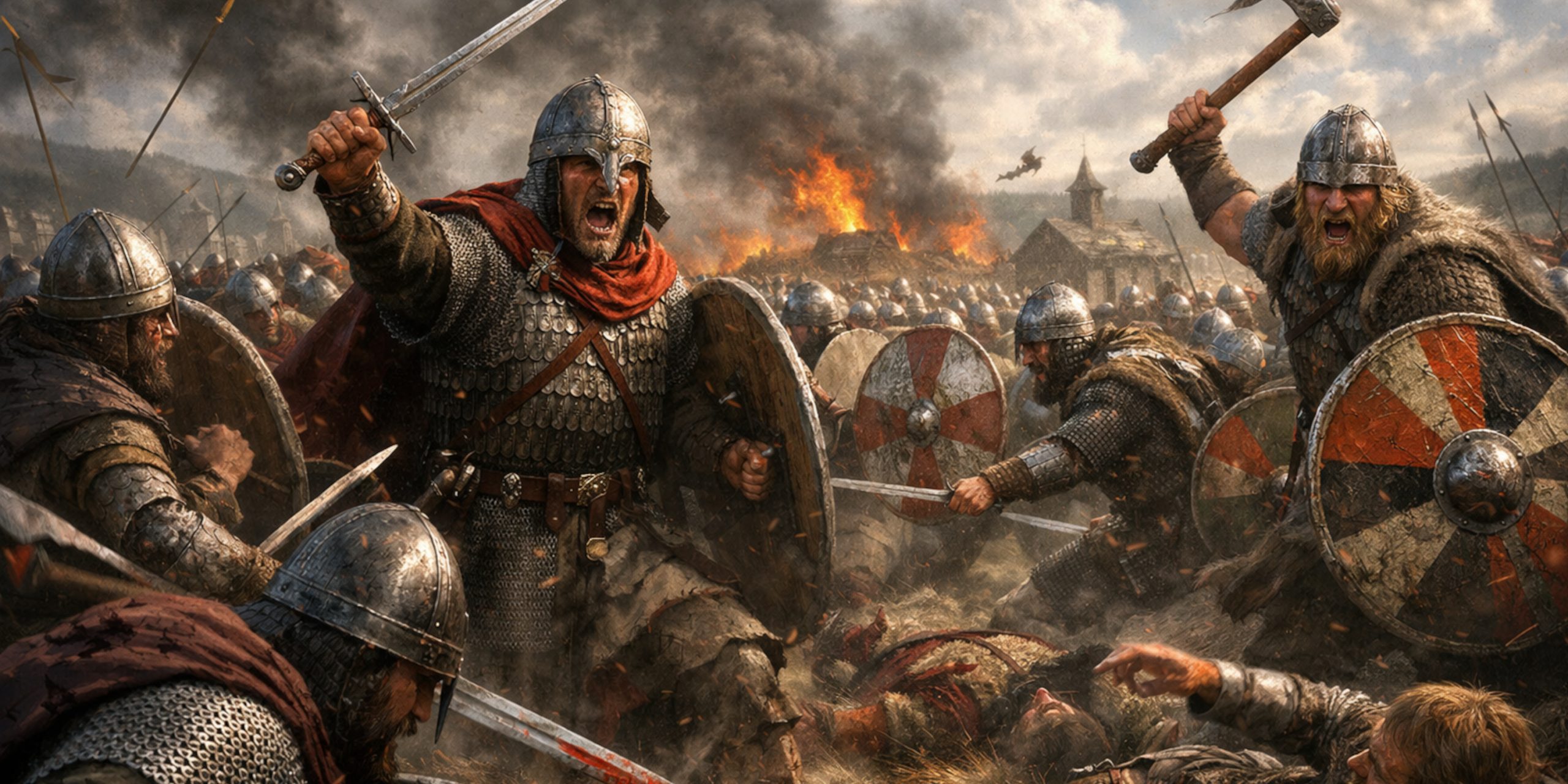
The fighting would have centred on opposing shield walls, brutal and intimate.
Anglo-Saxon Equipment
- Round wooden shields with iron bosses
- Mail shirts for wealthier thegns
- Conical helmets with nasal guards
- Spears as the primary weapon
- Swords of the late Anglo-Saxon type, pattern welded blades in the tradition of earlier migration era designs
- Seaxes as sidearms
Viking Equipment
- Similar round shields
- Mail and helmets among elite warriors
- Broad bladed spears
- Double edged swords of Scandinavian type, often high status imports with pattern welded cores
- Axes, including the feared bearded axe
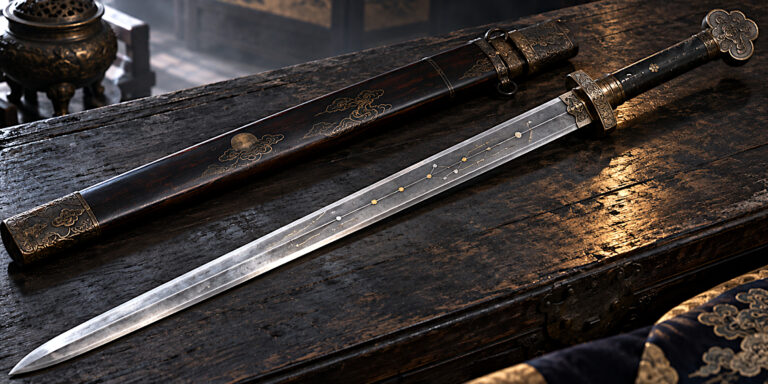
Sword types in this period often reflect transitional forms that predate later medieval typologies, though some surviving examples show features later associated with early Viking Age blades, broad, relatively short, and optimised for cutting within a tight formation.
The battle would have been decided not by elegant swordplay, but by stamina, discipline, and whether the line held.
The Battle: A Timeline
Early 871
The Danish army manoeuvres through Wessex after previous engagements.
Spring 871
Alfred advances to confront them near Wilton.
Morning
The West Saxons deploy in shield wall formation. Initial engagement favours Alfred. The Danes appear pressured.
Midday
Danish forces counterattack. Some sources suggest a feigned withdrawal drew parts of the English line out of position.
Afternoon
The English formation breaks. Alfred withdraws. The Danes hold the field.
The loss was not annihilation, but it was decisive enough to force Alfred into negotiation shortly afterwards.
Archaeology
Unlike Ashdown or Edington, Wilton has yielded little definitive battlefield archaeology. The likely site remains debated. Finds in the wider Wiltshire region include stray weapon fragments and burial evidence from the wider Viking campaign, though none can be tied conclusively to the clash itself.
This absence is not unusual. Ninth century battlefields often leave minimal material traces, especially when the victors strip the dead of valuable equipment.
The lack of artefacts frustrates the modern historian, though perhaps it would have disappointed Alfred less than the outcome.
Contemporary Voices
The Anglo-Saxon Chronicle records:
“And Alfred fought against the whole army, and put them to flight, and pursued them as far as their fortress. But the Danes afterwards fought again, and gained the victory.”
It is a remarkably restrained account. No theatrical lament. No embellishment. Simply the fact that initial success slipped away.
Asser later notes that Alfred made peace not long after, paying tribute to secure breathing space. It was a humiliating but pragmatic choice.
Consequences and Legacy
Wilton forced Alfred to confront reality. Wessex could not survive on courage alone. Reform was required.
In the years that followed, Alfred reorganised the fyrd, strengthened fortified burhs, and improved logistical coordination. Those reforms would prove decisive at Battle of Edington.
If Wilton was a defeat, it was also an education. It taught Alfred the cost of tactical impatience and the necessity of structural change. In that sense, the road to Edington ran through failure.
As a historian, I find Wilton oddly compelling. It lacks the triumphant clarity of Edington. It does not offer stirring victory. What it gives us instead is something more human, a young king learning, painfully, that leadership is forged in setback as much as in glory.
Seven Swords Takeaway
The Battle of Wilton in 871 stands as a sobering episode in Alfred’s reign. It exposed weaknesses in the West Saxon war effort and forced a temporary accommodation with the Viking army.
Yet without Wilton, there may have been no later renaissance of Wessex. The defeat clarified the stakes and sharpened Alfred’s resolve. History often remembers the victories. Wilton reminds us that defeats can be just as formative.
Watch the documentary: