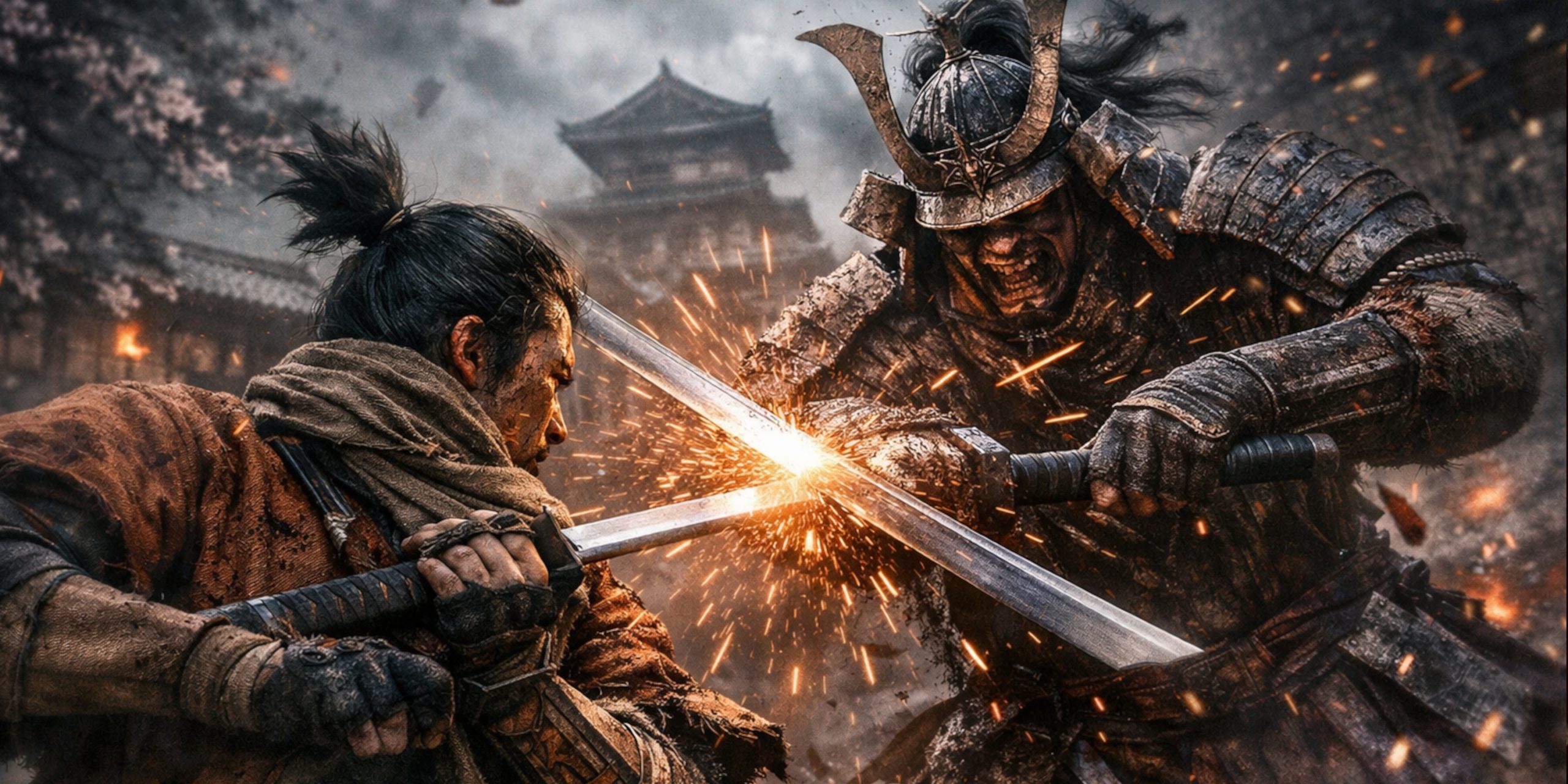
If you bounced off Sekiro: Shadows Die Twice after a few hours, you are not alone. Plenty of people who cruised through Dark Souls hit a wall here and wondered what just happened. Sekiro is not unfair, but it is demanding in a very specific way. It asks you to unlearn habits, slow down your panic, and actually listen to the steel.
This is why it feels so brutal, and why that brutality is kind of the point.
Sekiro Is Not a Souls Game in Disguise
Sekiro looks familiar at first glance. Bonfires, tough enemies, cryptic NPCs. Then the game politely ignores everything you learned before.
You cannot grind your way out of trouble. There is no stamina bar to hide behind. Armour does not save you. Instead, Sekiro wants confidence and timing, not patience and rolling.
The shock comes from expectation. You think you are playing defensively. Sekiro wants you on the front foot, always.
The Posture System Punishes Hesitation
Health bars exist, but they are not the real fight. Posture is.
Posture breaks when pressure stays constant. If you back off, enemies recover. If you hesitate, they reset the tempo. That alone flips how combat feels.
Focus points that catch most players out:
- Blocking is not failure. A clean deflect is progress.
- Backing away is usually the wrong answer.
- Low enemy health makes posture damage stick faster.
- Bosses recover posture frighteningly quickly if you give them space.
The game is quietly telling you to stay close and stay calm. Most players do the opposite.
Deflect Timing Is Everything
Sekiro lives and dies on deflection. Dodging works sometimes, but deflecting is the language the game speaks fluently.
The timing window is tighter than it looks, especially early on. Enemy attacks also vary rhythm rather than speed. This is why it feels chaotic until it clicks.
Once it does click, combat changes completely. You stop reacting and start responding. Fights feel more like duels than survival horror.
Yes, this takes time. No, button mashing will not save you.
Bosses Are Skill Checks, Not Damage Races
Sekiro bosses are not about shaving off health bars slowly. They are exams.
Each major boss tests a specific lesson:
- Can you read attack chains?
- Can you manage posture under pressure?
- Can you stay aggressive without panicking?
- Can you deal with unblockable attacks properly?
When you fail, the game does not let you brute force the win. It sends you back with a raised eyebrow and a very clear hint that you missed something.
That feels harsh, but it is also honest.
Death Has Weight and It Gets in Your Head
Resurrection sounds generous until you realise what it costs. Dragonrot spreads. NPC quests stall. You feel like you are breaking the world by failing.
That psychological pressure matters. Sekiro makes death feel personal, not just mechanical. You start playing tense. Tension ruins timing. Timing ruins fights.
The irony is that the game gets easier once you stop fearing death and start treating it as feedback.
Why Sekiro Feels Harder Than It Actually Is
Sekiro’s difficulty is front-loaded. Early enemies are fast, aggressive, and unforgiving, while your toolset is limited. You have to learn the core system before the game lets you feel powerful.
What makes it feel brutal:
- Minimal build flexibility.
- No overlevelling to compensate for mistakes.
- A single dominant combat style.
- Fast enemies with long attack strings.
What makes it fair:
- Clear visual and audio cues.
- Consistent rules across the entire game.
- Bosses that reward mastery, not luck.
- A combat system that never lies to you.
When you lose, you usually know why, even if you hate that fact at the time.
The Moment It Finally Clicks
Almost everyone who sticks with Sekiro has the same experience. One boss fight where things slow down. You stop flailing. You deflect without thinking. The posture bar shatters and you realise you were playing the wrong game before.
From that point on, Sekiro is still hard, but it is honest hard. You feel in control, even when you lose.
That shift is why so many people end up calling it FromSoftware’s best combat system, after swearing they would uninstall it forever.
Is Sekiro for Everyone?
Probably not. And that is fine.
Sekiro demands focus, patience, and a willingness to fail repeatedly without changing your stats to compensate. If that sounds exhausting, it might not be your game.
If it sounds intriguing, stick with it. The brutality has purpose. The difficulty teaches you how to play, whether you like the lesson or not.
And when it finally clicks, it feels incredible.