Yagyū Munenori was a man who knew exactly how to cut someone down, then spent the rest of his life explaining why the best cut was often the one never made. As a historian, I find that contradiction irresistible.
Born into the Yagyū clan, Munenori became the defining figure of Yagyū Shinkage-ryū swordsmanship and the trusted martial tutor of the Tokugawa shoguns. He lived long enough to see the battlefield fade and the bureaucracy rise, which helps explain why his legacy feels as much about restraint as it does about steel.
Early Life and the Yagyū Clan
Munenori was born in 1571 in Yamato Province, a time when Japan was still very much in the habit of tearing itself apart. His father, Yagyū Muneyoshi, better known as Sekishūsai, was already a respected swordsman and the man who would bring Shinkage-ryū into the family.
The Yagyū were not great warlords. They survived by being useful, adaptable, and very good at not dying unnecessarily. Munenori inherited that instinct. He trained hard, learned early, and paid close attention to the political winds. This would prove as valuable as any kata.
Training and the Meaning of Shinkage-ryū
Yagyū Shinkage-ryū is often described as subtle, which is a polite way of saying it frustrates people who want simple answers. Munenori’s approach focused on timing, distance, and psychological control rather than brute force.
At its core was the idea of katsujinken, the life-giving sword. This was not pacifism dressed up in armour. It was the belief that true mastery lay in controlling violence, not indulging it. Munenori took this idea seriously, perhaps too seriously for those who preferred their swords uncomplicated.
From a practical standpoint, Shinkage-ryū aimed to end fights quickly or prevent them entirely. On a battlefield that mattered. In a shogun’s court, it mattered even more.
Service to the Tokugawa Shogunate
Munenori’s career changed decisively when Tokugawa Ieyasu took an interest in Yagyū swordsmanship. Munenori became a direct retainer and later the official fencing instructor to the shogun’s household.
He served both Tokugawa Hidetada and Tokugawa Iemitsu, which is no small feat. Surviving one shogun’s favour is difficult. Surviving two suggests a man who understood politics as well as posture.
His role was not ceremonial. Training the shogun meant shaping how power understood violence. Munenori taught that a ruler’s strength lay in calm authority and readiness, not constant threat. It is a neat philosophy if you can afford it, and the Tokugawa could.
Heiho Kadensho and Martial Philosophy
Munenori’s most famous work, Heiho Kadensho, is less a fencing manual and more a meditation on governance, ethics, and the mind. It blends Zen ideas with martial experience, sometimes seamlessly, sometimes awkwardly.
He writes about emptiness, intuition, and the danger of fixation. Read charitably, it is a sophisticated attempt to explain how decision-making under pressure works. Read impatiently, it can feel like a swordsman trying to sound like a monk.
As a historian, I think Munenori was sincere. He was writing for rulers, not duelists. The sword becomes a metaphor because the audience already understands swords.
Arms, Armour, and Practical Skill
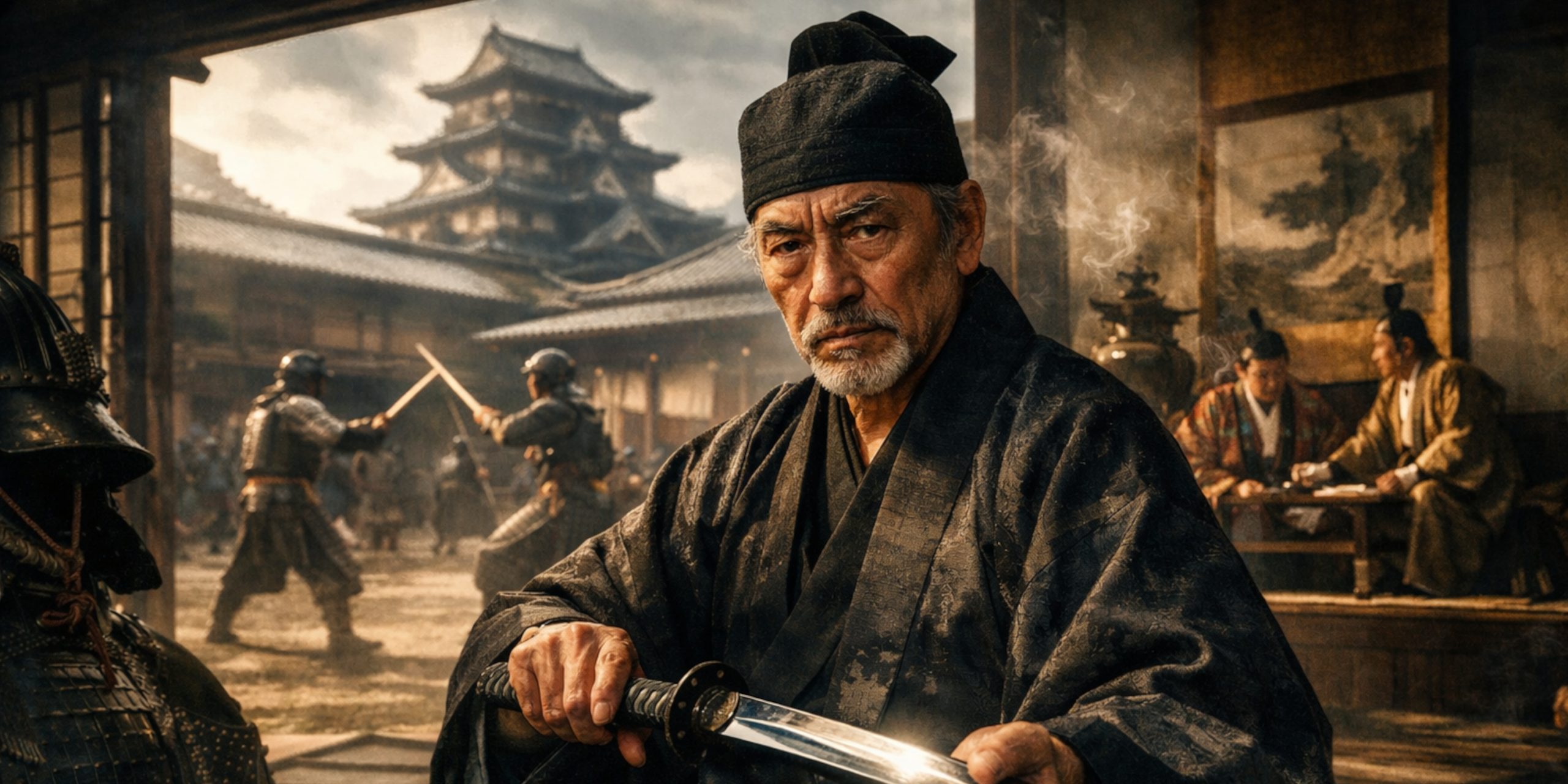
Despite the philosophy, Munenori was no ivory-tower thinker. He trained with the katana and bokken in a tradition that valued real effectiveness. Yagyū Shinkage-ryū practice included paired forms designed to break rhythm and exploit hesitation.
His era saw the transition from battlefield armour to lighter, more ceremonial equipment. Munenori adapted. His teachings reflect a world where individual duels mattered less than presence, posture, and authority.
The irony is obvious. As swords were used less, people wrote more about them.
Later Life and Death
Munenori lived into the early Edo period, dying in 1646. By then, Japan was stable, centralised, and deeply suspicious of unnecessary violence. In many ways, it was the world his philosophy had anticipated.
He left behind students, texts, and a reputation for seriousness that borders on severity. He does not come across as a warm man. He does come across as a thoughtful one.
Legacy and Historical Assessment
Yagyū Munenori’s influence is immense but quiet. He shaped how Japanese martial arts were framed intellectually, especially in relation to authority and self-control. Later generations often romanticised him, smoothing over the political sharp edges.
Personally, I admire his clarity more than his mysticism. Munenori understood that skill without judgement is dangerous, and judgement without skill is useless. That balance is hard to maintain, whether you are holding a sword or running a state.
He was not the greatest duellist of his age. He did something rarer. He made swordsmanship relevant when swords were becoming obsolete, and he did it without pretending the blade was anything other than what it was, a tool that demanded respect, or it would take everything from you.