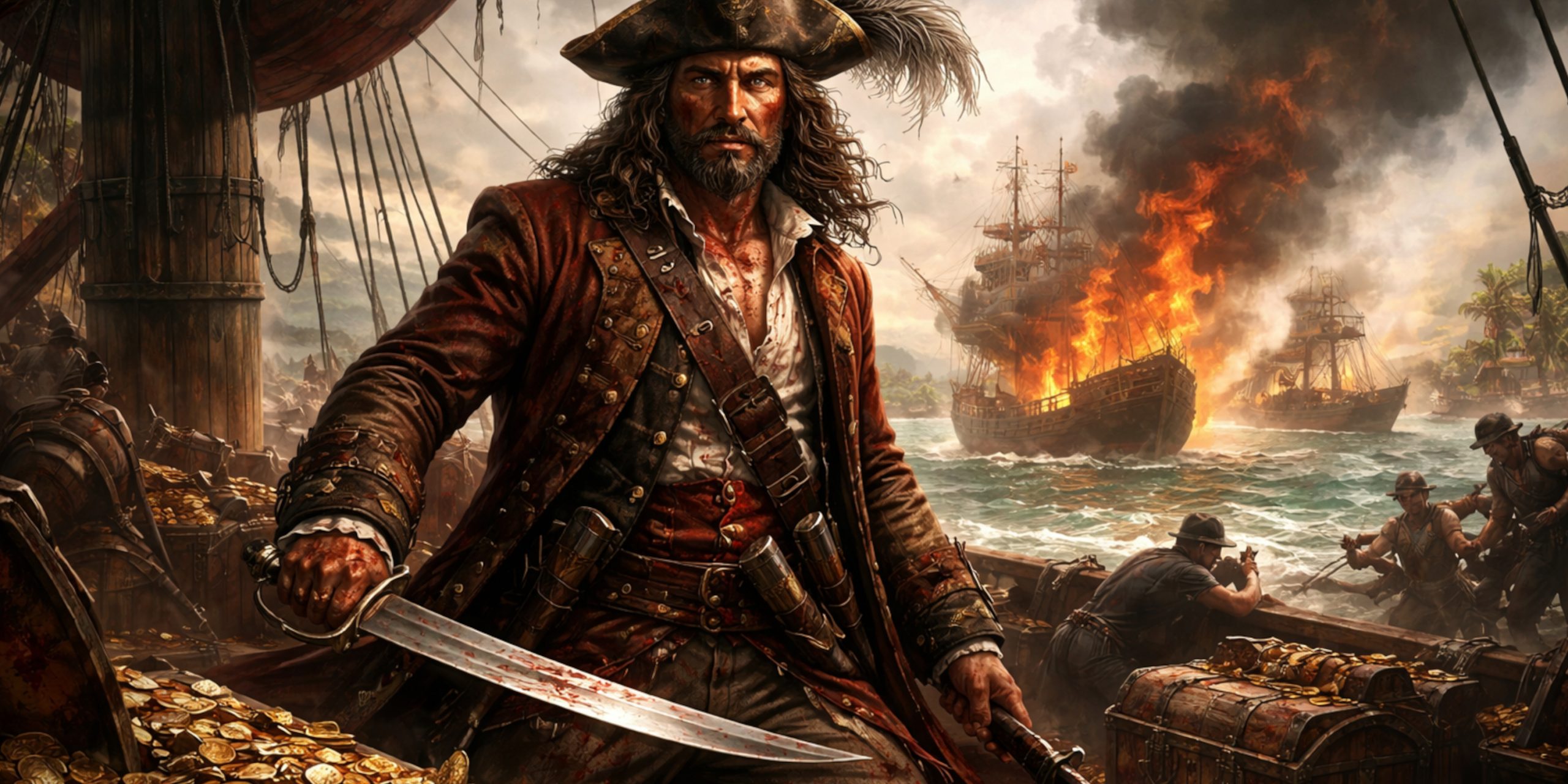
Christopher Myngs is known to history as both a hero and menace, which is often where the most interesting figures end up. As a naval officer of the Commonwealth and later the Restoration, he made a career out of hitting Spain hard in the Caribbean and returning with stories, scars, and cargo holds that told their own version of events.
Early life and background
Myngs was born around 1625, likely in Norfolk, though the record is patchy and seems unconcerned with modern neatness. He came of age during the English Civil Wars, a time when naval talent could advance quickly if one was bold and fortunate in equal measure. He proved to be both. By the 1650s he was already active in Caribbean waters, where England’s rivalry with Spain offered opportunity dressed up as duty.
Privateer to naval commander
Under the Commonwealth, Myngs served as a privateer with official blessing, which is a polite way of saying he was paid to be aggressive. He took prizes, harassed Spanish shipping, and learned the trade of fast, decisive violence at sea. After the Restoration, he transitioned smoothly into the Royal Navy, a testament either to his political agility or to the Crown’s willingness to forgive if results were good enough. They usually were.
Ships and command
Myngs commanded several vessels across his career, favouring ships that could strike quickly and carry prizes home without fuss. Among the better known were HMS Centurion and HMS Marston Moor. These were not floating palaces but practical fighting ships, well suited to Caribbean waters where reefs, storms, and sudden Spanish resistance were part of the job description.
Weapons and fighting style
Naval combat in Myngs’ era was a blunt affair. Cannon did the talking at range, while pistols, cutlasses, and boarding pikes settled matters up close. Myngs had a reputation for personal courage that bordered on recklessness. He favoured decisive action, closing distance quickly and trusting discipline to finish the work. This approach won battles and enemies in roughly equal measure.
Bounty, treasure, and the economics of violence
Privateering only works if it pays. Myngs understood this and pursued Spanish treasure with enthusiasm. The most notorious episode came with the sack of Campeche in 1663, where English forces looted the city after a hard fight. Silver, goods, and hostages flowed back to English hands. It was profitable, brutal, and effective, which explains why London approved even as it pretended to look shocked.
Major battles and campaigns
Myngs fought across the Anglo Spanish conflicts of the mid seventeenth century, particularly in the Caribbean. He raided ports, intercepted treasure fleets, and supported English efforts to weaken Spain’s colonial grip. His actions helped establish England as a serious naval threat in the region, though they also ensured his name was cursed in Spanish households for decades.
Contemporary quotes and reputation
Opinions on Myngs depended largely on nationality. English observers praised his courage and seamanship. Samuel Pepys, never shy of judgement, admired his bravery while noting his rough manners, suggesting that Myngs was more comfortable on a quarterdeck than in polite company. Spanish accounts were less charitable, describing him as ruthless and destructive, which rather misses the point of privateering.
Fate and death
Myngs’ career ended not in the tropics but during the Second Anglo Dutch War. He was mortally wounded in 1666 after the Four Days’ Battle, succumbing to injuries sustained in action. It was an ending that suited him. He died as he lived, in service, amid smoke, noise, and questionable decisions.
Legacy
Christopher Myngs left behind no tidy legend. He was not a gentleman adventurer nor a simple villain. He was a professional sailor in a violent age, effective at his job and largely uninterested in how that might look in later centuries. From a historian’s point of view, that honesty is rather appealing. From a Spanish one, less so.