The Roman legionary was not a mythic figure carved from marble. He was a paid professional, often badly fed, frequently uncomfortable, and expected to fight on command for years at a time. What makes him fascinating is not just Rome’s victories, but how ordinary men were turned into an almost industrial instrument of war. As a historian, I find the legionary compelling precisely because he sits at the crossroads of discipline, violence, bureaucracy, and stubborn human endurance.
Origins and Evolution of the Legionary
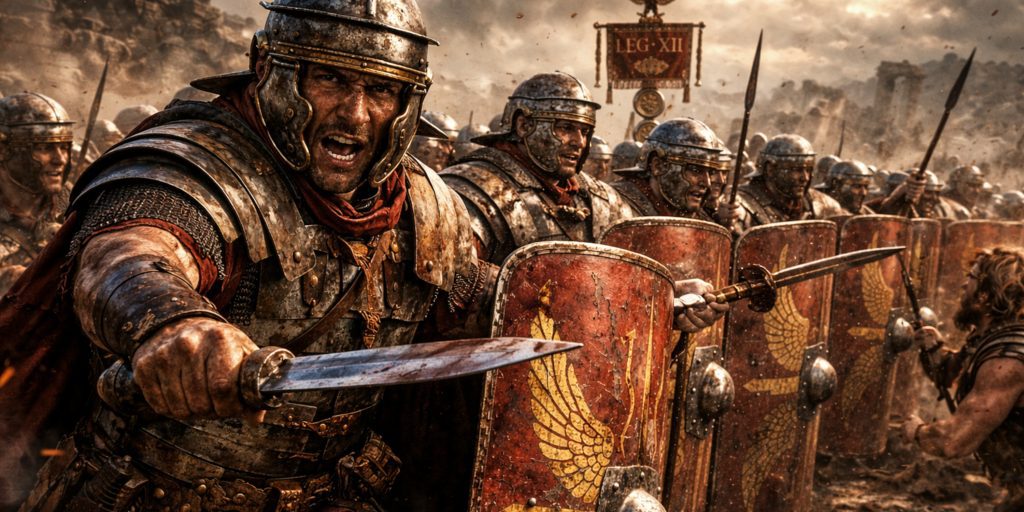
Early Roman armies were citizen militias. If you owned land, you turned up. If you did not, you watched. This changed dramatically during the late Republic, especially after the Marian reforms of the late second century BC. Rome realised that wars were no longer seasonal scuffles with neighbours. They were long, brutal campaigns across Spain, Gaul, the Balkans, and beyond.
The legionary became a career soldier. He enlisted for long service, received pay, equipment from the state, and the promise of land or pension on discharge. Loyalty shifted from the Senate to commanders who paid on time. Rome gained a professional army and also planted the seeds of civil war. Progress always comes with a receipt.
By the early Empire, the legionary was a standardised figure. Training, equipment, and organisation were broadly consistent from Britain to Syria. The system was not perfect, but it was terrifyingly reliable.
Recruitment and Daily Life
Legionaries were typically recruited in their late teens or early twenties. Physical strength mattered, but endurance mattered more. Marching thirty kilometres with full kit was not an occasional ordeal. It was routine.
Daily life revolved around drilling, maintenance, construction, and guard duty. Roman soldiers built roads, forts, bridges, and siege works. A legion on campaign carried shovels as proudly as swords. This is not romantic, but it wins wars.
Food was basic. Grain formed the core diet, supplemented by meat when available. Complaints about rations appear frequently in letters and records. Some things never change.
Organisation and Command
A standard imperial legion numbered around 5,000 men, divided into cohorts and centuries. The centurion was the backbone of the system. He enforced discipline, trained recruits, and led from the front. Casualty rates among centurions were high, which tells you exactly where they stood in battle.
Promotion was possible but limited. Rome valued experience more than charm. A good soldier could rise, but few escaped the ranks entirely.
Arms and Armour of the Legionary
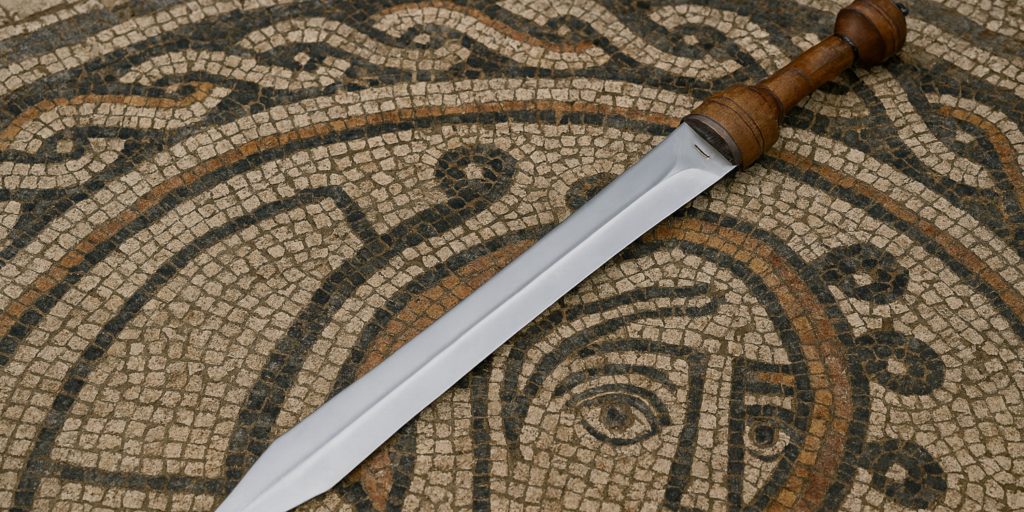
Roman military equipment was practical, intimidating, and designed for mass use. It evolved over time, but several elements became iconic.
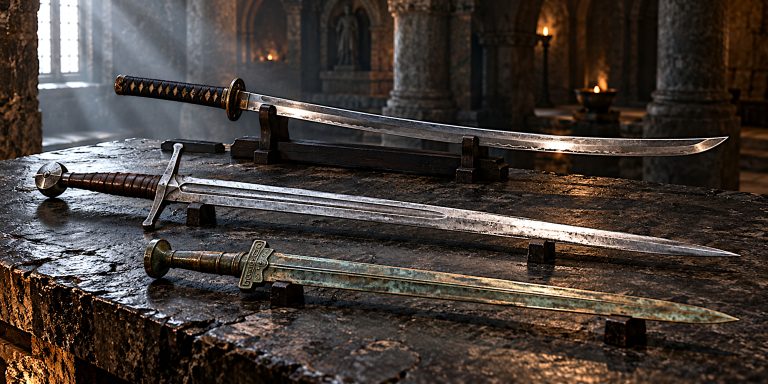
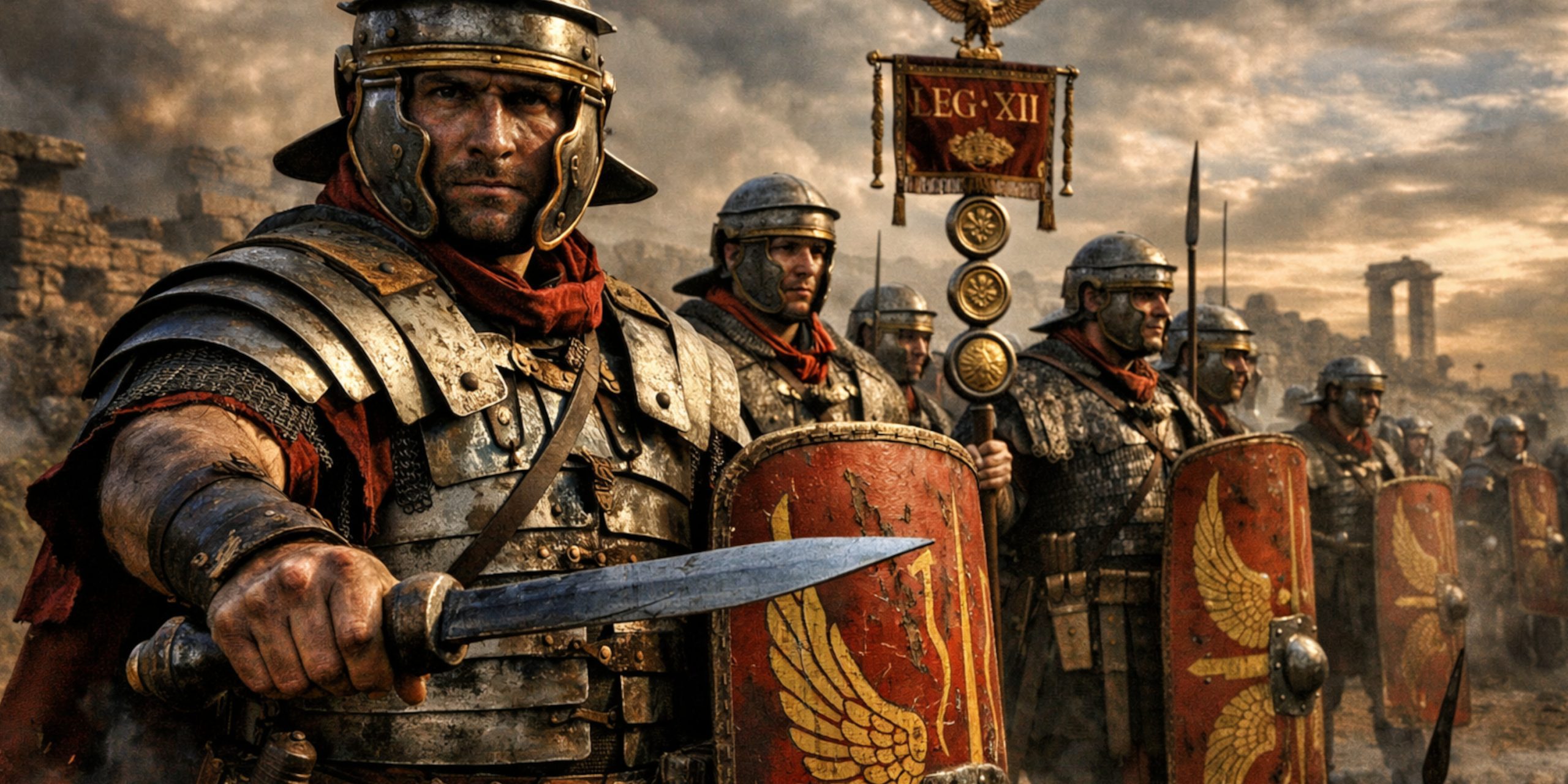
The primary sword was the gladius, a short stabbing weapon optimised for close formation fighting. Several types were used:
• Gladius Hispaniensis, an earlier form influenced by Iberian blades, longer and slightly leaf shaped
• Mainz-type gladius, with a pronounced waist and long point
• Pompeii-type gladius, shorter, straighter, and easier to manufacture, common in the early Empire
The legionary was trained to thrust, not slash. This is less cinematic but far more lethal. A short blade driven into the abdomen ends fights quickly.
The pilum, a heavy throwing spear, was designed to bend on impact. This prevented enemies from throwing it back and made shields cumbersome. Rome weaponised inconvenience.
Defensive equipment included the scutum, a large curved shield that worked as a mobile wall, and body armour such as lorica hamata (mail), lorica squamata (scale), and later lorica segmentata (segmented plate). Contrary to popular belief, segmentata was not universal and seems to have been one option among several, not a permanent standard.
Helmets evolved constantly, often adding cheek guards, neck protection, and reinforced brows. Roman engineers understood that the head was quite important.
Training and Battlefield Method
Training was relentless. Recruits practised with wooden swords heavier than real ones. They drilled formations until movement became instinctive. The legion did not rely on individual heroics. It relied on collective pressure.
On the battlefield, legionaries advanced steadily, using shields to absorb missiles before closing to stabbing range. Cohorts could rotate fresh men into the front line, maintaining pressure long after enemies were exhausted.
This method crushed less disciplined armies. Against equally organised foes, such as Parthians or later Germanic coalitions, Rome adapted or suffered. Flexibility was part of the system.
Campaign Life and Discipline
Discipline was severe. Punishments ranged from flogging to execution. Collective punishment was common. The infamous decimation, killing one in ten men, was rare but real. Rome believed fear maintained order. Sometimes it did. Sometimes it bred resentment.
Legionaries also formed tight social bonds. Inscriptions and letters show deep loyalty between comrades. Survival depends on the man next to you. Friendship follows quickly.
Archaeology and What the Ground Tells Us
Archaeology has transformed our understanding of legionaries. Forts like Vindolanda near Hadrian’s Wall preserve writing tablets that read like personal emails. Soldiers complain about boots, request socks, and invite friends to birthday parties. Empire, it turns out, runs on paperwork and mild irritation.
Excavations across Europe and the Middle East reveal standardised fort layouts, discarded equipment, and battlefield debris. Weapons break. Armour gets patched. Reality intrudes on theory.
Mass graves from battle sites confirm the brutal efficiency of Roman close combat. Trauma patterns match gladius thrusts rather than sweeping cuts. The training worked.
Contemporary Voices
Roman writers did not shy away from describing their soldiers.
Polybius noted the discipline and endurance of Roman troops, praising their ability to fight as a unified body rather than as individuals.
Vegetius, writing later, famously argued that Rome’s strength lay not in courage alone but in training and order. He also complained that standards were slipping, which is the ancient equivalent of saying things were better in his day.
Julius Caesar, never modest, repeatedly praised the resilience of his legions in Gaul, especially their ability to build under fire. He was not wrong, even if he enjoyed saying it.
Legacy of the Legionary
The Roman legionary became the blueprint for professional armies across Europe. Concepts like standardised training, rank structure, logistics, and long service did not disappear with Rome. They were inherited, adapted, and improved.
What endures most is the idea that wars are won less by brilliance than by preparation. The legionary was not invincible. He was simply trained, equipped, and organised better than most opponents for centuries. That was enough.
Final Thoughts from a Historian
The Roman legionary deserves neither blind admiration nor easy condemnation. He was a tool of conquest, often enforcing brutal policies, but also a working man navigating a harsh system that promised security at the cost of danger. When I walk through ruined forts or read a soldier’s letter asking for warmer socks, the marble statue dissolves. What remains is a person doing his job very well, because Rome gave him no alternative.
Dry humour aside, that may be the most Roman thing of all.
Watch the documentary: