The Battle of Wakefield, fought on 30 December 1460 near Sandal Castle in Yorkshire, is one of those moments where confidence curdled into catastrophe. Richard, Duke of York, walked into the winter fields believing he could dominate the north. By nightfall he was dead, his cause mauled, and the Wars of the Roses had taken a sharper, bloodier turn. Historians often linger on Towton, but Wakefield is where the conflict learned how ruthless it could be.
Background and strategic setting
By late 1460 the Yorkist cause looked secure. The Act of Accord had recognised Richard of York as Henry VI’s heir, pushing Queen Margaret of Anjou and her son aside. That decision did not end the war. It sharpened it. Margaret gathered Lancastrian support in the north, drawing on old loyalties and hard men who had little love for Yorkist reform.
York travelled north to assert authority, basing himself at Sandal Castle near Wakefield. It was not an ideal position. The castle was solid but isolated, and winter limited both movement and supply. York either underestimated the size of the Lancastrian army or overestimated the loyalty of the countryside. Possibly both. Medieval commanders were not blessed with satellite imagery, but even by the standards of the fifteenth century, his intelligence was poor.
Foces
Yorkist army
| Element | Details |
|---|---|
| Commander | Richard of York |
| Estimated strength | 5,000 to 8,000 |
| Core troops | Household retainers, southern levies, some Welsh contingents |
| Position | Sandal Castle and surrounding fields |
Lancastrian army
| Element | Details |
|---|---|
| Commanders | Henry Beaufort, Henry Percy, John Clifford |
| Estimated strength | 10,000 to 18,000 |
| Core troops | Northern retainers, border fighters, veteran men at arms |
| Position | Concealed around Wakefield and along approach routes |
Numbers vary wildly in the sources, which is historian shorthand for nobody knew exactly how many men were out there. What matters is that York was badly outnumbered.
The battle unfolds
On 30 December, York left the safety of Sandal Castle and advanced to engage. Why he did so remains debated. Some suggest a foraging expedition that escalated. Others point to false intelligence or deliberate provocation by the Lancastrians. Medieval chroniclers were fond of moral lessons, less so of operational clarity.
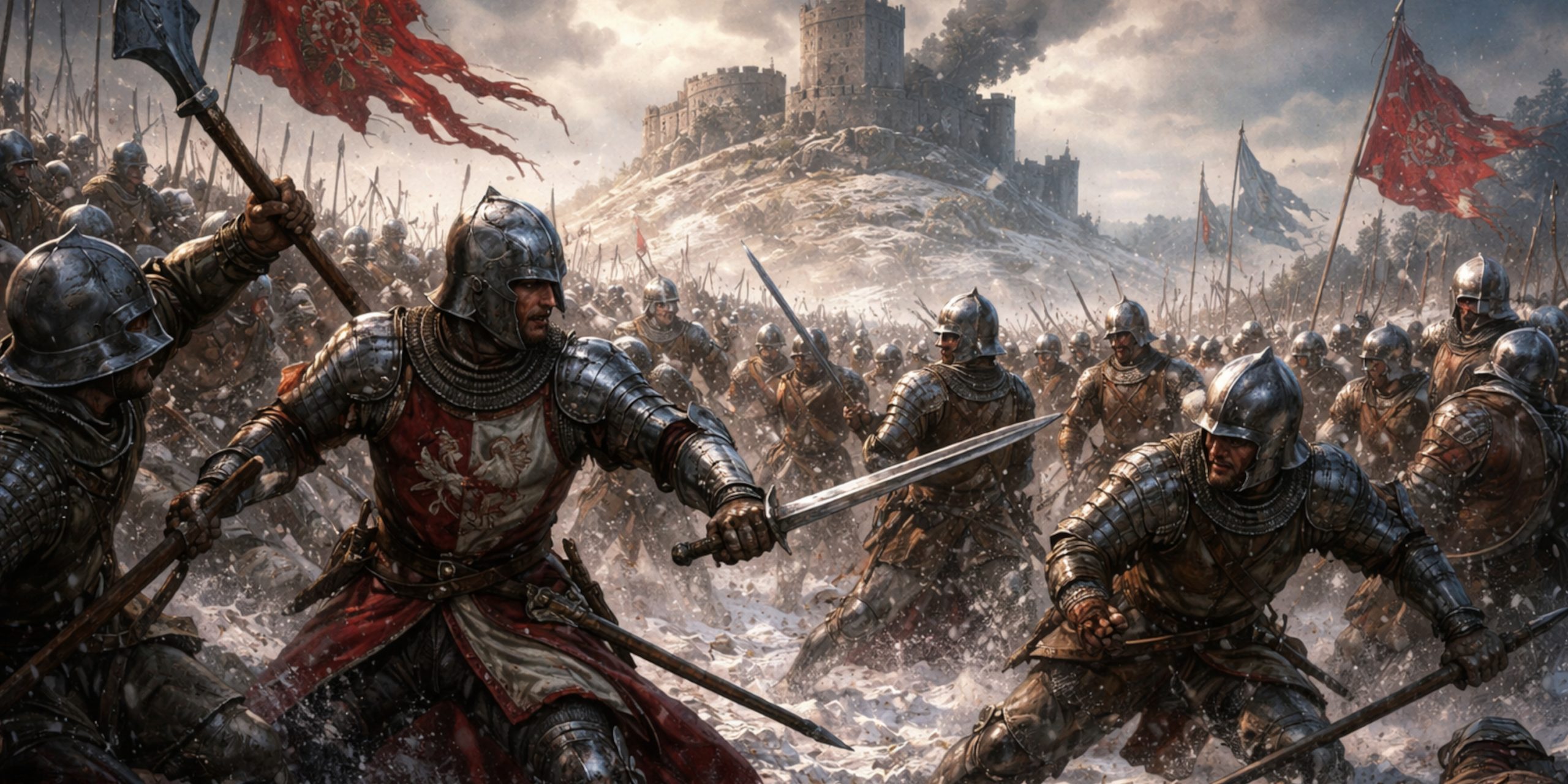
The Lancastrians executed a classic encirclement. As York’s force advanced, enemy contingents emerged on the flanks and rear. Any hope of orderly withdrawal vanished. Fighting collapsed into localised struggles across frozen fields and hedged lanes. Richard of York was killed in the fighting, possibly after being unhorsed. His son Edmund, Earl of Rutland, attempting to flee, was captured and killed by Lord Clifford. The Yorkist army broke soon after.
From a purely military perspective, it was not clever or subtle. It was decisive.
Arms and armour
Weapons in use
- Longswords of Oakeshott Types XV and XVI, stiff thrusting blades suited to armoured combat
- Falchions and messers, favoured by northern levies for their chopping power
- Polearms including bills and glaives, common among infantry
- Daggers such as rondels for close fighting once formations collapsed
Armour and protection
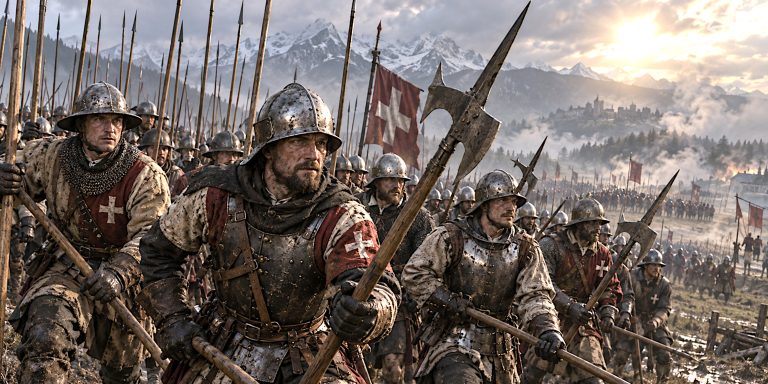
- Mail shirts reinforced with plate elements at the chest and shoulders
- Brigandines, practical and widespread among men at arms
- Sallets and kettle hats, often worn without full visors
- Shields were present but declining, used mainly by less heavily armoured troops
Wakefield was not a knightly tournament frozen in time. It was messy, cold, and brutal. Armour saved lives, until it did not.
Battle timeline
| Time | Event |
|---|---|
| Morning | Yorkist forces assemble at Sandal Castle |
| Midday | York advances to engage Lancastrian troops |
| Early afternoon | Lancastrian flanking forces reveal themselves |
| Afternoon | Yorkist line collapses under encirclement |
| Late afternoon | Richard of York is killed |
| Evening | Yorkist survivors flee or are captured |
Winter days are short. The battle was over quickly, which is often how disasters work.
Archaeology and landscape
No mass grave has been definitively identified, though the landscape around Sandal Castle has yielded scattered finds consistent with fifteenth century warfare. The lack of dramatic archaeological evidence is typical. Wakefield was not a single killing ground but a spread of skirmishes and pursuits across fields that have been farmed for centuries.
The castle ruins still dominate the area, and standing there it is easy to see the problem York faced. The ground falls away, offering little protection once committed. Geography can be an unforgiving critic.
Contemporary voices
A later chronicler recorded that York was “circumvented by the queen’s people and shamefully slain”, a phrase heavy with political judgement. The author of the Arrivall of Edward IV blamed treachery and deceit, which tells us less about what happened and more about how Yorkists coped with it.
Chroniclers were not impartial observers. They were advocates with quills.
Consequences and legacy
Wakefield destroyed the Yorkist leadership in one stroke, but it did not end the war. Instead it radicalised it. The display of Richard of York’s head on Micklegate Bar in York, crowned with a paper crown for mockery, ensured there would be no quiet settlement. His son Edward would respond with ferocity, culminating in Towton a few months later.
From a historian’s perspective, Wakefield is a lesson in overreach. It reminds us that political agreements mean little when armies are still in the field, and that confidence without caution is simply another way to lose a war. Dry humour aside, it is hard not to admire how efficiently the Lancastrians exploited York’s mistake. If only they had been as effective at winning the peace.
Watch the documentary: