Alfonso III of Asturias reigned from 866 to 910, a long and consequential stretch in a violent century that rarely allowed such continuity. He ruled a frontier kingdom pressed hard against the Umayyad Emirate of Córdoba, yet managed to expand, consolidate, and record his achievements with an unusual sense of historical awareness. Alfonso did not merely fight to survive. He shaped a political memory that would echo into the later Kingdom of León and, eventually, medieval Spain itself.
As a historian, I find Alfonso compelling not because he was flawless, but because he understood something rare for his age: power needed narrative as much as force.
Early Life and Accession
Alfonso was born around 848, the son of Ordoño I. His youth coincided with internal revolts, noble conspiracies, and constant pressure from the south. When Ordoño died in 866, Alfonso inherited a throne that came with enemies inside and out.
His early reign was anything but stable. Noble uprisings forced Alfonso into temporary exile, including a brief period among Basque allies. What matters here is not the setback, but the response. Alfonso returned with backing, suppressed rebellion decisively, and reshaped royal authority. From that point onward, Asturias ceased to be a loose coalition of warlords and became something recognisably royal.
Kingship and Political Vision
Alfonso ruled as a king who understood the long game. He pushed the capital’s influence southwards, encouraged settlement in depopulated frontier zones, and strengthened ecclesiastical structures to bind territory and loyalty together.
Crucially, Alfonso sponsored historical writing. The so called Asturian Chronicles, composed during his reign, present the kings of Asturias as rightful heirs to the Visigothic past. This was ideology with teeth. By framing his wars as restoration rather than rebellion, Alfonso gave later Christian rulers a ready made justification for expansion.
I am always cautious with royal propaganda, but even allowing for exaggeration, the ambition behind these texts is striking.
Battles and Military Acumen
Alfonso III was not a single decisive battle commander in the mould of later medieval kings. His success came through sustained pressure, raiding, and fortification.
He led repeated campaigns against Muslim-held territories along the Douro valley, taking advantage of internal instability within the Emirate of Córdoba. These were not glamorous clashes but strategic ones, aimed at weakening garrisons, disrupting supply, and encouraging Christian resettlement.
The most significant military achievement of Alfonso’s reign was the consolidation of northern Portugal and western León. Victories at places such as Porto and Coimbra allowed Alfonso to push the frontier hundreds of kilometres southwards. He also made careful use of alliances, including with Basque and Galician elites, to secure his flanks.
What impresses me is his patience. Alfonso rarely overreached. He advanced when conditions favoured him and paused when they did not. In a century of impulsive violence, restraint was a weapon.
Arms and Armour of Alfonso’s Reign
The Asturian army under Alfonso III was practical rather than ornate. This was warfare shaped by terrain, scarcity, and necessity.
Infantry formed the backbone of his forces, typically equipped with spears, round shields, and short swords or long seaxes. The sword, while symbolically powerful, remained secondary to the spear in actual combat. Cavalry existed, but it was light and limited, used for pursuit and raiding rather than shock charges.
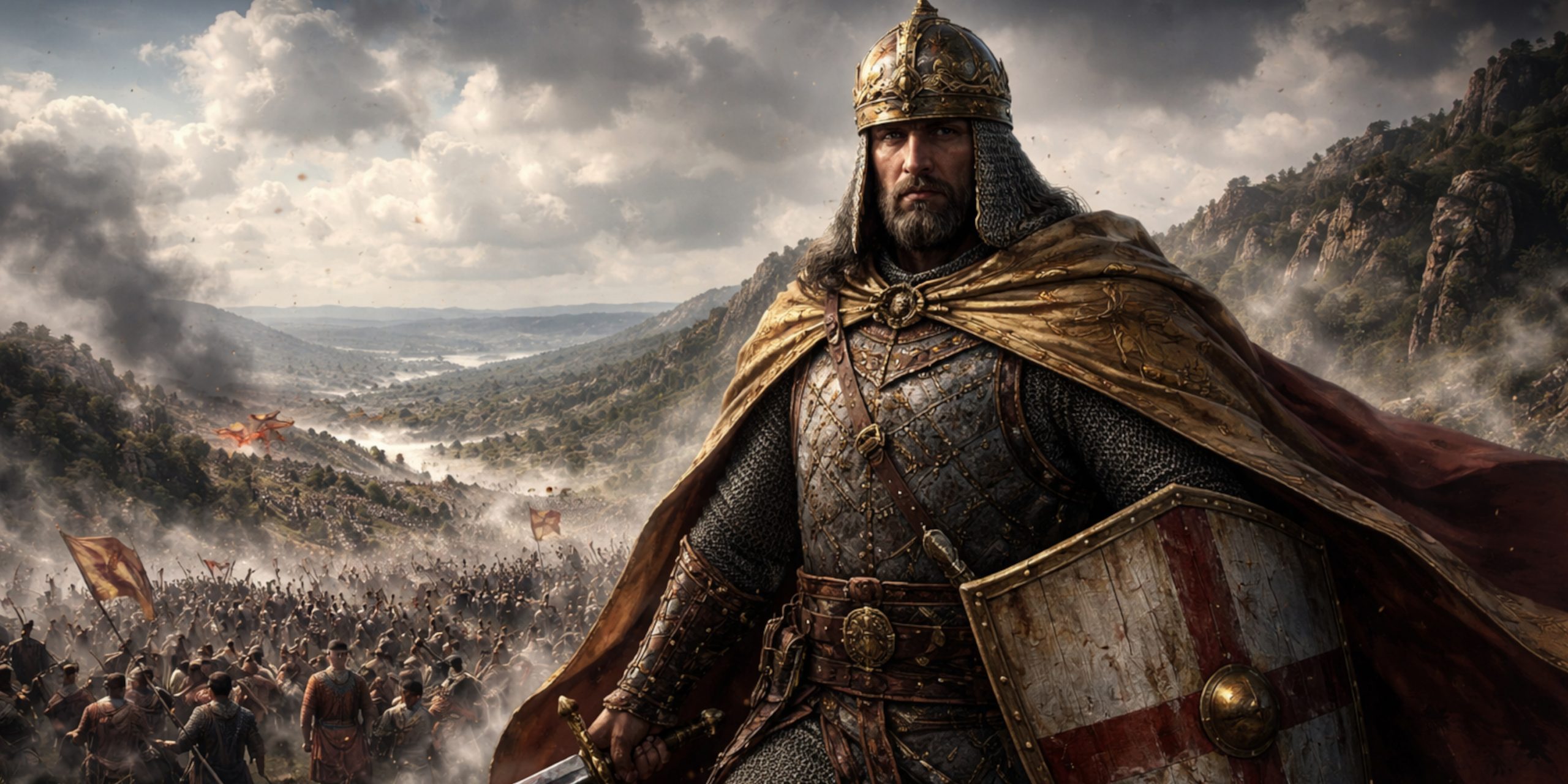
Helmets were rare and likely restricted to elites, often simple conical iron caps. Mail shirts were prized possessions, passed down through generations, rather than standard issue. Shields were wooden with iron bosses, functional and easily replaced.
There is no evidence that Alfonso himself wore especially distinctive armour. If anything, that restraint fits his image. Authority came from command and continuity, not display.
Religion, Culture, and Royal Identity
Alfonso’s reign saw an extraordinary flowering of Asturian architecture and Christian identity. Churches such as San Salvador de Valdediós and San Miguel de Lillo reflect a confident court culture, blending Visigothic heritage with local innovation.
Religion was never merely devotional. Churches anchored settlement, legitimised rule, and preserved literacy. Alfonso’s support for monastic communities helped ensure that his reign would be remembered, not just endured.
I often think that Alfonso’s real victory was cultural survival. Military success fades quickly without memory to support it.
Artefacts from Alfonso III’s Reign
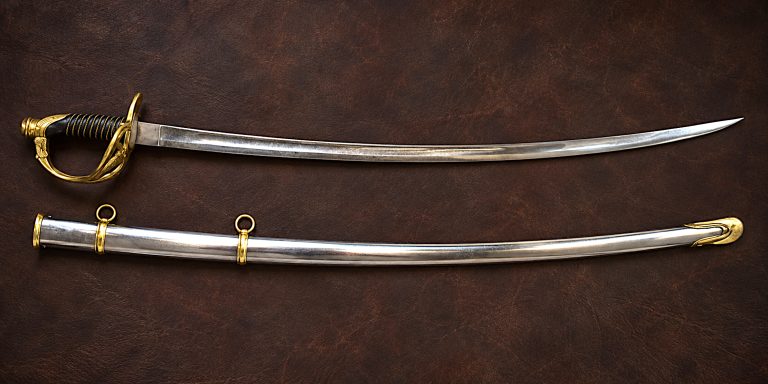
No personal arms or regalia of Alfonso III survive with secure attribution, which is frustrating but unsurprising. Early medieval kings did not preserve objects for posterity.
That said, several artefacts from his reign can be seen in northern Spain. The Cámara Santa of Oviedo Cathedral preserves liturgical objects associated with the Asturian monarchy, including crosses and reliquaries that reflect the wealth and craftsmanship of Alfonso’s court.
Architectural remains are the most reliable witnesses. Churches commissioned during his reign remain standing, offering tangible insight into royal patronage, aesthetics, and power.
Latest Archaeological Findings
Archaeology in Asturias and León continues to refine our understanding of Alfonso’s world. Recent excavations along the Duero frontier have revealed fortified sites and rural settlements consistent with organised repopulation rather than spontaneous migration.
Material evidence supports the written sources more than I once expected. Frontier communities appear planned, defended, and sustained over time, suggesting royal oversight rather than noble freelancing.
Ongoing work at Oviedo and surrounding sites is also shedding light on court life, including craft production and trade links that extended beyond the kingdom’s borders.
Death and Division
Alfonso III abdicated in 910, dividing his kingdom among his sons. Whether this was strategic or forced by internal pressure remains debated. What is clear is that unity fractured soon after his death.
As a historian, I find this ending painfully human. A king who spent decades building stability could not ensure it beyond his own lifetime. Yet the structures he created endured, shaping León and later Castile.
Legacy and Historical Assessment
Alfonso III deserves recognition as one of the architects of medieval Iberia. He expanded territory, strengthened institutions, and crafted a historical narrative that outlived him by centuries.
He was not a conqueror in the later crusading sense, nor a romantic warrior king. He was a ruler who understood limits, timing, and memory. That combination, more than any single battle, explains his success.
In studying Alfonso, I am reminded that history often favours those who endure rather than those who dazzle.