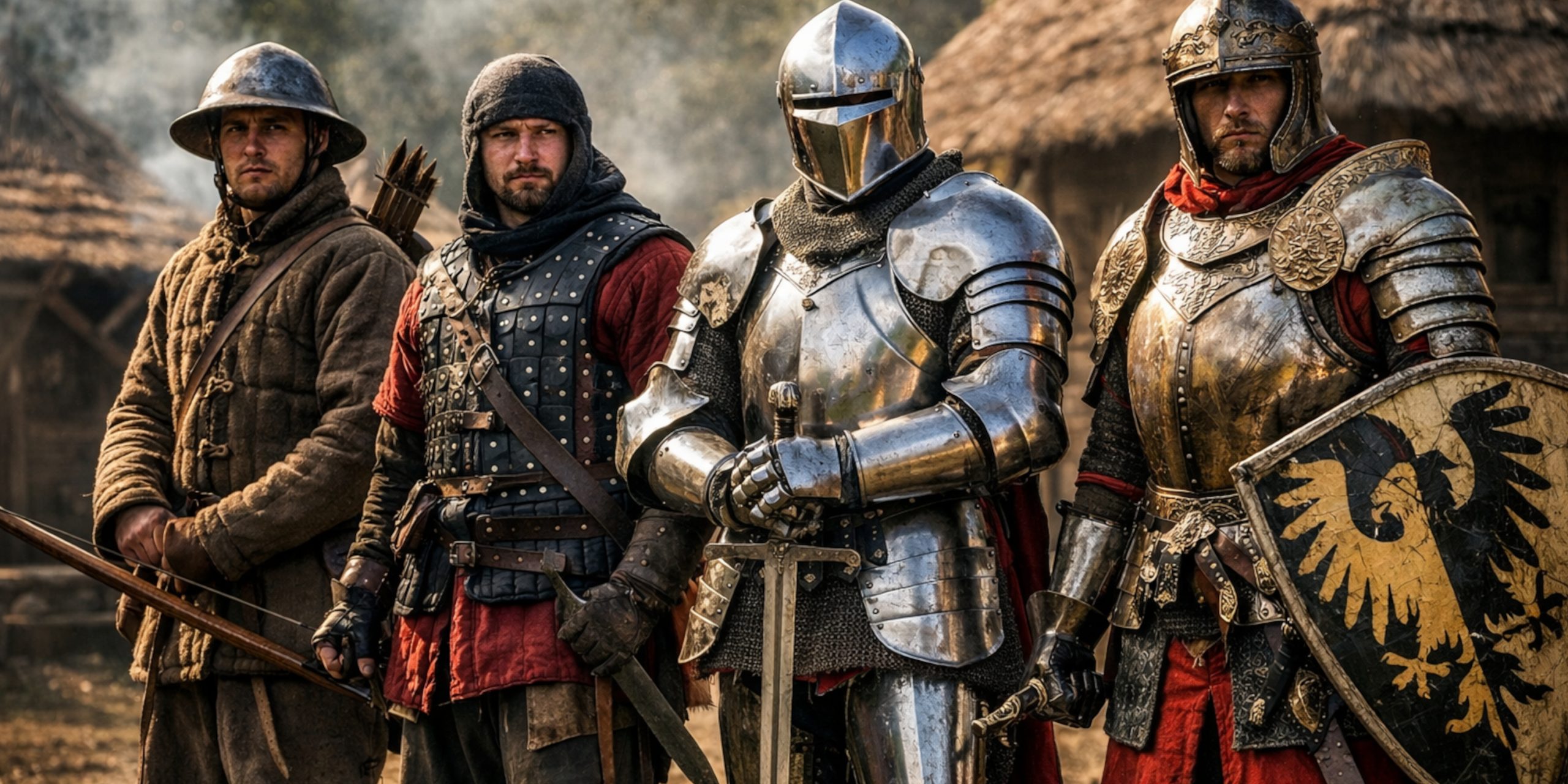
Kingdom Come II treats armour the way medieval people actually did. As layers, compromises, and social signals that can get you killed or save your life depending on where you are and who you annoy. This is not a fashion catalogue and it is definitely not a power fantasy wardrobe. Every set exists for a reason, and most of them come with trade offs that force you to think like a 15th century survivor rather than a loot goblin.
Below is a complete breakdown of every major armour category and recognisable set style you can build in the game, from padded rags to full late medieval plate. Think of these less as neat bundles and more as practical identities you assemble piece by piece.
Padded and Civilian Armour
Gambeson and Padded Sets
This is where everyone starts, and honestly where a lot of smart players end up lingering. Gambesons, aketons, and padded coats form the base layer for almost every serious build.
They offer solid blunt damage protection, decent comfort, and they do not scream “armed troublemaker” when you walk into town. They also pair with everything, whether you are slipping under mail or padding out plate.
If Kingdom Come II has a quiet MVP armour type, this is it.
Civilian Clothing with Hidden Protection
Some outfits look harmless but hide padded layers or reinforced stitching. Think sturdy coats, heavy tunics, or traveller gear.
Perfect for roleplaying a merchant, courier, or someone who would prefer guards not ask too many questions. Protection is limited, but the social stealth is real.
Light Armour and Early Military Gear
Leather and Reinforced Leather Sets
Leather armour sits in an awkward but interesting middle ground. It offers better cut protection than cloth and more mobility than metal, but it will not save you from a committed sword swing.
Hunters, scouts, and lightly armed retainers tend to live here. It is also popular early on because it is affordable, quiet, and easy to maintain.
You will feel underdressed in pitched battle, but overprepared for a tavern brawl.
Brigandine and Jack of Plates
This is where the game starts getting serious. Brigandines and plated jacks hide metal plates beneath fabric or leather, offering excellent protection without the bulk of full plate.
Historically common and mechanically brilliant, these sets balance defence, mobility, and social acceptability better than almost anything else.
If you want one armour category that works almost everywhere, this is it.
Mail Armour and Transitional Sets
Chainmail Hauberks and Shirts
Mail remains a classic for a reason. Strong against cuts, flexible, and reliable, though heavy and less impressive against blunt trauma.
In Kingdom Come II, mail shines when layered properly. Over padding, under plates, or paired with a brigandine, it becomes part of a system rather than a standalone solution.
Wearing mail alone is survivable. Wearing it smartly is lethal.
Partial Plate and Hybrid Builds
This includes breastplates over mail, plated arms with padded torsos, and mismatched battlefield scavenger setups.
Historically accurate and very much encouraged by the game, these builds reward players who think tactically rather than aesthetically. You look like someone who survived multiple fights and learned from them.
Which is usually accurate.
Full Plate Armour
Knightly Plate Harnesses
This is the dream. Articulated plate covering nearly every inch, visored helmets, gauntlets, and greaves that turn you into a walking tank.
The downside is obvious. Noise, heat, stamina drain, cost, and social reactions. You are not sneaking anywhere, and everyone assumes you mean business.
In open battle, nothing beats it. In towns, forests, or stealth situations, it can feel like overkill in the most literal sense.
Noble and Decorated Plate Sets
Some plate armour exists as much for status as survival. Polished surfaces, etched details, and heraldic elements matter here.
These sets are rarer and often tied to high reputation, quests, or wealth. They do not always outperform plainer harnesses, but they absolutely change how the world responds to you.
People notice. Guards hesitate. Nobles take you seriously.
Helmets and Head Protection
Open Helmets and Kettle Hats
Great visibility, decent protection, and far less claustrophobic than closed helms. Ideal for skirmishing, travel, or situations where awareness matters more than raw defence.
You still look armed, just not committed to dying for it.
Visored Helms and Great Helms
Maximum protection, minimum comfort. Vision is restricted, stamina suffers, and conversations feel tense before they even start.
In battle, they are lifesavers. Outside of it, they announce your intentions loudly.
Shields and Defensive Pairings
Bucklers and Small Shields
Light, fast, and excellent for skilled fighters. Best paired with swords or lighter armour builds where mobility matters.
They reward timing and positioning rather than brute force.
Heater and Kite Shields
Heavier, more protective, and ideal for infantry or defensive play. These shine when combined with mail or partial plate.
You trade agility for survivability, which often feels like a good deal when arrows start flying.
How Armour Really Works in Kingdom Come II
The game does not care about neat sets. It cares about layers, damage types, stamina, noise, and context. A padded jack plus mail might outperform cheap plate. A brigandine with an open helm may keep you alive longer than a full harness in the wrong situation.
This is why the armour system feels so grounded. You are not chasing rarity colours or set bonuses. You are building a medieval solution to medieval problems.
Sometimes that solution is a knight in shining steel. Sometimes it is a farmer’s coat with better stitching and a quiet conscience.