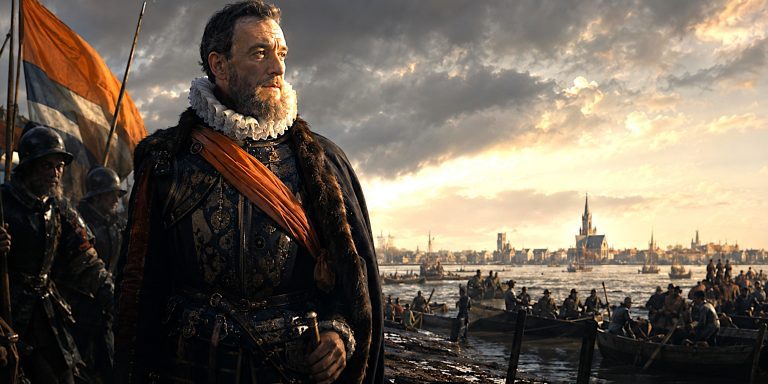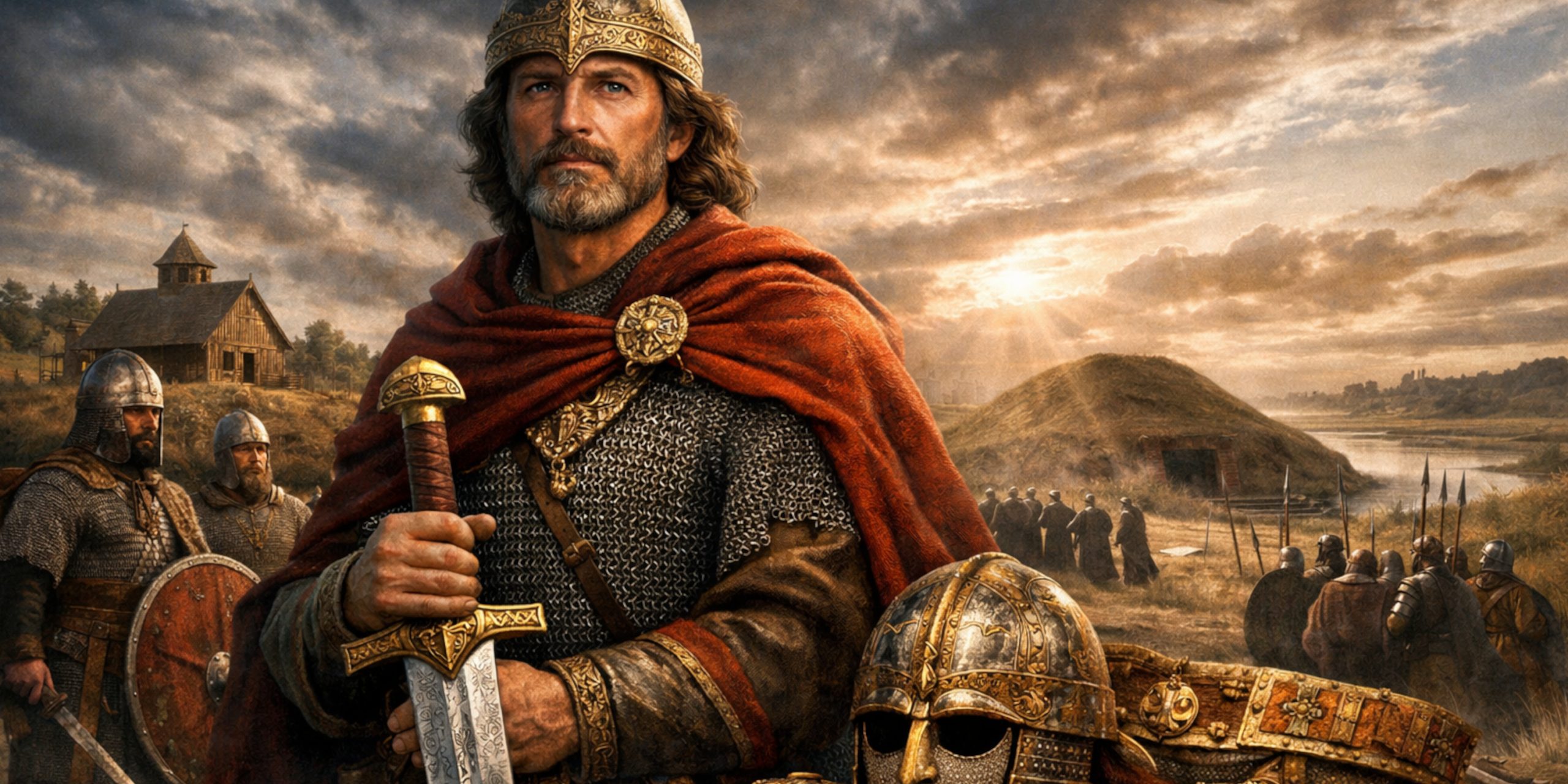
Ealdwulf ruled the kingdom of the Kingdom of East Anglia for close to half a century, from around 664 until his death in 713. In an age defined by short reigns, dynastic violence, and fragile kingship, that longevity matters. It suggests political skill, caution where needed, and an ability to adapt as England slowly shifted from pagan warlord rule to Christian kingship tied into continental Europe.
Ealdwulf rarely appears in the sources as a dramatic figure. That in itself is revealing. He presided over stability, not spectacle, and left behind a kingdom that endured rather than collapsed.
Background and Accession
Ealdwulf was a member of the Wuffingas dynasty, the ruling house of East Anglia. His father was Æthelhere, who died fighting the Mercians at the Battle of the Winwaed in 655. That defeat reshaped power in southern England and left East Anglia exposed.
Ealdwulf came to the throne less than a decade later. He inherited a kingdom that had lost military momentum and needed careful management rather than further grand gestures. East Anglia sat between aggressive Mercia to the west and the growing cultural pull of Kent and Northumbria. Survival required diplomacy as much as force.
Kingship and Political Style
Ealdwulf ruled for nearly fifty years, an extraordinary span by early Anglo-Saxon standards. Nothing in the written record suggests major internal rebellion, large scale invasion, or dynastic rupture during his reign. That absence is meaningful.
He appears to have prioritised continuity, local authority, and ecclesiastical patronage. East Anglia remained Christian throughout his reign, with close links to monastic centres. Kingship here looks administrative and ceremonial rather than relentlessly martial.
As a historian, I find Ealdwulf refreshing. He reminds us that early medieval power was not only forged on battlefields. It was also maintained in halls, monasteries, and long negotiations that never earned a chronicler’s flourish.
Arms and Armour
No arms or armour can be directly attributed to Ealdwulf himself, but we can reasonably reconstruct the equipment used by East Anglian elites during his reign based on archaeological finds and comparative evidence.
Royal retainers and the king’s warband would likely have been equipped with pattern-welded swords, often with lobed or trilobate pommels, similar to those found at Sutton Hoo. These were prestige weapons, not common arms.
Spears were the most widespread military tool, with leaf-shaped iron heads and ash shafts. Shields were round, wooden, and bossed, with simple iron fittings. Helmets were rare and largely confined to elite contexts. Mail armour existed but was uncommon and expensive, reserved for the wealthiest warriors.
Ealdwulf’s power rested on access to these elite fighters rather than mass armies. The visual language of kingship here was measured, not ostentatious.
Battles and Military Acumen
There are no securely recorded battles fought by Ealdwulf during his reign. That silence frustrates readers who want campaigns and clashes, but it tells us something more subtle.
Ealdwulf avoided the fate of his father by steering East Anglia clear of major conflicts with Mercia and Northumbria. Whether through tribute, alliance, or careful neutrality, he kept his kingdom intact at a time when others were swallowed or shattered.
This was strategic restraint, not weakness. In early medieval England, choosing not to fight could be the most intelligent military decision available. Ealdwulf understood that survival was itself a victory.
Religion and Cultural Influence
Christianity was firmly embedded in East Anglia by Ealdwulf’s reign. Monastic communities flourished, and the kingdom remained part of wider intellectual and religious networks that linked England to Ireland and the continent.
These connections helped stabilise rule. Monasteries acted as centres of literacy, diplomacy, and memory. Kings like Ealdwulf benefited from clerical support that reinforced legitimacy and continuity.
The absence of pagan revival or religious conflict during his long rule is striking, especially given how volatile conversion politics could be elsewhere.
Archaeology and Material Evidence
No grave or palace site has been identified as belonging directly to Ealdwulf. That said, the broader archaeological picture of East Anglia during the late seventh and early eighth centuries is rich.
Excavations at elite settlement sites across Suffolk and Norfolk show continued high-status occupation, imported goods, and strong craft traditions. Coinage from the period reflects economic stability and engagement with wider trade networks.
Recent archaeological reassessments of East Anglian sites have focused less on single dramatic finds and more on landscape use, settlement continuity, and regional power structures. This approach suits Ealdwulf’s reign perfectly. His legacy is not a single object, but a pattern of endurance.
Where to See Artefacts from His Era
While nothing can be labelled as Ealdwulf’s personal property, artefacts from his kingdom and lifetime can be seen in several major collections.
The British Museum holds key East Anglian material, including weaponry and jewellery that illustrate elite culture during his reign. Sutton Hoo finds, although earlier, remain essential for understanding the symbolic world inherited by Ealdwulf and his contemporaries.
Regional museums in Suffolk and Norfolk also display settlement finds, coins, and everyday objects that bring the period into sharper focus. These quieter artefacts often say more about long reigns than famous treasures.
Legacy and Historical Assessment
Ealdwulf does not dominate textbooks or popular history, and that is precisely why he matters. He represents a type of kingship that prioritised durability over drama.
His reign kept East Anglia independent during one of the most dangerous centuries in its history. He passed on a functioning kingdom to his successor, not a crisis. In early medieval terms, that is an achievement of the highest order.
As a historian, I have a soft spot for rulers like Ealdwulf. He did not seek glory through bloodshed or monumental display. He ruled, quietly and effectively, and allowed his kingdom to outlive the ambitions of louder men.