A Smaller Story With Bigger Historical Roots
If Game of Thrones was all dragons, dynasties, and people being poisoned at banquets, A Knight of the Seven Kingdoms is the quieter cousin who turns up with a dented helmet and a questionable horse. That shift is not accidental. George R. R. Martin pulls this story much closer to real medieval life, where most knights were not lords, most wars were messy and small, and glory was often something you heard about rather than experienced.
This series, adapted from Martin’s Dunk and Egg novellas, feels grounded because it leans on history that is recognisable. You can see it in how people fight, how power works, and how status is constantly negotiated in awkward conversations rather than decided by prophecy.
Hedge Knights and the Reality of Medieval Chivalry
Ser Duncan the Tall is a hedge knight, which sounds romantic until you remember it basically means freelance warrior with no benefits package. In medieval Europe, thousands of knights lived like this. They owned their armour, rented out their sword, and slept wherever someone would let them.
Chivalry in the real world was not a fixed moral code. It was more like a marketing pitch that nobles loved and everyone else tolerated. Knights were expected to show courage and loyalty, but survival often mattered more. Dunk’s constant anxiety about money, equipment, and reputation fits this reality almost uncomfortably well.
He is not polishing ideals. He is trying not to starve.
Tournaments Were Less Sport, More Legalised Violence
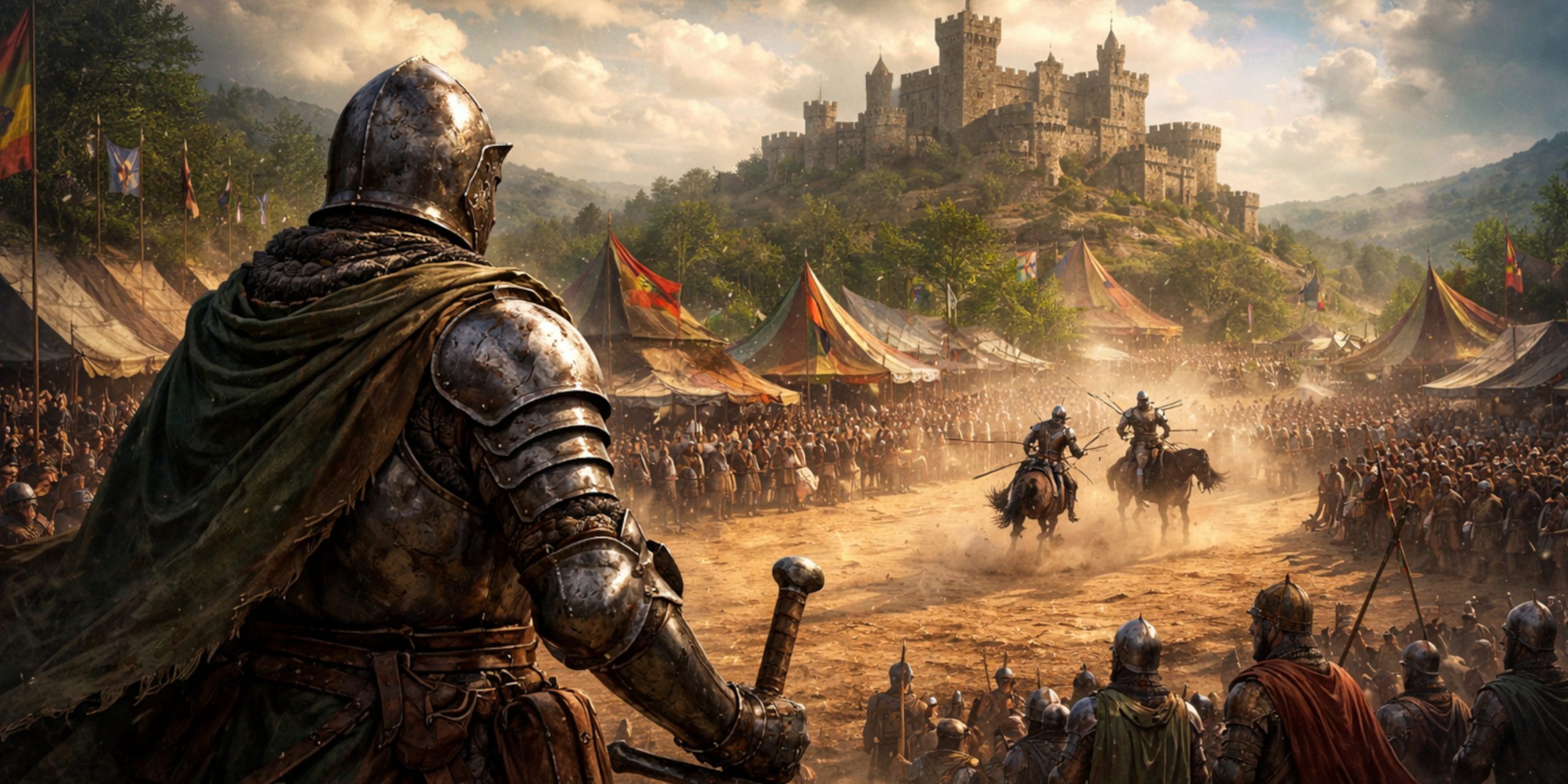
Tournaments in the series look festive on the surface, but they carry real danger, grudges, and politics underneath. That tracks closely with history. Medieval tournaments were brutal affairs where men died, nobles cheated, and feuds were settled under the thinnest veneer of honour.
The emphasis on ransom, reputation, and who you offend by winning or losing mirrors actual tournament culture in places like France and England during the 12th to 14th centuries. Winning mattered, but surviving and staying on the right side of powerful families mattered more.
If this all feels tense rather than celebratory, that is the point.
Feudal Power Is Petty, Personal, and Fragile
Unlike later Westeros stories packed with kings and councils, A Knight of the Seven Kingdoms focuses on local power. Lords abuse authority. Princes throw their weight around. Justice depends heavily on who likes you today.
This is straight out of medieval feudalism. Authority was personal, not institutional. Law travelled slowly. A bad decision by a noble could ruin lives, and there was rarely a higher court to appeal to. The series captures that claustrophobic feeling where power is always nearby and never particularly fair.
Egg’s position as a disguised prince also reflects real medieval anxieties about class. Blood mattered, but so did who knew about it.
Weapons, Armour, and Fighting Feel Believable
One of the quiet triumphs of the story is how grounded the combat feels. Armour is heavy. Fights are awkward. Skill does not guarantee victory. Size, fatigue, and luck play huge roles.
Dunk’s success comes from strength and persistence rather than flashy technique. That aligns with historical accounts of combat, where brute force and endurance often decided outcomes more than elegant swordplay. Armour was designed to keep you alive, not make you look cool, even if it sometimes managed both.
It is refreshing to watch fantasy fighting that looks exhausting instead of choreographed.
The Targaryens as a Medieval Dynasty, Not a Fantasy Superpower
Set generations before the dragons return, the Targaryens here feel more like a real royal house than a mythical one. They squabble, overreach, and rely on symbolism as much as force.
This version of the dynasty echoes medieval ruling families like the Plantagenets or Capetians, where legitimacy, marriage, and reputation were just as important as military strength. Without dragons to solve problems, politics becomes fragile again.
That vulnerability makes the world feel more human and more historically honest.
Why This Prequel Feels Different, and Why That Works
A Knight of the Seven Kingdoms succeeds because it is not trying to top Game of Thrones. It zooms in instead of out. By focusing on one knight, one boy, and a handful of bad decisions, it captures something closer to real medieval life than most fantasy ever attempts.
History was not constant spectacle. It was long stretches of uncertainty punctuated by moments of violence or opportunity. This series understands that rhythm, and it trusts the audience to find meaning in smaller stories.
Personally, I find that confidence oddly comforting. No dragons required.
Seven Swords Takeaway
If you enjoy medieval history, this is probably the most historically literate corner of Westeros so far. It respects the messiness of the past without turning it into a lecture. Knights are flawed. Honour is conditional. Power is inconveniently human.
That might not sound epic, but it is exactly why the story works.
Watch the Trailer: