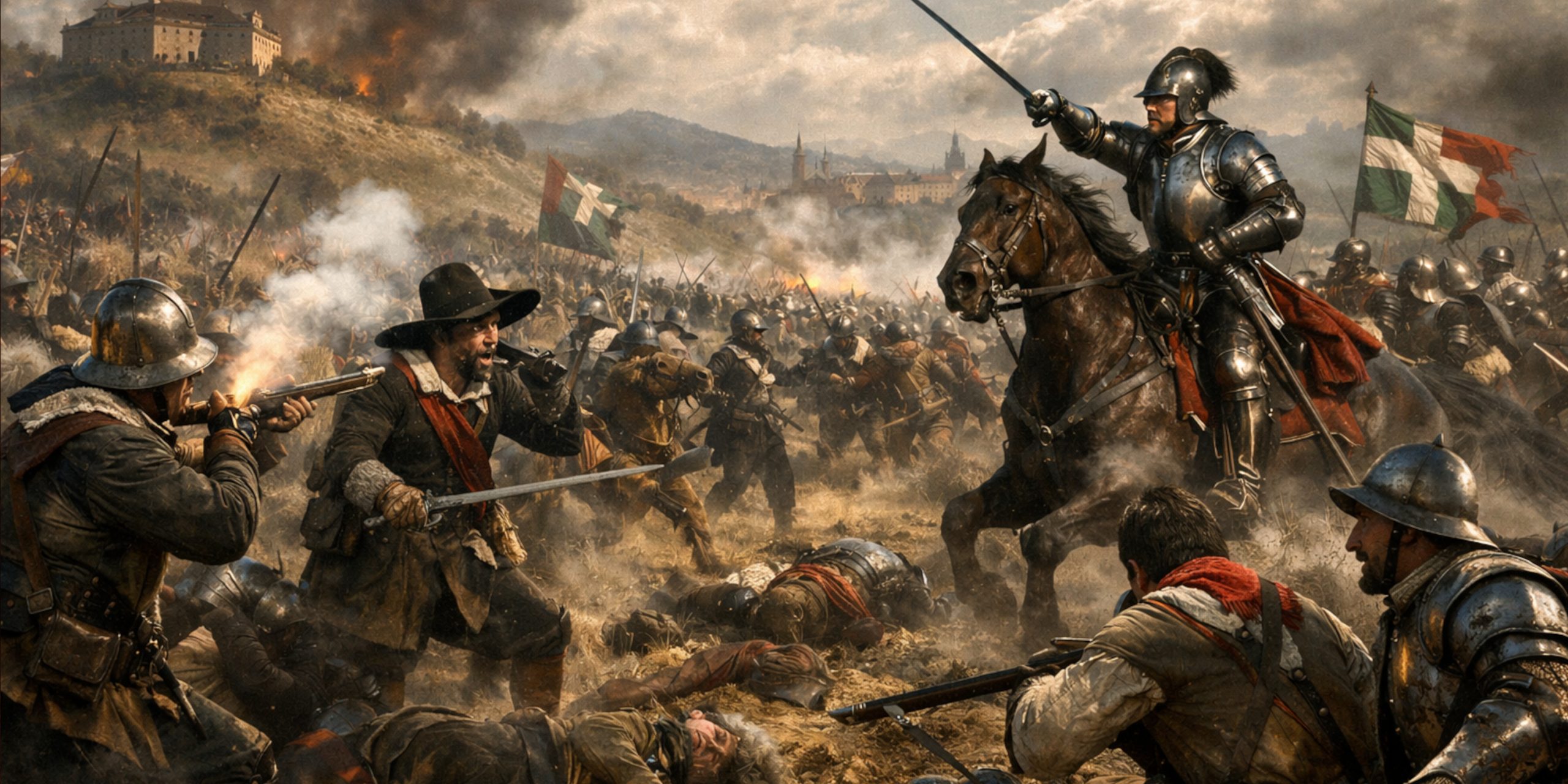
The Battle of White Mountain sits at the uneasy beginning of the Thirty Years’ War, a conflict that would go on to exhaust central Europe for a generation. Fought just outside Prague in November 1620, it was brief, decisive, and politically catastrophic for the Bohemian Revolt. For all its modest scale, the battle reshaped the religious and dynastic balance of the Holy Roman Empire with an efficiency that still makes historians wince.
Context and Road to Battle
Bohemia’s Protestant estates had rebelled against Habsburg rule in 1618, an uprising that began with the famous Defenestration of Prague and ended with something far less theatrical. They elected Frederick V of the Palatinate as king, a decision that looked bold on paper and reckless on the battlefield.
The Habsburg response gathered pace under Ferdinand II, who combined imperial authority with Catholic League backing. By autumn 1620, the Imperial and League armies were marching on Prague. The Bohemian field army chose to stand on the low plateau known as White Mountain, more a gentle rise than a commanding position. It would not live up to its name.
Forces
| Side | Estimated Strength | Composition |
|---|---|---|
| Bohemian-Protestant Army | c. 15,000 to 21,000 | Bohemian levies, German mercenaries, limited cavalry |
| Imperial and Catholic League | c. 23,000 to 27,000 | Imperial regiments, Bavarian troops, veteran cavalry |
The numbers tell only part of the story. Training, cohesion, and morale favoured the Imperial side, which mattered more than headcount on a cold November morning.
Commanders and Leadership
Bohemian-Protestant Command
- Christian of Anhalt, overall commander
- Heinrich Matthias von Thurn, experienced but overstretched
- Ernst von Mansfeld, present but largely detached from the main action
Imperial and Catholic League Command
- Count Tilly, commanding League forces
- Charles Bonaventure de Longueval, leading Imperial contingents
Tilly in particular brought discipline earned in earlier campaigns. His opponents brought enthusiasm, which is not quite the same thing.
Arms and Armour
Infantry Weapons
- Pike formations with ash shafts and steel heads
- Matchlock muskets, slow to fire but decisive at close range
- Short swords such as German Katzbalger-style sidearms for close combat
Cavalry Equipment
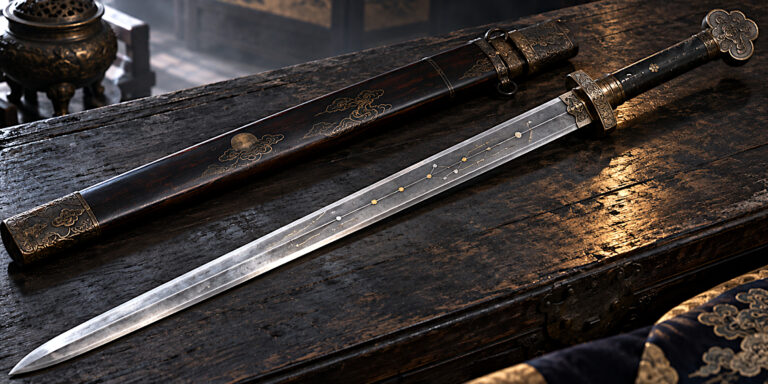
- Heavy cavalry armed with straight, double-edged broadswords of the early seventeenth century
- Pistols for caracole tactics, though shock charges proved more effective
- Breastplates and open-faced helmets, practical rather than ornate
Defensive Gear
- Infantry often wore minimal armour, typically a buff coat and morion helmet
- Officers favoured half-armour with gorgets and decorative hilts, style surviving even when tactics changed
The weaponry was typical of the period, transitional and pragmatic. Gunpowder decided the battle, but cold steel finished most arguments.
The Battle Timeline
Morning, 8 November 1620
Imperial and League forces advance from the west toward the Bohemian line. Skirmishing begins, probing rather than committing.
Late Morning
Catholic League infantry assault the Bohemian left. Resistance is uneven. Mercenary units begin to falter under sustained pressure.
Early Afternoon
Imperial cavalry exploit a breach near the Star Castle game reserve. The Bohemian centre wavers, then collapses.
Mid Afternoon
Organised resistance ends. The retreat turns into a rout toward Prague. The entire engagement lasts little more than two hours.
A short battle, then, though its consequences would echo for decades.
Archaeology and the Battlefield
White Mountain today is a quiet suburb of Prague, a fact that often surprises visitors expecting a dramatic landscape. Archaeological finds are sparse but telling. Musket balls, fragments of blades, and occasional armour fittings have been recovered over the years, usually during construction rather than systematic excavation.
The battlefield’s modest material record reflects the speed of the fighting and the thorough looting that followed. Victors and locals alike had an eye for reusable iron.
Contemporary Voices
A Catholic League observer noted with satisfaction that the Bohemians “fled with such haste that even their courage could not keep up with them,” a line that manages both triumph and pettiness.
From the Protestant side, the mood was bleaker. One Bohemian noble lamented that the army “stood bravely, but not long,” which is about as charitable as defeat allows.
Aftermath and Legacy
White Mountain ended the Bohemian Revolt in practice, if not immediately in law. Frederick V fled after a reign of one winter, earning the nickname that history has never quite forgiven. Habsburg authority was reasserted with enthusiasm, followed by confiscations, executions, and enforced re-Catholicisation.
For the Thirty Years’ War, the battle set a grim precedent. Swift victories encouraged overconfidence, and compromise retreated even faster than the Bohemian infantry.
Why White Mountain Still Matters
Historians return to White Mountain not for its tactics, which were competent but unremarkable, but for its consequences. It reminds us that wars are not always decided by epic clashes. Sometimes a short, cold morning outside a city is enough to change the fate of a kingdom.
If nothing else, it stands as a warning that choosing a king and choosing a battlefield are skills best mastered before the enemy arrives.
Watch the documentary: