Rome’s Quiet Architect of Power
Marcus Agrippa tends to suffer from proximity. Stand him next to Augustus and he looks like a supporting character. Step back and the picture changes. Agrippa is the man who repeatedly solves Rome’s biggest problems, often before they turn fatal. He wins wars, builds systems, fixes infrastructure, and then steps aside without demanding centre stage. As a historian, I find that restraint oddly reassuring. It suggests confidence, or perhaps a clear-eyed sense of how Rome actually worked.
Origins and Rise
Agrippa was born around 63 BC, roughly the same generation as Octavian. Unlike many of Rome’s elite, he did not come from a glittering aristocratic lineage. What he brought instead was competence, loyalty, and an instinct for organisation.
Key points in his rise:
- Close early association with Octavian during the civil wars
- Rapid advancement through military command rather than political theatrics
- Appointment to repeated high office, including the consulship
- Marriage into Augustus’ family, cementing trust as well as usefulness
Agrippa’s career makes little sense unless you accept one thing. Augustus trusted him more than anyone else, and Rome ran better because of it.
Arms and Armour
Agrippa lived and fought at the end of the Roman Republic, a transitional period in military equipment. His arms and armour would have been conventional for a senior Roman commander, with emphasis on quality rather than novelty.
Typical Equipment of Agrippa’s Era
| Category | Likely Forms |
|---|---|
| Helmet | Bronze or iron helmet of late Republican style |
| Body Armour | Mail shirt or muscle cuirass for command appearances |
| Shield | Scutum when on campaign |
| Primary Weapon | Gladius |
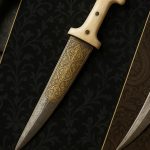
| Secondary Weapon | Pugio dagger |
| Cloak | Paludamentum, marking senior command |
Agrippa is sometimes visually associated with the rostral crown, a naval honour awarded for victories at sea. It is telling that Rome remembered him not with a sword raised, but with a symbol of maritime mastery.
Battles and Military Acumen
Agrippa’s military record is not defined by reckless bravery or dramatic last stands. It is defined by preparation, planning, and an ability to think in systems.
Major Campaigns and Engagements
- War against Sextus Pompey (38 to 36 BC)
Pompey threatened Rome’s grain supply by controlling the seas. Agrippa’s naval reorganisation and victories removed this danger completely. - Battle of Naulochus (36 BC)
A decisive naval victory that effectively ended Pompey’s power and restored stability to Rome’s food supply. - Battle of Actium (31 BC)
The turning point of Roman history. Agrippa commanded Octavian’s fleet and neutralised Antony and Cleopatra’s naval strength, making the political victory inevitable.
Why Agrippa Was Exceptional
- He understood naval warfare as logistics first, combat second
- He built fleets and crews rather than relying on inherited power
- He coordinated land and sea operations with unusual precision
- He knew when to press an advantage and when containment was enough
In short, Agrippa won wars by making them difficult for the enemy to fight at all.
Administrator and Builder of Rome
Agrippa’s military success bought him influence. What he did with it is what makes him enduring.
Major Civic Projects
- Repair and expansion of Rome’s aqueduct system
- Construction of the Aqua Virgo, still supplying water today
- Development of Rome’s first monumental public bath complex
- Oversight of roads, sewers, and urban maintenance
He famously declined personal profit from many projects, presenting them as gifts to the Roman people. This was not false modesty. It was political intelligence. Infrastructure lasts longer than speeches.
The Pantheon and Architectural Legacy
Agrippa commissioned the original Pantheon during his third consulship. The building standing today is later, rebuilt under Hadrian, but the inscription still credits Agrippa.
That choice was deliberate. Later emperors could rebuild stone, but they preserved the name because it carried authority. Agrippa becomes part of Rome’s architectural memory, even when the bricks change.
Artefacts and Where to See Them
Agrippa left fewer personal artefacts than flashier figures, but what survives is revealing.
Notable Surviving Material
- Marble portrait busts showing restrained Augustan style
- Coinage depicting Agrippa with the rostral crown
- Architectural inscriptions naming him as builder or patron
Key Locations
| Site | What You Can See |
|---|---|
| Rome | Pantheon inscription, Aqua Virgo system |
| Paris | Portrait busts associated with Agrippa |
| London | Coinage bearing his image |
| Athens | Monumental base honouring Agrippa |
| Baiae | Submerged remains linked to naval infrastructure |
These remains reflect how Agrippa was remembered, not as a conqueror shouting his name, but as a stabilising presence.
Latest Archaeological Findings
Agrippa continues to surface through archaeology because he built things meant to endure.
Recent areas of study include:
- Detailed surveys of the Aqua Virgo and its subterranean features
- Ongoing underwater archaeology at Baiae and Portus Julius
- Reassessment of the Baths of Agrippa as political space, not just leisure architecture
What emerges is a clearer sense of Agrippa as a manager of resources and people. Archaeology keeps confirming what the texts imply. His power lay in coordination.
Legacy and Historical Judgement
Agrippa presents historians with an uncomfortable question. How much credit do we give the man who makes empire work, rather than the one who claims it?
He was loyal to Augustus, and that loyalty helped end a republic. He was also practical, restrained, and unusually public-spirited in an age of ego. I suspect Agrippa understood something many Romans did not. Rome no longer needed heroes. It needed systems.
In that sense, Agrippa may be the most modern figure of the Augustan age. Not glamorous, not sentimental, but essential. Rome was built on marble, but it was kept standing by men like him.
Watch the documentary: