Who Was Kotetsu?
Kotetsu, more formally known as Nagasone Okisato, is one of the most discussed swordsmiths of the Edo period, and also one of the most misunderstood. His blades sit at an awkward intersection of fact, myth, and Edo era gossip. To own a Kotetsu was to own something undeniably formidable, but also something whispered about in the same breath as bad omens and ill temper.
He worked primarily in Edo during the mid 17th century, a time when Japan was relatively peaceful, which makes his reputation for viciously effective swords all the more striking. Kotetsu is one of those figures who remind us that swords were still judged by cutting ability long after large scale warfare had ended.
From Armourer to Swordsmith
Kotetsu did not begin his career forging swords. He was originally an armour maker, and not a particularly famous one. He is believed to have turned to swordsmithing relatively late in life, possibly in his forties or fifties. That alone raises eyebrows among historians, since most elite smiths began as apprentices in childhood.
This background matters. Armourers think differently. They obsess over impact, stress, and failure points. When Kotetsu began forging blades, he brought that mindset with him. His swords feel engineered rather than romantic, which may explain both their effectiveness and their slightly brutal personality.
What Makes a Kotetsu Blade Distinctive?
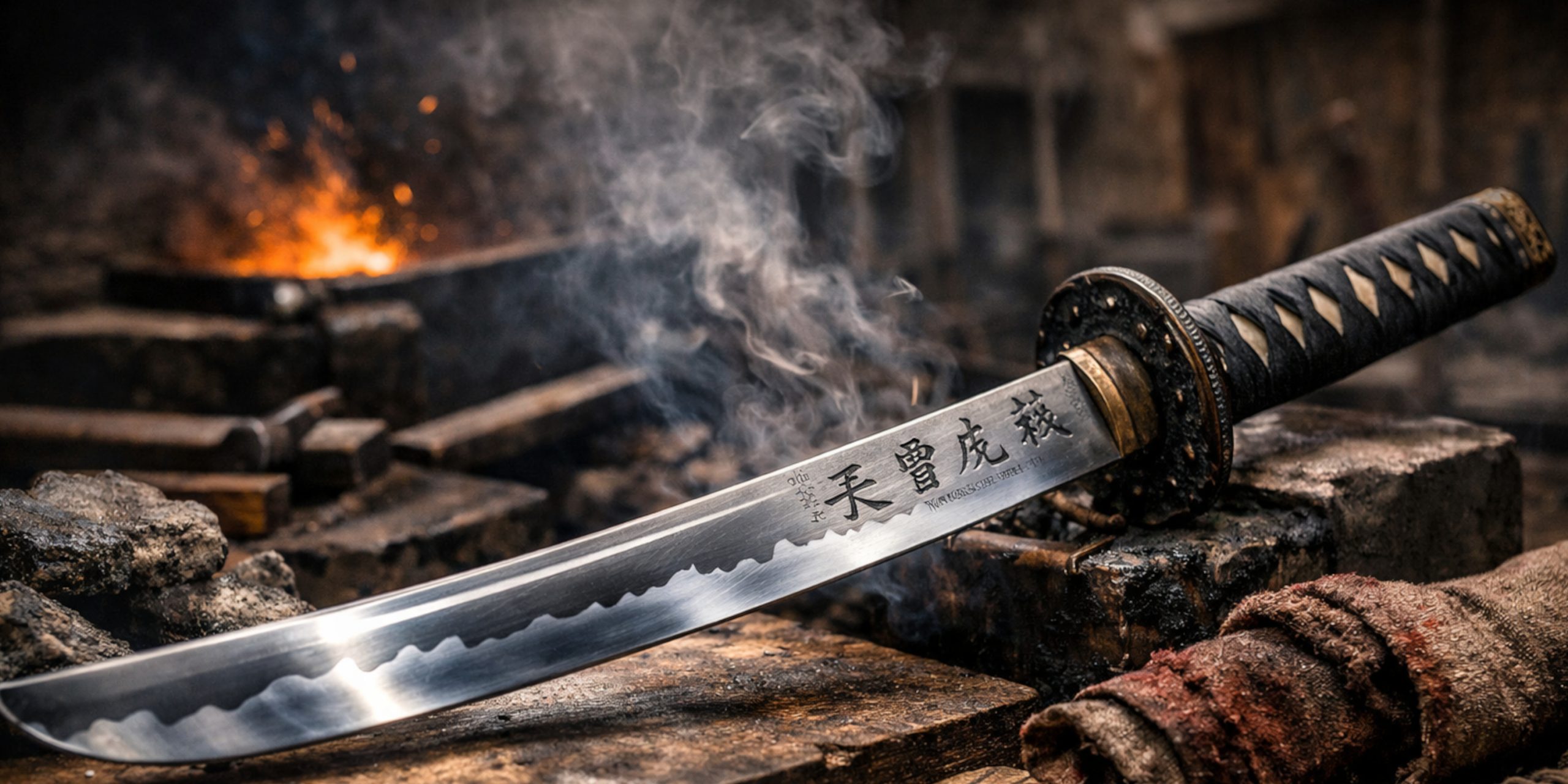
Kotetsu blades are not elegant in the courtly sense. They are purposeful, dense, and sometimes faintly intimidating even at rest.
Common characteristics include:
- A robust sugata with noticeable presence
- Thick kasane, giving the blade weight and authority
- A hamon often in gunome or notare styles, lively but controlled
- Strong jigane with visible texture rather than refined smoothness
Collectors often remark that Kotetsu swords look like they expect trouble. That may not be a technical term, but it is a recurring observation.
Reputation for Cutting Ability
Kotetsu swords earned a reputation for exceptional sharpness and cutting power, particularly during the Edo period practice of test cutting. Some blades are associated with multiple body tests, which was the closest thing to a performance review available at the time.
This reputation became so strong that Kotetsu swords were sometimes blamed when violence occurred, as though the blade itself had a personality flaw. It is easier to blame steel than people, especially in a society that prized harmony on paper and quietly accepted duels in alleyways.
The Myths and Superstitions
No discussion of Kotetsu is complete without addressing the rumours. His blades were said to bring misfortune, encourage violence, or cause their owners to meet unpleasant ends. Some samurai reportedly refused to wear Kotetsu swords despite their quality.
As a historian, one has to smile at this. Dangerous tools tend to attract dangerous stories. A blade that cuts exceptionally well will be present at ugly moments. Correlation becomes legend, and legend becomes warning.
In reality, Kotetsu swords were likely overrepresented in violent incidents because they were chosen by men who expected to use them.
Signatures and Authentication Challenges
Kotetsu signatures are famously problematic. He signed blades as Kotetsu later in life, while earlier works may bear different names. To complicate matters, Kotetsu was widely copied, forged, and outright impersonated, even during his lifetime.
Authenticating a true Kotetsu requires careful examination of:
- Nakago shape and patina
- Mei style and chiselling rhythm
- Jigane texture and steel layering
- Overall balance and construction logic
Even experienced collectors tread carefully. A confident attribution often says more about the blade than the signature.
Kotetsu and Edo Period Society
Kotetsu’s fame reflects Edo Japan’s complicated relationship with violence. The samurai class was armed but underemployed. Swords became symbols, heirlooms, and sometimes excuses. Kotetsu blades fit neatly into this tension, being tools that reminded everyone what swords were originally for.
They were admired, feared, and occasionally hidden away when tempers ran hot.
Surviving Kotetsu Blades Today
Genuine Kotetsu swords are rare and fiercely sought after. They appear in major collections and museums, as well as high end private holdings. When one surfaces at auction, it commands attention and serious money.
Their appeal lies not just in craftsmanship, but in character. Kotetsu swords feel human in the way only controversial objects can. They are imperfect, opinionated, and unapologetically dangerous.
Legacy and Historical Assessment
Kotetsu stands as proof that greatness in swordsmithing does not require refinement alone. His blades remind us that function matters, even in an age of peace. He disrupted expectations, annoyed purists, and left behind steel that still demands respect.
As a historian, I find Kotetsu refreshing. He did not behave. He did not conform. He forged swords that refused to be polite, and history noticed.
Not every legend needs to be comfortable. Some are sharp for a reason.