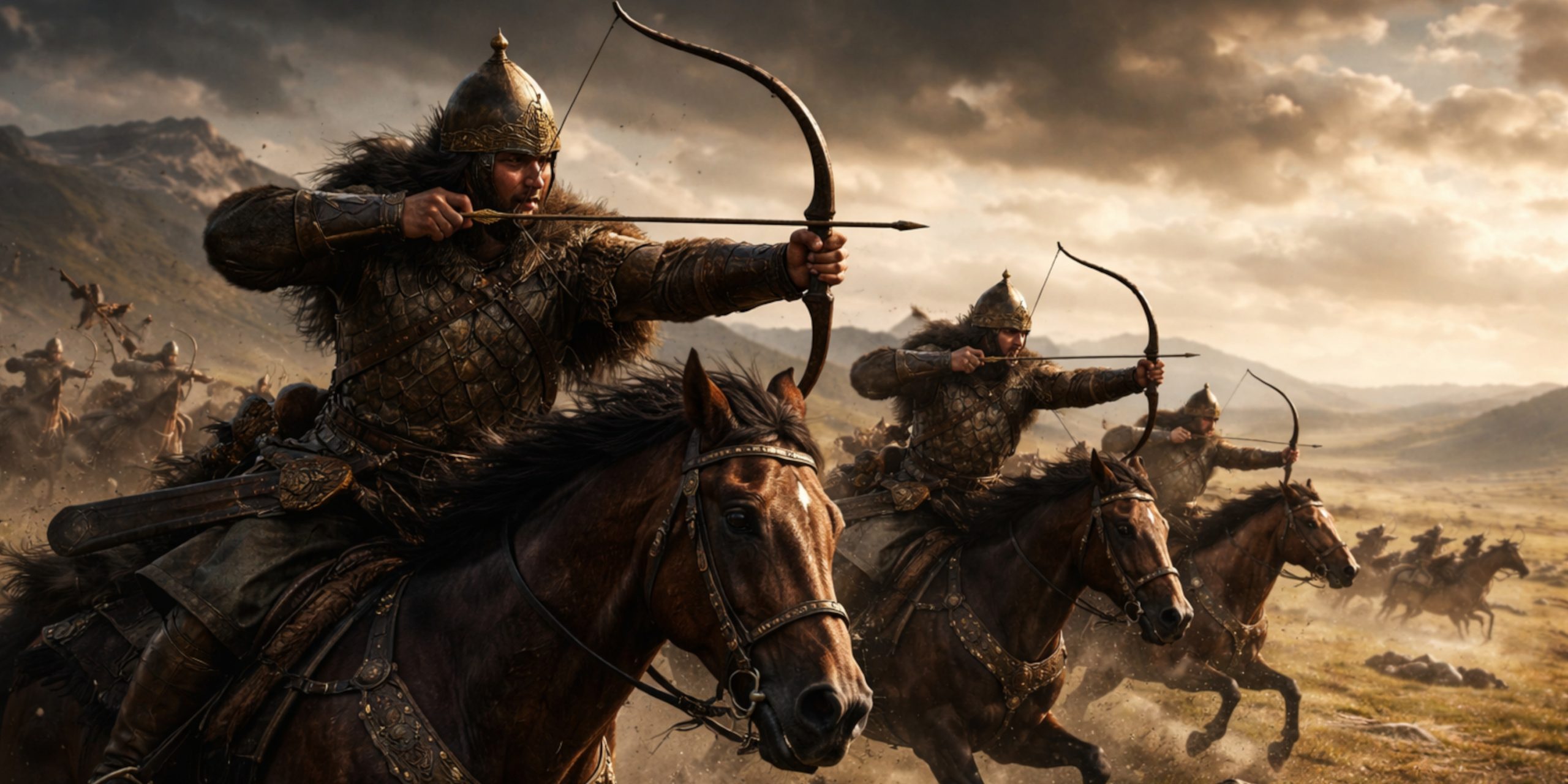
The Scythians were among the most formidable mounted warriors of the ancient world. Emerging across the vast grasslands north of the Black Sea and stretching deep into Central Asia, these nomadic peoples built a reputation that unsettled the great civilisations around them. Persians feared them. Greeks wrote about them with a mix of fascination and suspicion. Their enemies rarely caught them in a conventional battle and often regretted trying.
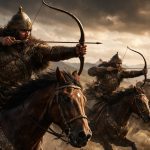
The Scythian horse archer became one of the most effective military archetypes in history. Light, mobile and relentlessly skilled with the bow, these riders turned the open steppe into a battlefield that favoured speed and precision over massed formations. To fight them was to chase shadows across the horizon.
As a historian I often find them strangely modern in their approach to warfare. They avoided unnecessary risk, relied on mobility and struck only when the moment favoured them. It is difficult not to admire the practicality.
Origins and Historical Background
The Scythians were an Iranian speaking nomadic culture that dominated the Eurasian steppe between roughly the ninth and third centuries BCE. Their territory stretched from the Pontic steppe north of the Black Sea to regions of modern Kazakhstan and southern Siberia.
Greek writers encountered them through trade and conflict along the northern shores of the Black Sea. These interactions produced the earliest detailed descriptions of Scythian life and warfare.
Scythian society revolved around mobility. Their wealth lay in horses, livestock and portable goods rather than cities or fixed settlements. This way of life shaped their military traditions. Every man was effectively a cavalryman, and archery from horseback was not simply a skill but a daily practice.
The environment played a decisive role. On the open steppe a slow army could be harassed endlessly by riders who knew the terrain. Invaders who attempted to pursue them often discovered they were chasing an army that had no intention of standing still.
The Horse Archer Tradition
Mounted archery was the heart of Scythian warfare. Riders were trained from childhood to control a horse with their legs while firing arrows at speed.
This created a military force with several advantages:
- Extreme mobility across open terrain
- The ability to strike and withdraw repeatedly
- Long range missile capability against slower infantry
- Flexibility in both pursuit and retreat
A typical engagement rarely resembled the structured clashes of Greek hoplites or Persian infantry. Instead the Scythians would circle an enemy formation, showering it with arrows before withdrawing beyond reach.
Their most famous tactic involved the deliberate feigned retreat. Riders would appear to flee in disorder, tempting an enemy to pursue. Once the formation broke apart, the Scythians would turn and unleash arrows while riding away. The effect could be devastating.
This manoeuvre later became known as the Parthian shot, though the technique was already well established among earlier steppe peoples like the Scythians.
Arms and Armour
Scythian warriors carried a distinctive combination of weapons suited to mounted combat.
Primary Weapons
| Weapon | Description |
|---|---|
| Composite bow | Short, powerful bow made from wood, horn and sinew. Designed for use on horseback and capable of impressive range. |
| Arrows | Often bronze or iron tipped. Stored in decorated cases called gorytoi. |
| Spears | Light spears used for thrusting during close combat. |
| Sagaris axe | A short battle axe associated with Scythian warriors and sometimes depicted in Greek art. |
Sword Types
Scythian swords were relatively short and practical weapons designed for close fighting.
| Sword Type | Characteristics |
|---|---|
| Akinakes | Short thrusting sword or dagger, usually 40 to 60 cm long. Straight blade and simple hilt. Widely used by Scythians and Persians. |
| Steppe short sword | Slightly longer cavalry blade suited to slashing from horseback. Often carried on the belt. |
The akinakes deserves particular mention. It was both a weapon and a symbol of status. Elite Scythian warriors were sometimes buried with richly decorated examples featuring gold fittings.
Armour and Protection
Scythian armour varied depending on wealth and rank.
- Scale armour made from bronze or iron plates
- Leather armour reinforced with metal scales
- Conical or pointed helmets
- Small shields, often made of wicker or leather
Many horse archers relied primarily on speed rather than heavy protection. A lightly equipped rider could move faster and endure longer campaigns across the steppe.
Horses and Equipment
The Scythians were exceptional horse breeders. Archaeological finds show their horses were smaller than many modern breeds but extremely hardy.
A typical warrior maintained several horses, switching mounts during long campaigns to maintain speed.
Key equipment included:
- High pommel saddles that improved stability
- Decorative bridles and harness fittings
- Quivers attached to the belt or saddle
The ability to fire accurately while riding at full speed was not simply impressive. It was essential.
Warfare and Campaigns
Scythian warfare relied heavily on manoeuvre and patience.
Typical battlefield methods included:
- Harassing attacks with arrows
- Encirclement of slower enemy formations
- Feigned retreats to break pursuit lines
- Rapid raids against supply routes
One of the most famous encounters occurred during the Persian invasion led by King Darius I around 513 BCE. The Persians marched deep into the steppe expecting a decisive battle.
The Scythians simply refused to provide one.
Instead they retreated across the plains, destroying supplies and attacking isolated units. According to Greek accounts the Persians were eventually forced to withdraw after exhausting their resources.
It was a masterclass in strategic patience.
Archaeology
Much of what we know about the Scythians comes from their burial mounds, known as kurgans.
These large earth barrows dot the steppes of Ukraine, southern Russia and Kazakhstan. Inside them archaeologists have uncovered extraordinary artefacts.
Notable discoveries include:
- Gold jewellery and ceremonial weapons
- Composite bows preserved in frozen tombs
- Horse skeletons buried alongside warriors
- Decorated armour and clothing
Some of the richest finds come from the frozen kurgans of the Altai Mountains. Permafrost preserved organic materials that rarely survive elsewhere, including textiles and leather.
These tombs reveal a sophisticated artistic culture known as the Scythian animal style. Gold plaques often depict dynamic scenes of animals locked in combat.
The artistry alone suggests a society far more complex than the stereotypical image of wandering raiders.
What Ancient Writers Said
Several classical authors left accounts of the Scythians. Their descriptions range from admiration to bewilderment.
The Greek historian Herodotus wrote:
“None who attacks them can escape, and none can catch them if they desire not to be found.”
Another passage reflects the frustration of armies attempting to fight them.
“They have neither cities nor forts. They carry their homes with them and are all mounted archers.”
Later writers echoed this sentiment. Strabo described them as masters of mounted warfare, capable of travelling immense distances across the steppe.
These comments underline a consistent theme. The Scythians were difficult to pin down and even harder to defeat.
Culture and Identity
The Scythians were not a single unified state but a collection of tribes sharing similar traditions.
Their culture placed strong emphasis on:
- Horsemanship
- Warrior prestige
- Elaborate burial customs
- Animal themed art
Greek sources also describe female warriors among the Scythians. This likely contributed to the Greek myth of the Amazons, though the reality was probably more nuanced.
Excavations of Scythian graves have indeed revealed women buried with weapons and riding equipment.
Which suggests the stories were not entirely fanciful.
Legacy of the Steppe Horse Archer
The Scythian model of warfare did not disappear with their decline.
Successive steppe cultures refined the same approach:
- Sarmatians
- Huns
- Turks
- Mongols
Each adopted variations of the mounted archer tradition that proved devastating against sedentary empires.
In many ways the Scythians represent the earliest fully developed example of this military system.
Their tactics influenced warfare across Eurasia for more than a thousand years.
Not bad for a people who rarely bothered to build cities.
Seven Swords Takeaway
The Scythian horse archer remains one of the most elegant solutions to warfare ever devised. It relied on mobility, discipline and an intimate understanding of terrain.
Against the rigid formations of settled civilisations, these riders turned the open steppe into a weapon. Armies that marched confidently into their territory often discovered they had entered a battlefield designed by their enemy.
From a historian’s perspective they remind us that military success does not always belong to the largest army or the most impressive fortress.
Sometimes it belongs to the rider who refuses to stand still.