Writing about Pierre Le Grand feels like working with a half-burnt map. The outlines are there, the sea is familiar, but the details fade when you try to hold them still. He appears briefly in the records of seventeenth-century piracy, performs an act of astonishing audacity, then vanishes. That vanishing is not a failure of history. It is the point.
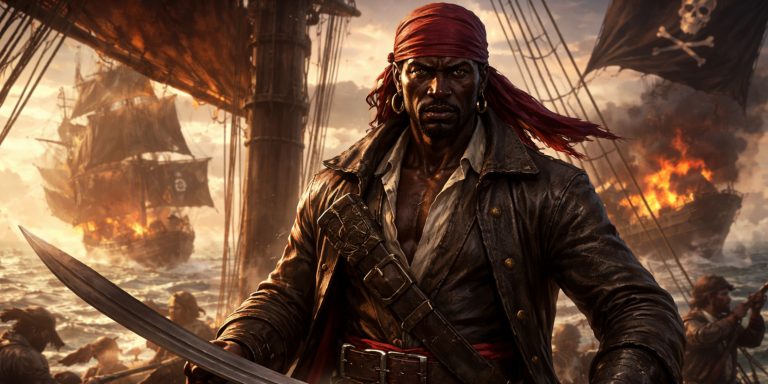
Pierre Le Grand was a French privateer turned pirate, active around the 1630s. He did not build a career of raids across decades. Instead, he carved his name into maritime folklore with a single exploit so unlikely that it reads like exaggeration even when stripped of romance.
Historical setting
The early seventeenth century was a dangerous time to be rich at sea. Spain’s imperial wealth moved along predictable routes, guarded by reputation more than by constant force. Galleons were large, well-armed, and confident. That confidence could harden into carelessness.
France, meanwhile, was officially hostile to Spain often enough that French sailors blurred the line between privateering and piracy with ease. A man like Pierre Le Grand could move between legality and outlawry depending on who was asking and how recently he had shared the profits.
The capture that made his name
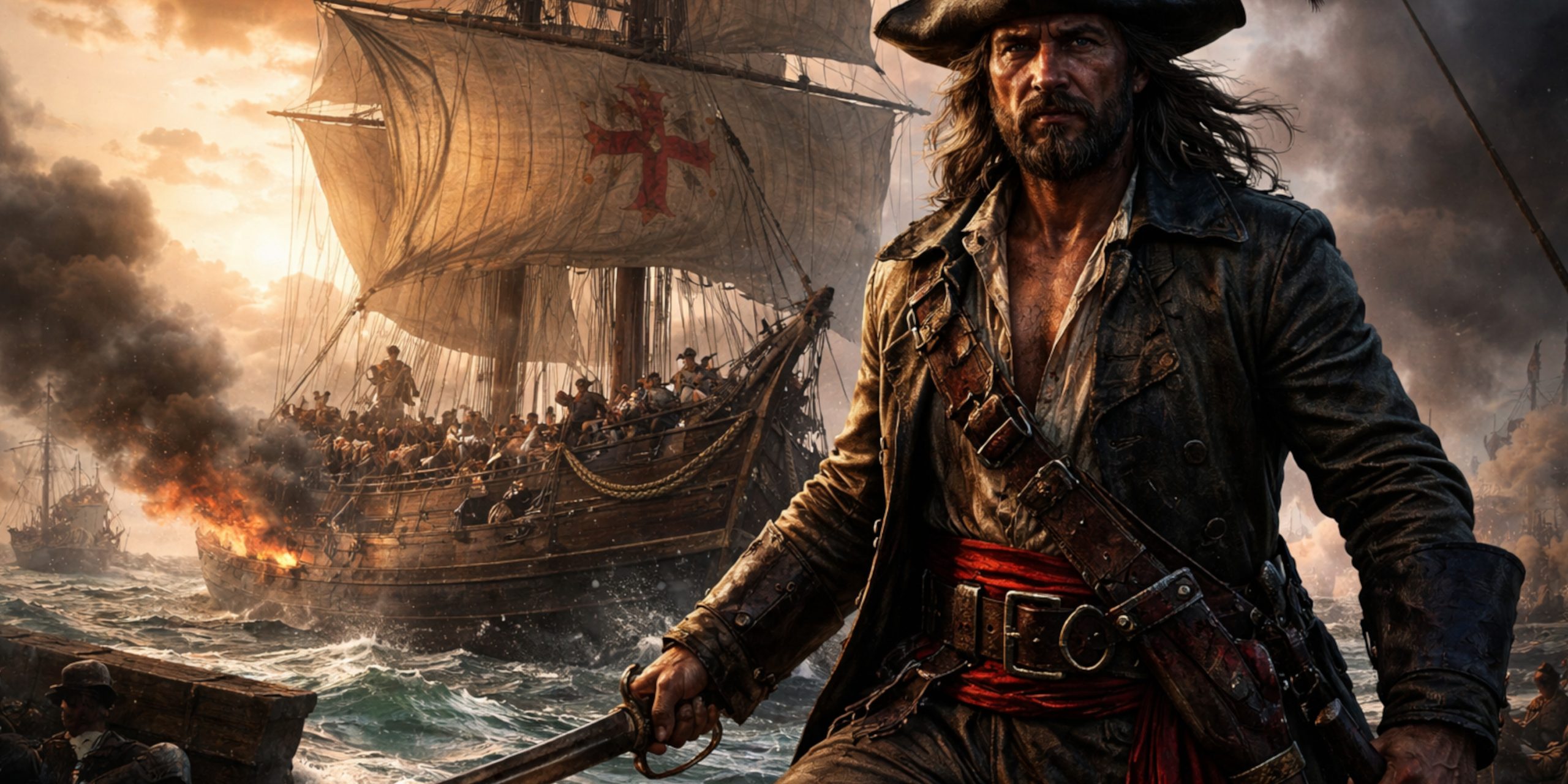
According to contemporary accounts, Pierre Le Grand commanded a small vessel with a modest crew, numbers vary wildly but never in his favour. Near the Canary Islands, he encountered a Spanish galleon returning from the Americas, heavy with silver, jewels, and trade goods.
Rather than flee or shadow the ship, he attacked directly. The Spanish captain was reportedly so stunned by the audacity that resistance collapsed quickly. The galleon was taken with minimal bloodshed, a detail worth pausing over. Piracy is usually loud, violent, and chaotic. This was brisk and almost polite, which somehow makes it more unsettling.
If true, it was one of the most disproportionate victories in pirate history. A dinghy seizing a fortress, then politely asking for the keys.
Weapons and fighting methods
Pierre Le Grand’s armament was unremarkable, which is precisely why it matters.
His crew likely carried:
- Matchlock muskets and pistols, slow to reload but terrifying at close range
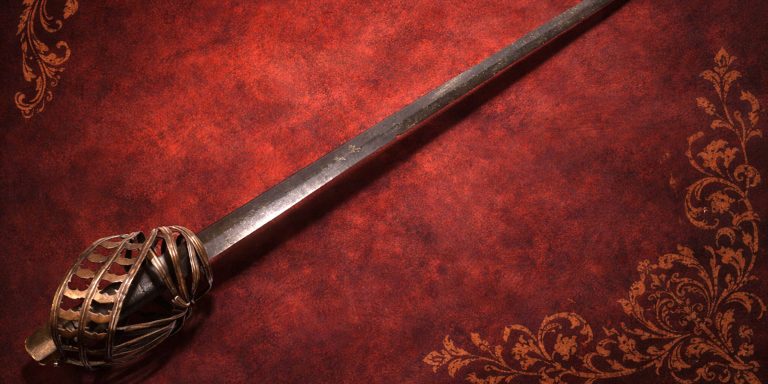
- Cutlasses and hangers suited to boarding actions
- Boarding pikes and axes for intimidation as much as combat
The real weapon was surprise. Boarding actions relied less on technical skill and more on psychological collapse. A crew that believed resistance was pointless often made it so.
Ships and seamanship
Le Grand’s ship was small, fast, and disposable. It had to be. Large ships required supply chains, ports, and protection. A pirate betting everything on speed and nerve could operate where navies could not be bothered.
Spanish galleons were floating treasuries but they were also cumbersome. Once their decks were compromised, their size became a liability. Maritime history is full of moments where bulk lost to agility. This was one of them.
Bounty and treasure
The captured cargo was immense by any standard of the period. Silver dominated, with additional goods likely including cochineal dye, gold, pearls, and colonial produce. The precise division of the treasure is unknown, which historians often translate as “someone lied very effectively”.
What matters is what Pierre Le Grand did next. He did not continue raiding. He did not seek notoriety. He disappeared, presumably wealthy enough to do so. As a career plan, it is brutally efficient.
Battles that never came
Unlike figures such as Henry Morgan or François l’Olonnais, Pierre Le Grand did not fight a series of escalating engagements. There were no sieges, no burning ports, no public hangings narrowly avoided.
His lack of further battles suggests a man who understood odds. He won once, improbably, and declined to test fate again. As a historian, I find this restraint oddly refreshing. Ambition ruins more pirates than cannons ever did.
Fate and disappearance
After the galleon capture, Pierre Le Grand vanishes from the record. He may have retired quietly in France or the Caribbean. He may have changed his name. He may have died at sea on an entirely unrelated voyage.
There are no confirmed trials, no executions, no triumphant old age portraits. For a pirate, this absence is almost suspiciously tidy.
Contemporary quotes and later commentary
Direct quotes from Pierre Le Grand do not survive. Instead, we rely on later chroniclers, especially Alexandre Exquemelin, who recorded pirate exploits with a mixture of moral warning and thinly veiled admiration.
One account summarises Le Grand as a man who “won fortune by daring beyond reason.” It is meant as criticism. It reads like praise.
Another notes the Spanish captain’s astonishment at being attacked by so small a force, a moment that likely decided the battle before a blade was drawn.
A historian’s reflection
Pierre Le Grand troubles neat narratives. He was not a reformer, a revolutionary, or a monster. He did not burn cities or challenge empires over years. He struck once, decisively, then stepped out of the light.
There is a temptation to inflate him, to turn one act into a legend padded with invented campaigns. I prefer him smaller and sharper. A reminder that history sometimes turns on a single, unreasonable decision, made at exactly the wrong moment for everyone else.
Dry humour aside, there is something almost ethical in his restraint. Take the money. Leave the sea. Know when the story is finished.
Watch the documentarty: