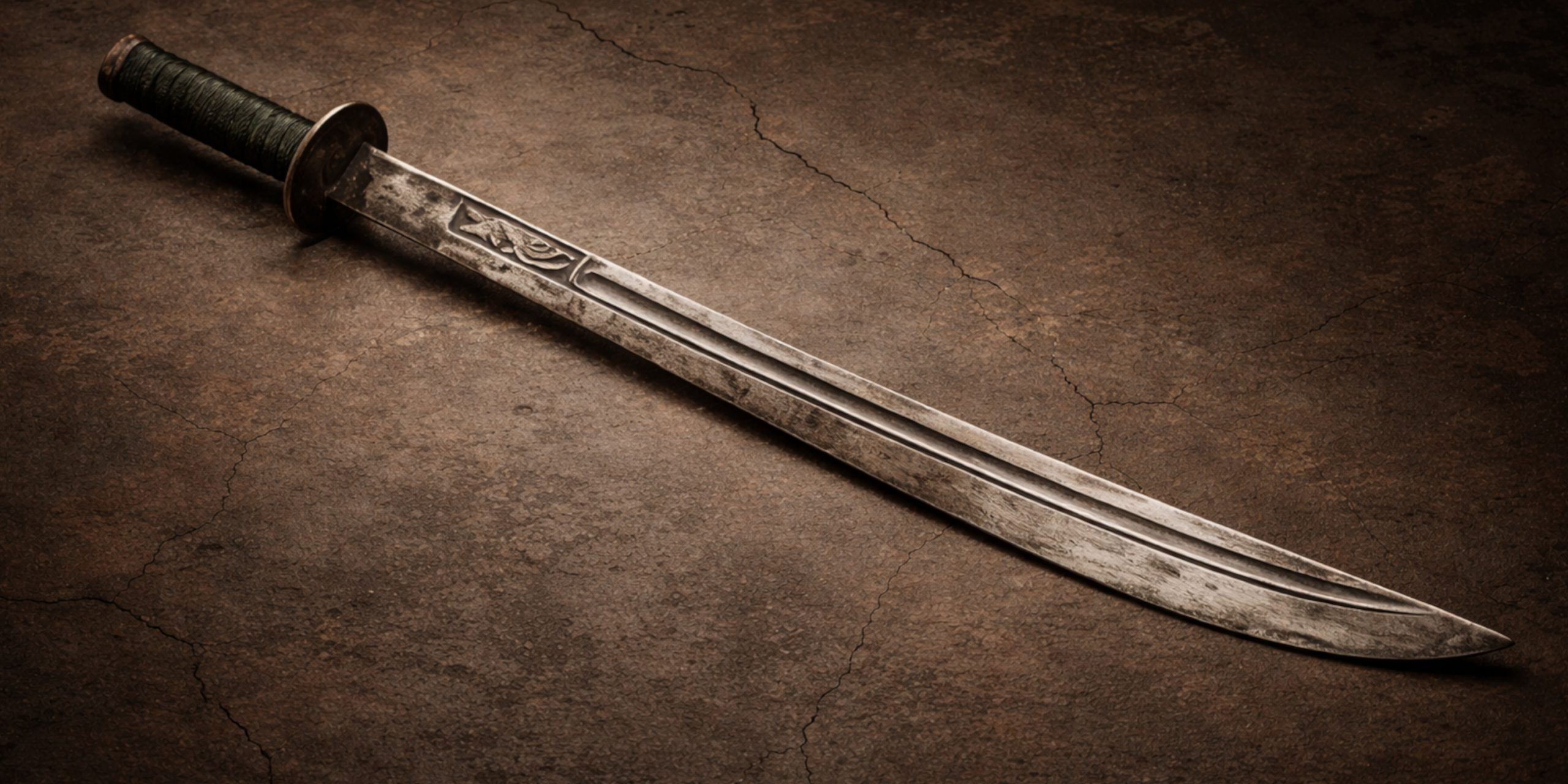
The Mongol sabre, sometimes broadly referred to as a curved steppe sabre, was a weapon of remarkable versatility and lethality that emerged from the needs of mobile warfare. It became a defining arm of the Mongol Empire during its explosive expansion in the 13th and 14th centuries, serving mounted archers and heavy cavalry alike. Forged to match the tactics of speed, skirmish, and shock, the sabre is an emblem of steppe warfare at its peak.
The Mongol sabre is typically associated with the horse archers of Genghis Khan’s empire. Lightweight, single-edged, and curved, it was an ideal secondary weapon for close combat once arrows were spent. It influenced sabre and curved sword designs across Asia, the Middle East, and Eastern Europe.
Specifications
| Feature | Description |
|---|---|
| Blade Type | Single-edged, curved |
| Blade Length | Typically 70–85 cm |
| Full Length | Around 90–100 cm including hilt |
| Blade Curve | Moderate curvature to aid slicing |
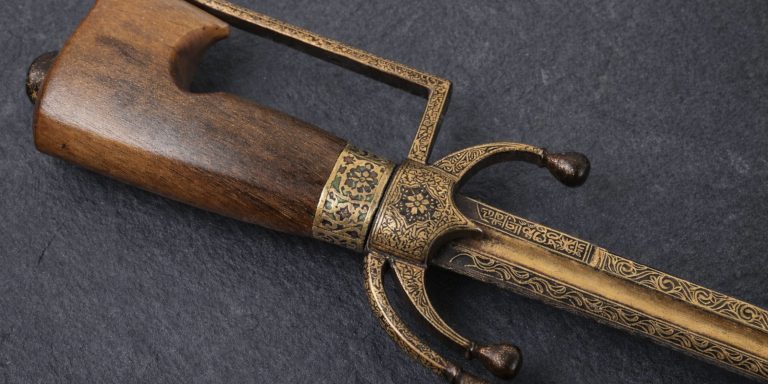
| Crossguard | Usually small, straight or slightly curved |
| Hilt | Often wood or bone, occasionally wrapped |
| Pommel | Rounded or flattened, often with a disc |
| Weight | 900 g to 1.2 kg |
| Primary Material | High-carbon steel (occasionally pattern-welded) |
History and Evolution
The Mongol sabre developed from earlier steppe blades used by Turkic and proto Mongolic peoples. By the time of the rise of the Mongol Empire in the early thirteenth century, the weapon had reached a highly practical form.
Early Mongol blades were influenced by Chinese dao traditions and Central Asian sabres, but they evolved to prioritise cutting power during fast cavalry engagements. As Mongol armies pushed westward, these sabres influenced local weapon design in Persia, the Islamic world, and Eastern Europe.
By the fourteenth century, Mongol style sabres had helped shape later weapons such as the Turkic kilij and the eastern European sabre tradition.
- Origins in the Steppe: The sabre developed out of earlier Scythian and Turkic curved blades, adapted for rapid strikes from horseback.
- 13th Century Refinement: Under the Mongol Empire, the sabre took a more standardised form with moderate curvature and a focus on slashing power.
- Influence on Neighbours: The Mongol sabre spread westward and eastward, influencing Persian shamshirs, Chinese dao, and the later European sabres.
- Post-Empire Usage: Even after the decline of the Mongol khanates, their sabre design endured in Tatar, Turkic, and Cossack traditions.
Advantages and Disadvantages
Advantages
- Excellent cutting power from horseback
- Curved blade optimised for draw cuts and slashing attacks
- Lightweight enough for long campaigns
- Simple construction made field repairs easier
Disadvantages
- Limited thrusting capability compared to straight swords
- Minimal hand protection
- Less effective in tight infantry formations
- Dependent on mounted tactics for full effectiveness
Comparison with Similar Weapons
| Feature | Mongol Sabre | Chinese Dao | Persian Shamshir | European Arming Sword |
|---|---|---|---|---|
| Blade Type | Curved | Curved | Deeply curved | Straight |
| Optimal Use | Cavalry slashing | Infantry and cavalry | Cavalry slashing | Infantry thrusting and cutting |
| Thrusting Ability | Moderate | Moderate | Poor | Strong |
| Weight | Light | Medium | Light | Heavier |
| Blade Flexibility | Semi-rigid | Semi-rigid | Often very flexible | Rigid |
Legacy
The Mongol sabre’s influence is difficult to overstate. As Mongol armies crossed continents, their weapons went with them. The sabre became the dominant cavalry sword across much of Eurasia, replacing straight blades in many cultures.
Later military sabres used by Ottoman, Polish, Hungarian, and Russian forces owe a clear debt to Mongol and Turkic designs. Even modern ceremonial sabres trace part of their lineage back to this steppe weapon.
- The Mongol sabre directly influenced the design of the Turkish kilij and Mamluk swords.
- It inspired Chinese Ming dynasty sabres, particularly the yanmaodao.
- Its principles shaped the Russian and Polish cavalry sabres of the 16th to 18th centuries.
- Many sabres used by steppe peoples until the 19th century retained core Mongol characteristics.
Where to See
- State Hermitage Museum (Russia): Features sabres attributed to Mongol or Mongol-influenced craftsmen.
- National Museum of Mongolia (Ulaanbaatar): Houses reconstructions and artefacts from the Mongol Empire period.
- British Museum (London): Occasionally exhibits steppe sabres in broader steppe warfare collections.
- Metropolitan Museum of Art (New York): Includes Mongol-related arms in Islamic and East Asian collections.
Collector’s Guide
Collecting Tips:
- Authentic Mongol sabres are rare. Many are attributed based on typology rather than definitive provenance.
- Look for curvature typical of the early sabre form, rather than later deeper curves of Persian or Turkish blades.
- Bone or horn hilt pieces with minimal crossguards are often more consistent with Mongol manufacture.
Auction Prices (Recent Examples):
| Auction House | Description | Sale Price (GBP) |
|---|---|---|
| Bonhams | 13th-century steppe sabre fragment | £4,500 |
| Hermann Historica | 14th-century Turkic-Mongol sabre | £7,200 |
| Sotheby’s | Composite sabre (Mongol-Timurid) | £12,000 |
| Czerny’s | Steppe sabre with bone hilt | £3,800 |
Important Notes:
- Provenance and condition affect value significantly.
- Many authentic sabres are part of state collections and are unlikely to be available on the market.
- Be cautious of reproductions or mislabeled sabres from later periods.
Watch the documentary: