If you spend long enough in the company of medieval texts, you start to feel as if Lancelot is less a man and more a mirror. He reflects whatever the age wants from its heroes. Sometimes he is a flawless knight who can out-ride, out-fight and out-love anyone who crosses his path. Sometimes he is the warning pinned to the great tapestry of Arthurian Britain, showing how even the finest knight can crack under the weight of desire and loyalty. I have never fully made peace with him, which is perhaps the most Arthurian feeling of all.
Origins and Literary Birth
Lancelot appears relatively late in the Arthurian tradition. He rises to prominence through the French romances of the twelfth century, most notably in the works of Chrétien de Troyes. Chrétien’s Lancelot, the Knight of the Cart is not subtle about its intentions. It sets out to craft a knight who embodies courtly love in its most intense shape. The version we inherit from this period is one who serves Queen Guinevere with absolute devotion, sometimes to the point of absurdity, sometimes to the point of tragedy.
Later cycles expand and complicate him. The Vulgate Cycle folds him deeply into the moral fabric of Arthur’s court while the Post-Vulgate tries to balance two competing truths. One truth is that Lancelot is the greatest knight alive. The other is that he is the slow poison that brings the Round Table to its knees.
As I read across these texts, I find a man shaped not by history but by narrative appetite. He evolves because authors needed him to answer very different questions about loyalty, love and downfall.
Character, Virtues and Failings
Lancelot is introduced as the knight who wins every trial. He is relentless in battle, unstoppable in tournaments and impossovely courteous when a lady requires assistance. None of this is accidental. He is written as the pinnacle of knightly behaviour, the walking definition of chivalry.
Yet his central flaw is baked into the very thing that makes him fascinating. His affair with Guinevere is not treated as a simple betrayal. Most Arthurian writers handle it with a mixture of admiration and unease, as if unsure whether to scold him or sympathise. The love is mutual, the loyalty complicated, the consequences ruinous. As a historian who has spent more time than is healthy reading contradictions in medieval manuscripts, I find this tension entirely believable. No court, real or imagined, survives on clean morals.
In the later tradition, particularly the English reworking by Malory, Lancelot becomes more introspective. He knows he has failed Arthur, yet he cannot abandon Guinevere. This layered guilt gives him a depth that few medieval heroes receive.
Lancelot and the Grail Tradition
One of the great literary surprises is how the Grail quest reshapes Lancelot. Early stories present him as the unstoppable champion of Arthur’s world, but the Grail texts let his flaws interrupt that momentum. His love for Guinevere creates a spiritual barrier. He approaches the Grail but cannot attain it.
The role of ultimate Grail hero passes to his son, Galahad, whose purity is written so absolutely that it clears the board. Some readers dislike this turn, but I see the beauty in it. Lancelot’s story does not need the Grail. His value lies in being the flawed knight striving for something just out of reach.
Arms, Armour and Martial Reputation
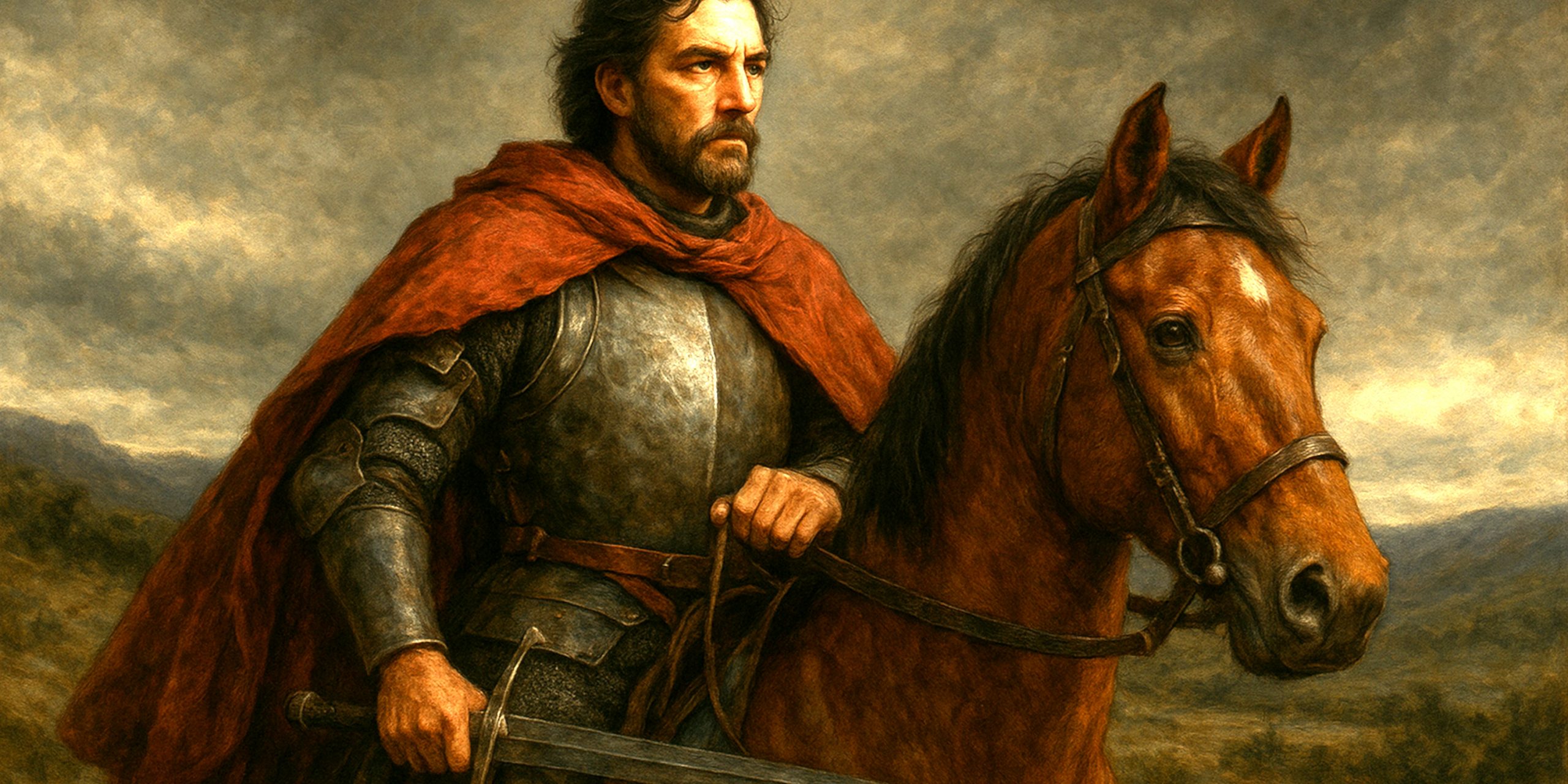
While he is a literary figure rather than a historical one, there is a clear pattern in how authors describe him. Lancelot carries the standard war gear of a high medieval knight. The texts place emphasis not on exotic weaponry but on his unparalleled skill.
He uses:
- A knightly arming sword suited for both cut and thrust.
- A kite shield in the earlier French tradition, later shifting toward a heater shield as artistic fashions change.
- A couched lance that he handles with terrifying force in tournaments.
- Full mail hauberk and chausses in the earlier romances, developing into plate-reinforced armour in later English and continental illuminations.
Artists often depict him in the most fashionable armour of their own century. This makes him a surprisingly useful timeline of medieval aesthetic change.
Lancelot in Modern Imagination
The modern world keeps reinventing him. Some adaptations soften him, turning him into a conflicted romantic hero. Others sharpen his edges, stressing his betrayal of Arthur and the political ruin that follows. I have yet to see an adaptation that captures the quiet strangeness of the early French texts, where Lancelot’s devotion to Guinevere borders on the mystical.
He remains popular because he represents a truth we still recognise. He is the person who can win every battle but still lose the thing he values most.
Manuscripts, Variants and How Lancelot Changes Across Europe
One of the pleasures of tracing Lancelot through medieval Europe is watching how each region reshapes him to fit its tastes. The French material establishes him as the emotional core of Arthurian romance. The German tradition elevates his Knighthood even further, sanding back some of his excesses. The English tradition, especially through Malory, turns him into a tragic pillar rubbed smooth by guilt and loyalty.
French manuscripts often highlight the courtly love element, painting him as a knight pulled irresistibly toward Guinevere. He is driven by love that feels almost ritualistic. Meanwhile, the German texts are more cautious. They value knightly honour above romantic narrative, so the emotional fire burns lower, and his martial prowess takes centre stage.
By the time we reach Malory in fifteenth century England, the political climate has shifted. England is grappling with the failures of its own nobility during the Wars of the Roses. Malory’s Lancelot reflects that uncertainty. He is still the greatest knight alive, yet his choices fracture a kingdom already on its knees. You can feel Malory wrestling with admiration and disappointment in almost every chapter.
As a historian, I find this evolution more honest than any single portrayal. Lancelot is a barometer for medieval anxieties. As those anxieties change, so does he.
The Historical Shadows Behind the Legend
While Lancelot is not a historical figure, several features of his character echo real traditions of medieval knighthood. The chivalric codes that appear in his stories often mirror the expectations placed on real thirteenth century knights. Loyalty to a lord, devotion to a lady and unwavering martial skill all reflect aristocratic ideals of the time.
Some scholars argue that Lancelot draws inspiration from Breton or Welsh hero cycles. Others point to continental noble households that valued stories of knightly lovers navigating perilous loyalties. There is no definitive prototype, but there is a landscape of influences that shaped him.
If I had to choose one historical thread that stands out, it is the tension between personal desire and political duty. That conflict appears often in medieval chronicles. For instance, the romances of southern France and northern Spain lean heavily into courtly passion, possibly reflecting the culture of troubadours who thrived under noble patronage. Lancelot fits comfortably into that literary climate.
Lancelot and the Fall of Camelot
One of the most enduring questions is whether Lancelot is responsible for the collapse of Arthur’s realm. Medieval authors never give a simple answer, which makes the debate richer. Some versions insist that Camelot’s downfall is inevitable because the quest for the Grail fractures the unity of the Round Table. Others lay the blame on Mordred’s ambition. Yet many texts treat Lancelot’s affair with Guinevere as the first fissure in the stone.
When I read these accounts side by side, I am struck by how careful the authors are. They acknowledge the affair, but they also highlight Lancelot’s consistent defence of Arthur’s kingdom. He rescues Guinevere from execution and simultaneously destroys the fragile peace Arthur has tried to maintain. His actions are protective and destructive at once, and the writers seem to understand the tragedy of that contradiction.
Modern retellings often pick a side, but medieval literature rarely does. It simply presents the mess, and expects the reader to sit with it.
Lancelot’s Moral Landscape
The moral tone of his stories shifts depending on the text. In Chrétien’s works he is heroic through and through. His love is noble, his adventures glamorous, his errors forgivable. By contrast, the prose cycles complicate him by giving his love life spiritual consequences.
The Grail material treats his desire as a barrier to divine grace. It reframes the question of heroism. Skill in battle proves nothing if the soul is wandering. This is where Lancelot becomes most interesting. He continues fighting for Arthur, for Guinevere, for honour, even though he knows he has blocked his own path to redemption. The awareness of that failure makes him gentler, more thoughtful and occasionally more desperate.
As a modern reader, I find this phase the most compelling. It tells us more about medieval spirituality than many sermons do.
The Afterlife of the Legend
Lancelot’s influence can be seen in later knights across literature. His combination of nobility and personal weakness becomes a template for the flawed hero. You can trace echoes of him in Spanish chivalric romances, in Renaissance poetry and even in nineteenth century Victorian medievalism.
The Victorians, for all their strict public morality, adored Arthurian themes. Tennyson’s Idylls of the King paints Lancelot in sombre colours. He becomes the man who knows he has failed the highest ideal. This reading of Lancelot influenced modern adaptations far more than the earlier French romances. Many readers encounter Lancelot first as a tragic adulterer rather than a radiant champion.
Still, something about him endures. He has the rare literary quality of feeling both larger than life and painfully human.
Where Lancelot Stands in Scholarship Today
Modern scholarship treats Lancelot as a study in narrative flexibility. Academics analyse how different cultures reshape his identity, how gender expectations influence his portrayal and how the politics of loyalty inform his decisions. Some scholars explore how his relationship with Guinevere reflects changing ideas about marriage, sovereignty and feminine agency.
Others look at how Lancelot interacts with class. He is of noble birth, yet many of his most important episodes involve disguises or moments where his identity is hidden. This device allows authors to explore what knightly worth looks like without the trappings of heritage.
From a historian’s perspective, this makes Lancelot unusually versatile. He functions as a window into medieval storytelling habits. He tells us what the medieval world admired, feared and moralised about.
Legacy and Lasting Influence
Lancelot has shaped how the West imagines chivalry. He embodies excellence and imperfection in the same breath. The Round Table collapses because its strongest pillar is cracked at the centre. As literary metaphors go, that one has survived centuries for good reason.
When I look at his story as a historian, I see the tension between ideal and reality that medieval writers understood far better than we often give them credit for. Lancelot is not a reminder that heroes fall, but a reminder that they are human long before they fall.