Hofund is not a subtle weapon. It does not whisper menace or hint at danger. It announces itself, loudly, every time it appears on screen. In modern popular culture, Hofund is best known as the sword wielded by Heimdall, the ever watchful guardian of the Bifrost. Its job is simple enough. Guard the gateway between worlds, open it when required, and make very sure nobody sneaks through uninvited.
As a historian, I am duty bound to point out that this is not a medieval artefact with a neat museum label. Hofund belongs to the world of myth and adaptation, where symbolism matters more than metallurgy. Still, it is a fascinating example of how modern storytellers borrow heavily from Norse ideas and reshape them for a cinematic audience.
Origins and Meaning
The name Hofund comes from Old Norse roots, often translated as “head” or “skull”. This is not accidental. The implication is authority, judgement, and finality. Hofund is not a knight’s sidearm or a hero’s duelling blade. It is a key, a sentence, and a warning all at once.
In Marvel’s interpretation, Hofund is inseparable from Heimdall’s role. He does not simply fight with it. He governs with it. The sword embodies vigilance and control, rather than personal glory. No flashy heroics, just eternal responsibility. Anyone hoping for a carefree life should avoid being handed this weapon.
Appearance and Design
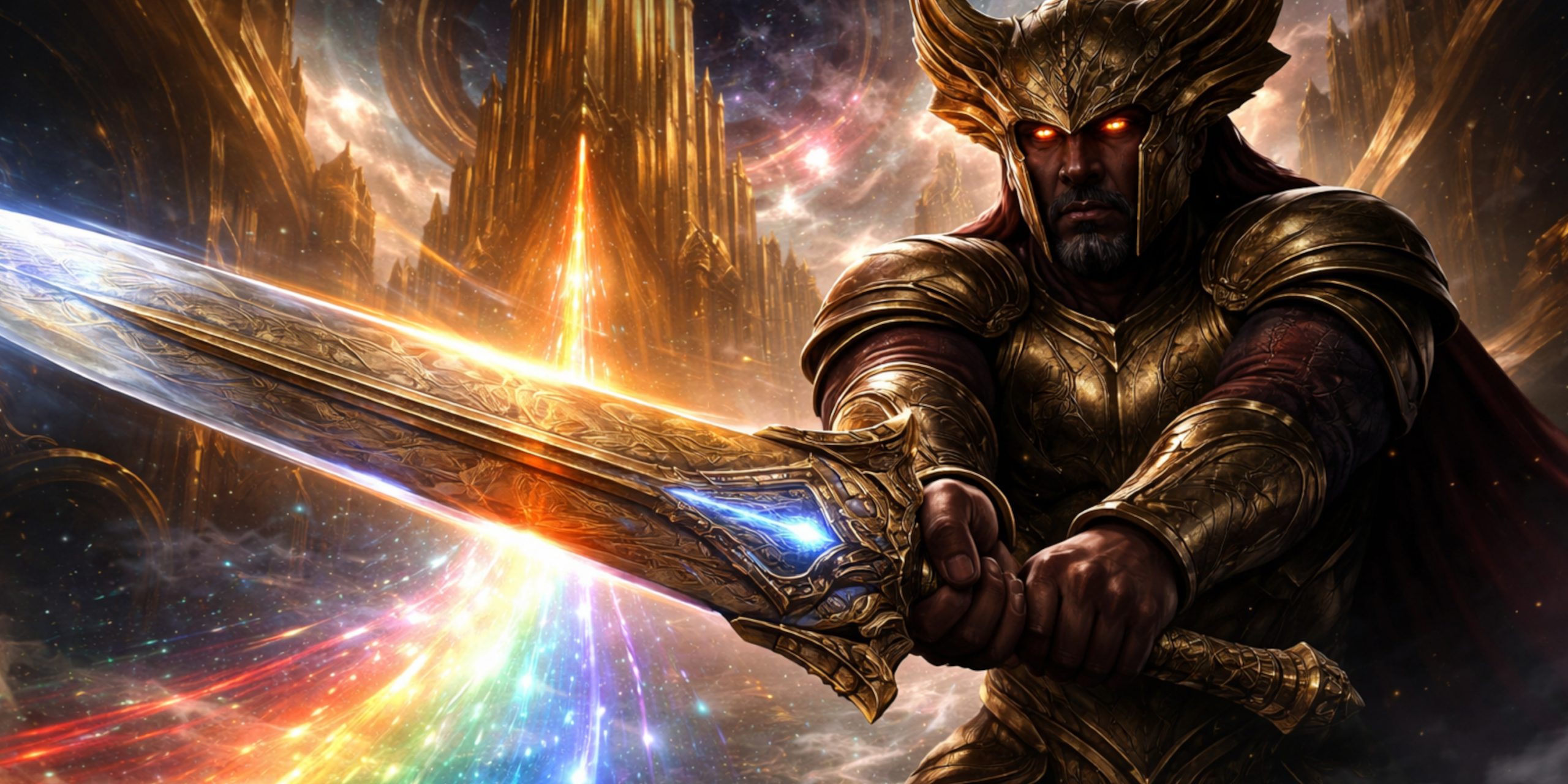
Visually, Hofund is closer to a greatsword than a Viking age blade. That choice is telling. Historical Norse swords were typically one handed, practical, and elegant. Hofund, by contrast, is oversized, ceremonial, and deliberately imposing.
Key design features include a long straight blade, a heavy and angular crossguard, and a grip that suggests two handed use. The overall effect is architectural rather than martial. It looks like something that belongs in a doorway, which is fitting since it effectively is one.
From a practical perspective, this sword would be exhausting to carry on patrol. Fortunately, Heimdall does not seem to need tea breaks.
Function and Powers
Hofund’s most important function is its ability to open and control the Bifrost. This places it firmly in the category of mythic weapons that double as tools of cosmic infrastructure. It is less “sharp bit of metal” and more “multiversal access system”.
In combat, Hofund is portrayed as devastating. It channels immense energy, delivers crushing blows, and reinforces Heimdall’s status as someone you really should not surprise from behind. That said, its true power lies in restraint. Heimdall fights rarely, but when he does, the implication is that things have already gone badly wrong.
Myth, History, and Creative Licence
There is no historical Norse sword called Hofund that we can point to in the archaeological record. This is a modern synthesis, drawing on Norse myth, saga aesthetics, and the needs of visual storytelling.
What it does capture well is the Norse emphasis on guardianship and duty. Heimdall in the myths is a watchman, destined to sound the horn at Ragnarök. Giving him a sword that controls the bridge between worlds is a clever visual shorthand. As metaphors go, it is refreshingly blunt.
Cultural Legacy
Hofund has become one of the more recognisable fantasy swords of the last decade, despite appearing far less often than flashier blades. Its appeal lies in what it represents rather than how often it is swung.
For viewers, it reinforces the idea that some weapons are not meant for adventuring. They are meant for standing still, watching the horizon, and making hard decisions. Not glamorous, but historically speaking, very believable.
Where You Have Seen It
Hofund appears prominently in Marvel’s Thor films and related media, always in Heimdall’s hands and usually at moments of high tension. Replicas and concept art have since become popular among collectors of fantasy weapons, although one hopes nobody is using them to guard an actual bridge.
The Seven Swords Takeaway
Hofund works because it understands restraint. It is not about personal heroism or battlefield bravado. It is about duty, boundaries, and the quiet power of saying no. As someone who has spent years explaining that most historical swords were tools rather than symbols, I find it oddly comforting that modern fiction occasionally agrees with me.
Just do not ask me to lift it.