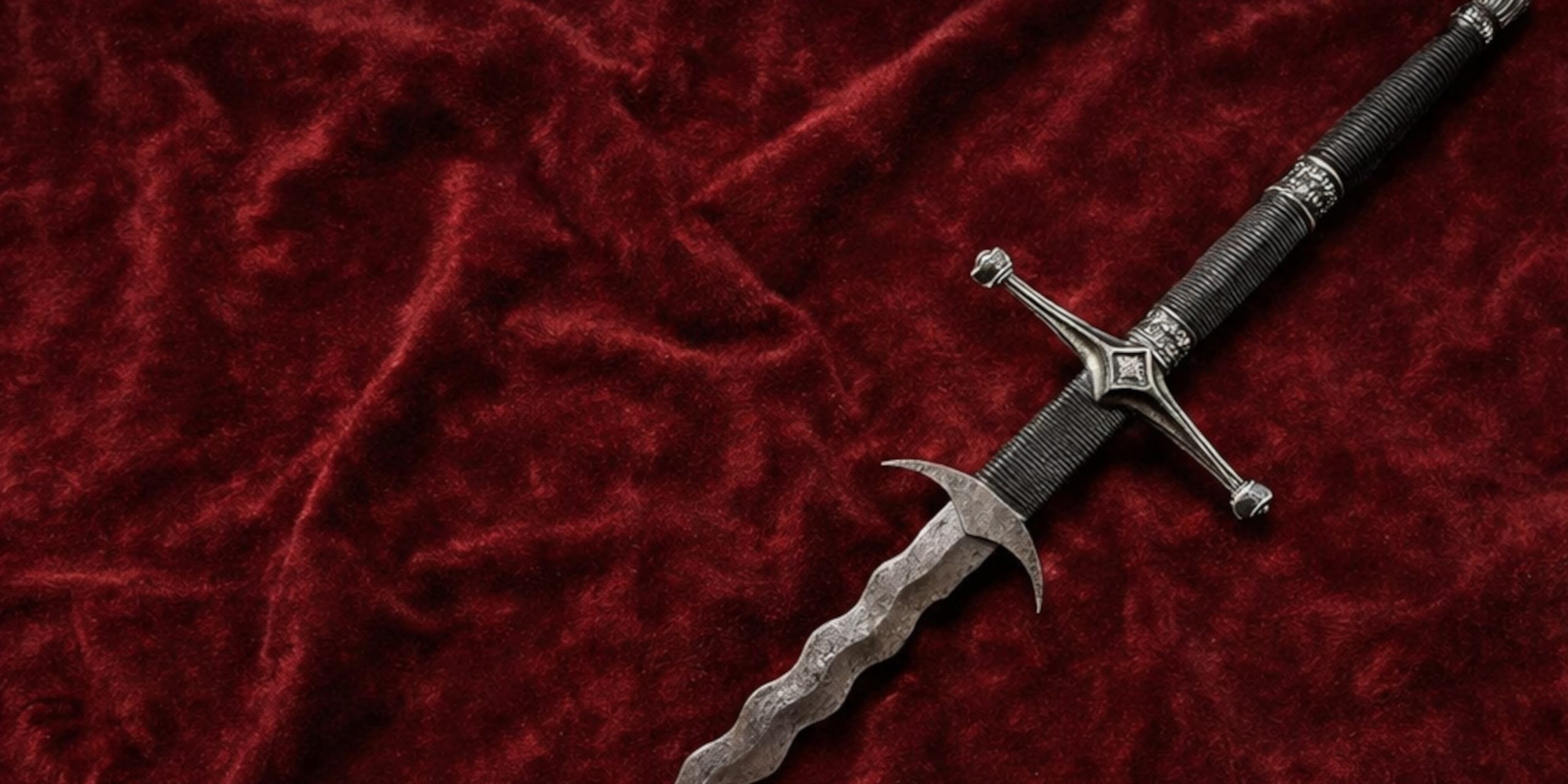
The flamberge is one of the most visually striking swords of the Renaissance. Its blade undulates in a deliberate wave pattern, immediately separating it from the straight lines of most European longswords. The name comes from the French word for flame, and the comparison is apt. The blade looks alive.
Yet the flamberge was not simply an artistic flourish. It was a battlefield weapon associated above all with the formidable German Landsknechts of the sixteenth century. In the press of pike formations, where steel met wood and men fought at arm’s length, the flamberge had a clear tactical role.
This article examines the weapon in detail, from technical specifications to battlefield use, and from museum examples to modern auction prices.
Specifications
The flamberge was not a single standardised model. It most commonly appears in two broad forms, a wavy longsword and a wavy two handed greatsword.
Typical Measurements
| Feature | Longsword Flamberge | Zweihänder Flamberge |
|---|---|---|
| Overall length | 110 to 130 cm | 150 to 180 cm |
| Blade length | 85 to 100 cm | 110 to 140 cm |
| Weight | 1.4 to 1.8 kg | 2.5 to 3.5 kg |
| Grip style | Two handed | Extended two handed |
| Guard | Straight or slightly curved | Large parrying hooks, side rings |
Key Characteristics
- Distinctive wavy blade with multiple undulations
- Double edged construction
- Long ricasso on larger examples
- Often paired with complex guards in sixteenth century forms
- Primarily steel blade with wooden grip and leather wrap
The wave pattern was forged into the blade during shaping, not added later. It required considerable skill from the smith.
History and Evolution

The flamberge emerged in the late fifteenth century and flourished during the sixteenth. It developed within the broader tradition of German and Swiss two handed swords.
Its rise is closely associated with the German Landsknechts, professional mercenary infantry who dominated European battlefields in the early modern period. Within their ranks, the Doppelsöldner, soldiers who received double pay, often carried large two handed swords. Many of these swords featured flamberge blades.
Famous Units Who Used the Flamberge
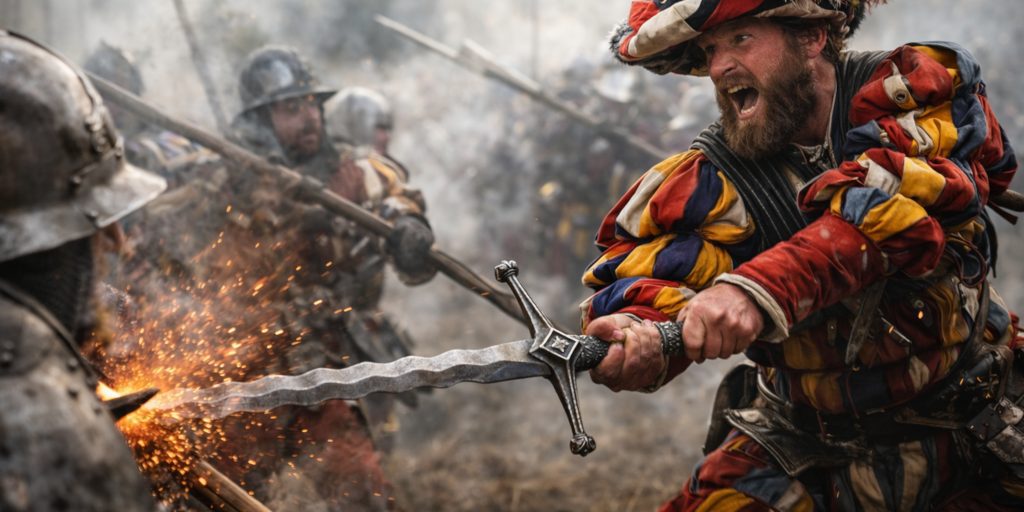
- German Landsknechts, especially Doppelsöldner formations
- Swiss mercenary infantry in limited cases
- French and Imperial troops influenced by German mercenary fashion
- Ceremonial guards in later Renaissance courts
The weapon saw use in the Italian Wars and other major conflicts of the sixteenth century. It was not the primary arm of infantry, that role belonged to the pike. Instead, it was a specialist tool within the pike and shot system.
Over time, the wavy blade became increasingly decorative. By the late sixteenth and seventeenth centuries, flamberge blades were frequently mounted on rapiers and smallswords as stylistic features rather than battlefield necessities.
Battlefield Role
Understanding the flamberge requires understanding pike warfare.
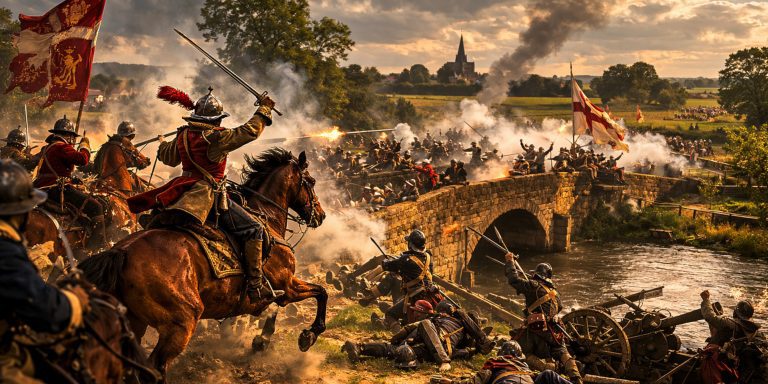
In a typical pike formation, ranks of men presented long spears forward. Combat between opposing pike blocks was chaotic and brutal. The flamberge, particularly in its two handed form, had several battlefield functions:
- Disrupting enemy pike heads by striking and knocking aside shafts
- Creating openings in tightly packed formations
- Guarding standards and officers
- Engaging enemy soldiers once formations broke down
The extended reach of the zweihänder variant allowed its wielder to operate at the front of the formation. Doppelsöldner were expected to be physically strong and highly trained. Their role was dangerous and prestigious.
The wave pattern may have contributed to vibration and resistance when parrying wooden shafts, though claims of enhanced cutting power are often overstated. The primary advantage was psychological as much as mechanical. The blade looked formidable, and battlefield morale mattered.
Advantages and Disadvantages
Advantages
- Intimidating appearance that could affect morale
- Effective in disrupting pike formations
- Increased friction when parrying, potentially improving control
- Strong cutting capability due to mass and length
- Prestige weapon associated with elite troops
Disadvantages
- Heavier and more tiring to wield
- Required significant training and strength
- Limited utility outside formation warfare
- More complex to forge, increasing cost
- Less practical in confined spaces
The flamberge was a specialised solution to a specific tactical environment. Once gunpowder firearms and lighter infantry tactics became dominant, its practical value declined.
Comparison With Similar Weapons
Flamberge vs Straight Zweihänder
| Feature | Flamberge | Straight Zweihänder |
|---|---|---|
| Blade profile | Wavy | Straight |
| Visual impact | Highly distinctive | Traditional |
| Manufacturing complexity | Higher | Lower |
| Battlefield function | Similar | Similar |
| Cost | Generally higher | Standard |
Functionally, both performed comparable roles. The flamberge variant likely offered marginal differences in blade interaction but no revolutionary change in combat effectiveness.
Flamberge vs Rapier With Wavy Blade
In the later Renaissance, some rapiers featured flamberge blades.
- Rapiers prioritised thrusting
- Wave pattern was largely decorative in civilian duelling contexts
- Weight was much lighter than battlefield flamberges
In these cases, the aesthetic of the flame blade endured long after its military relevance had faded.
Legacy
The flamberge occupies a strong place in historical imagination. It appears frequently in:
- Renaissance artwork
- Military treatises
- Modern fantasy literature and gaming
- Museum collections across Europe
It symbolises the flamboyance of Landsknecht culture, known for bright clothing and dramatic weaponry. In popular media, the flamberge often represents elite warriors or commanding figures.
Historically, its importance lies in its association with the evolution of professional infantry in early modern Europe.
Where to See Original Examples
Authentic flamberge swords can be viewed in several major collections:
- Kunsthistorisches Museum, Vienna
- Germanisches Nationalmuseum, Nuremberg
- Wallace Collection, London
- Royal Armouries, Leeds
These institutions hold both battlefield grade examples and highly decorated ceremonial pieces. Viewing them in person reveals the precision of the wave pattern and the scale of the larger two handed variants.
Collector’s Guide
Original sixteenth century flamberges are rare and command significant prices.
Auction Price Ranges
| Condition and Type | Estimated Price |
|---|---|
| Museum quality, complete | £60,000 to £150,000 |
| Good condition, partial restoration | £30,000 to £60,000 |
| Fragmentary examples | £10,000 to £25,000 |
Prices vary depending on provenance, maker marks, condition and originality of fittings.
What Collectors Should Consider
- Authenticity of blade and hilt pairing
- Presence of original patina
- Structural integrity, especially at wave troughs
- Documented provenance
- Institutional comparables for valuation
Reproductions are widely available and typically cost between £300 and £2,000 depending on craftsmanship. These are suitable for display and historical reenactment but do not carry investment value.
Seven Swords Takeaway
The flamberge is not merely a flamboyant curiosity. It is a weapon rooted in the harsh realities of Renaissance pike warfare. Associated with elite Landsknecht soldiers and the brutal clashes of early modern Europe, it reflects both technical skill and martial culture.
Its battlefield utility was specialised, its appearance unforgettable, and its legacy secure. Today it stands as one of the most recognisable sword forms in European history, equally at home in museum galleries and the modern imagination.ibuting to its gradual decline as battlefield tactics evolved. Additionally, the cost of crafting such intricate blades restricted their availability, ensuring they remained symbols of status as much as tools of war.