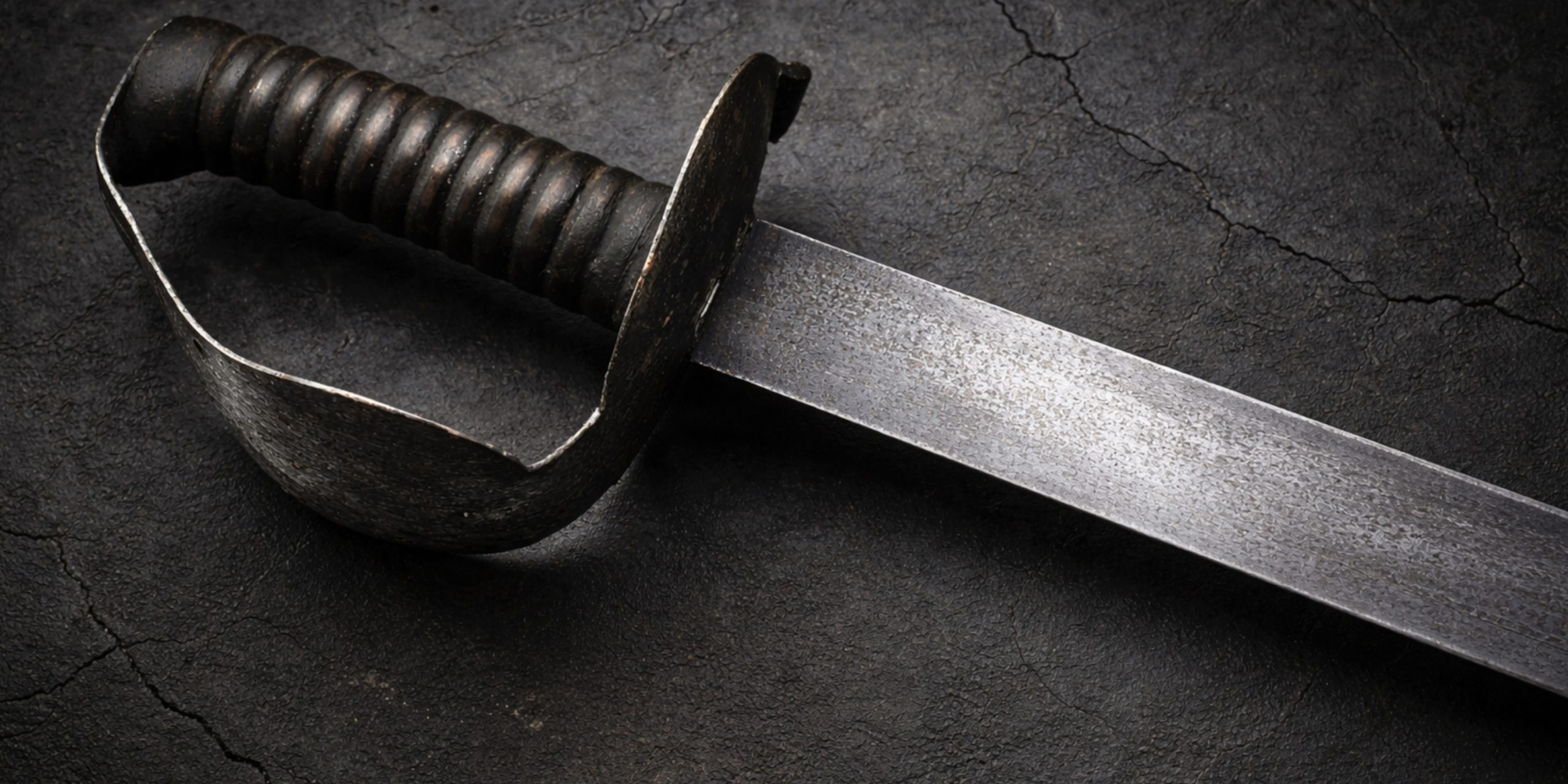
The British 1804 Royal Navy Cutlass sits at an interesting turning point in naval warfare. Issued during the height of the Napoleonic Wars, it reflects a navy adapting to mass mobilisation, close quarters combat, and the brutal reality of boarding actions. This was not a duelling sword or an officer’s ornament. It was a utilitarian weapon designed to be issued in large numbers to seamen who needed something simple, tough, and forgiving under pressure.
Specifications
| Feature | Details |
|---|---|
| Date introduced | 1804 |
| Country of origin | Great Britain |
| Blade length | Approx. 27–28 inches (68–71 cm) |
| Blade type | Single edged, broad curved blade |
| Blade material | Carbon steel |
| Hilt | Cast iron |
| Guard | Stirrup style knuckle guard |
| Grip | Ribbed iron grip |
| Overall length | Approx. 32–33 inches (81–84 cm) |
| Weight | Approx. 1.2–1.4 kg |
Key physical traits
- Broad blade optimised for heavy cuts rather than fine point work
- Robust iron hilt suited to hard service and minimal maintenance
- Balance biased toward blade presence rather than finesse
History and Evolution
By 1804 the Royal Navy was fighting a global war. Boarding actions remained common, particularly against privateers and in fleet engagements where ships locked together. Earlier naval cutlasses varied widely in quality and pattern, often relying on private manufacture.
The 1804 pattern represented an early attempt at standardisation. Its form was influenced by earlier hangers and cutlasses of the late 18th century, but simplified further to reduce cost and speed production. The iron hilt was a deliberate choice. Brass and more complex guards were expensive and unnecessary for rank and file sailors.
This pattern did not exist in isolation. It helped set the stage for later, more refined naval cutlasses such as the 1845 pattern, which would remain in service for decades. The 1804 cutlass marks the Royal Navy beginning to think in terms of uniform issue rather than individual purchase.
Advantages and Disadvantages
Advantages
- Extremely durable, suited to harsh saltwater environments
- Simple design made it easy to train with and maintain
- Broad blade delivered powerful cuts in confined spaces
- Iron hilt resisted damage better than wood or bone grips
Disadvantages
- Crude balance compared to contemporary sabres
- Limited thrusting ability due to blade profile and point geometry
- Iron grip could be uncomfortable and slippery when wet
- Lacked hand protection compared to later basket or bowl guards
Comparison With Similar Weapons
| Weapon | Key Differences |
|---|---|
| 1796 Naval Cutlass | Slightly lighter, less standardised, often varied by maker |
| French naval cutlasses | Frequently featured brass hilts and slimmer blades |
| 1803 Infantry hanger | Shorter and more suited to land service |
| 1845 Royal Navy cutlass | Improved ergonomics, better guard coverage, longer service life |
Compared to continental naval weapons, the British 1804 cutlass prioritised ruggedness over refinement. Where French and Spanish examples sometimes favoured elegance, the British approach leaned heavily toward survivability and ease of mass issue.
Legacy
The 1804 Royal Navy Cutlass is best understood as a transitional weapon. It bridged the gap between the ad hoc naval blades of the 18th century and the fully standardised cutlasses of the Victorian era. While it never achieved the iconic status of later patterns, it played a real role during Britain’s struggle for naval dominance.
Its influence can be seen in the continued emphasis on simple iron hilts and broad cutting blades well into the mid 19th century. For historians, it reflects the realities of Napoleonic warfare more honestly than many more decorative weapons.
Where to See One
Original examples can be found in major British collections, including
- National Maritime Museum
- Royal Armouries
- British Museum
Private collections and specialist naval history exhibitions occasionally display surviving examples, often showing heavy service wear.
Collector’s Guide and Auction Prices
The 1804 Royal Navy Cutlass is collectable but not especially common, particularly in untouched condition.
What collectors look for
- Original blade length with minimal reprofiling
- Clear naval style hilt without later modifications
- Period scabbard, though these are rare
- Honest wear rather than aggressive restoration
Common condition issues
- Pitting from salt exposure
- Heavy sharpening or edge loss
- Replaced grips or altered guards
Typical auction prices
| Condition | Price range |
|---|---|
| Poor, incomplete | £600–£900 |
| Fair, original blade | £1,000–£1,600 |
| Good, untouched example | £1,800–£2,500 |
| Exceptional provenance | £3,000+ |
Prices have risen steadily over the past decade as interest in naval edged weapons has grown, though they remain more affordable than later Victorian patterns.