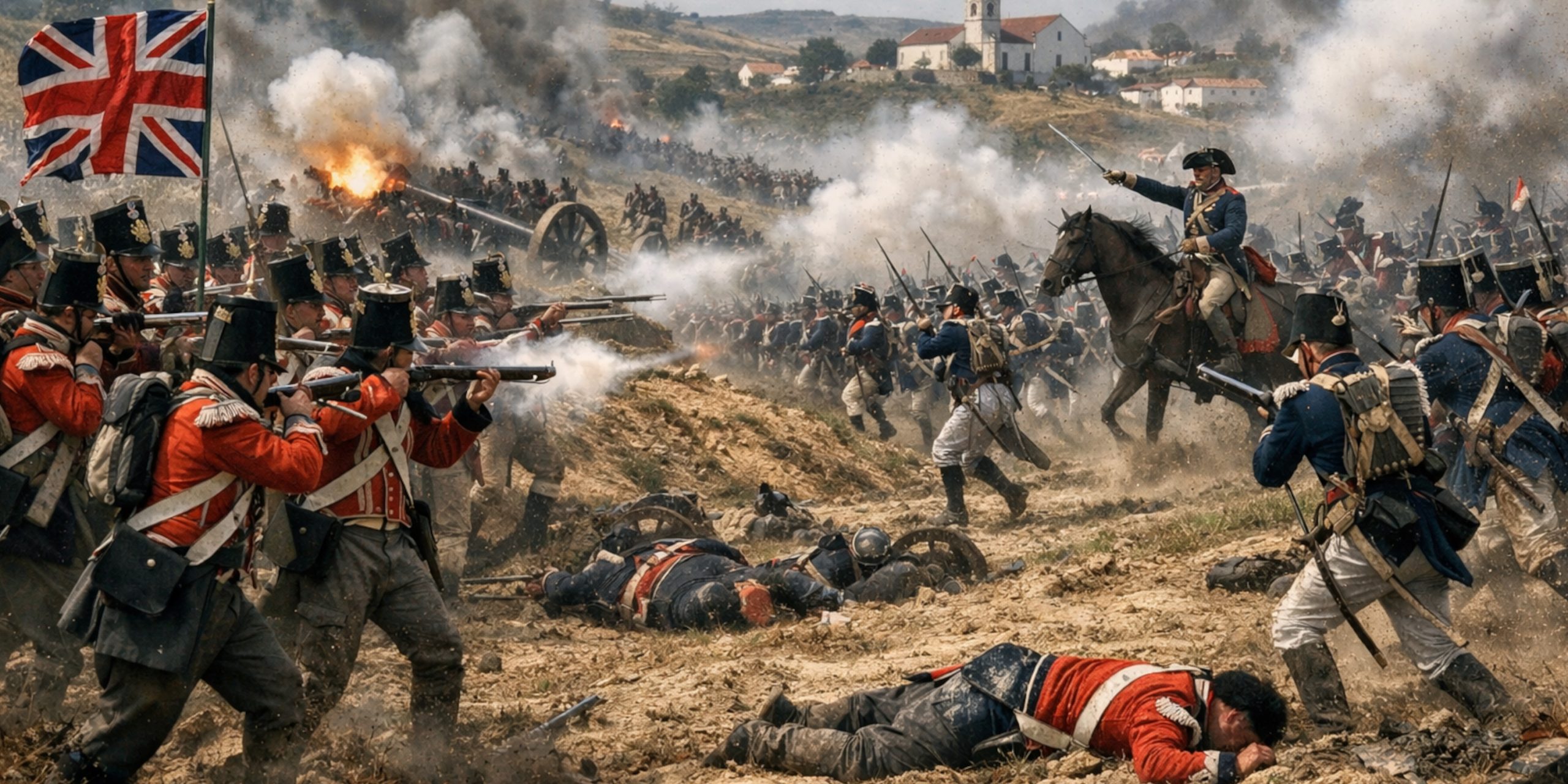
The Battle of Vimeiro sits at the awkward but decisive opening act of the Peninsular War. It was not the largest fight of the age, nor the bloodiest, but it mattered. Here, on rolling Portuguese ground near the Atlantic, a British led army halted Napoleon’s first serious attempt to hold Portugal. It also introduced a commander who would soon become impossible for France to ignore. History sometimes turns on such days, not with fireworks, but with competence.
Background and Setting
In the summer of 1808, Portugal was occupied by French forces under General Junot. Britain, sensing opportunity after Spanish resistance flared, landed troops to challenge French control. The countryside around Vimeiro was broken by low hills, vineyards, and dry riverbeds. It was ideal defensive terrain if used properly, and disastrous if attacked with optimism instead of caution. Junot chose optimism.
British forces were commanded by Arthur Wellesley, still several victories away from becoming Wellington. The French army was led by Jean-Andoche Junot, a brave officer with an unfortunate habit of believing momentum could substitute for preparation.
Forces
Allied Army, British and Portuguese
| Component | Estimated Strength |
|---|---|
| British regular infantry | 13,500 |
| Portuguese troops | 2,000 |
| Cavalry | 1,500 |
| Artillery | 18 guns |
| Total | Approx. 17,000 |
French Army
| Component | Estimated Strength |
|---|---|
| Line infantry | 12,500 |
| Cavalry | 2,000 |
| Artillery | 23 guns |
| Total | Approx. 14,500 |
The armies were close in number, though the British infantry enjoyed higher discipline and better battlefield cohesion. The French relied on aggression and column attacks, which had worked often enough elsewhere to encourage repetition.
Commanders and Leadership
- Arthur Wellesley
Calm, analytical, and already fond of defensive positioning. He showed little interest in heroic charges and a great deal of interest in winning. - Jean-Andoche Junot
Personally brave and politically well connected. His plan relied on speed and shock, but underestimated British firepower and terrain.
Subordinate French commanders showed initiative, though often without coordination. British brigade commanders, by contrast, fought like men following a clear script.
Arms and Armour
Infantry Weapons
- British Army
- Brown Bess flintlock musket
- Socket bayonet
- Officers commonly carried straight or lightly curved spadroons
- French Army
- Charleville Model 1777 musket
- Triangular bayonet
- Officers favoured smallswords or light sabres
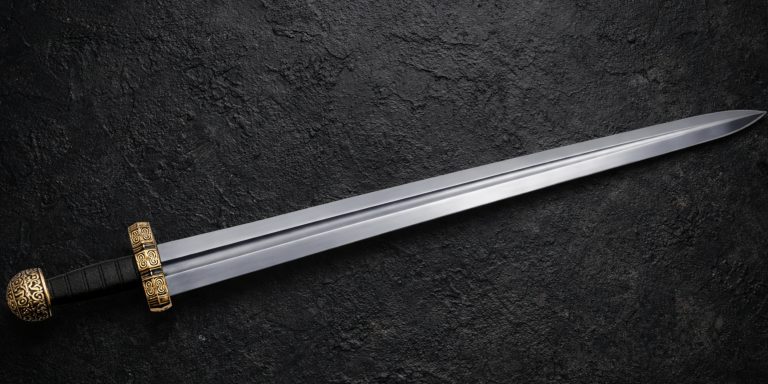
Sword Types in Use
- British infantry officers
- Spadroon with straight double edged blade
- Light infantry officers sometimes carried curved sabres influenced by German patterns
- French officers and cavalry
- Light cavalry sabres with pronounced curvature
- Heavy cavalry sabres with broad blades designed for cutting from horseback
Body armour was absent for infantry. Cavalry cuirasses were rare in Portugal and mostly absent at Vimeiro. This was a battle decided by musketry, not steel glamour.
The Battle Timeline
- Early morning
French columns advance in separate attacks, attempting to overwhelm British positions piecemeal. - Mid morning
British infantry hold hilltops and ridges, delivering controlled volleys that break French momentum. - Late morning
French cavalry probes British flanks but finds no opening. - Early afternoon
Final French attacks collapse under sustained musket fire and artillery. - Afternoon
Junot orders withdrawal. The battlefield falls quiet except for the wounded and the arguments that would soon follow in headquarters.
Archaeology and the Battlefield Today
The Vimeiro battlefield has yielded musket balls, uniform buttons, and artillery fragments over the years. Most finds confirm the intensity of infantry fire along the ridge lines. The landscape remains recognisable, which is rare and valuable. Standing there today, one can still see why frontal assaults were a poor idea, though that lesson was expensive in 1808.
Contemporary Voices
A British officer noted with restrained satisfaction:
“The enemy advanced with great confidence, but were received with a steadiness that decided the matter.”
Junot, less pleased, reportedly remarked after the defeat:
“I attacked Englishmen, not peasants.”
It was a costly distinction to learn in real time.
Aftermath and Significance
Tactically, Vimeiro was a clear British victory. Strategically, it forced the French to negotiate the Convention of Cintra, allowing their army to evacuate Portugal. Politically, this caused outrage in Britain. Militarily, it kept the war alive.
For Wellesley, it was both triumph and frustration. He won the battle, then watched senior officers sign away the immediate gains. Still, Vimeiro marked the beginning of a long and uncomfortable relationship between the French Empire and British redcoats in Iberia.
Historical Assessment
Vimeiro rarely receives dramatic retellings, perhaps because it lacks cavalry charges or last stands. What it offers instead is something more instructive. Good ground, disciplined troops, and a commander who understood when not to attack. For historians, it is a reminder that wars are often decided by restraint rather than bravado. For generals, it was an early warning that fighting Britain in Portugal would become a recurring problem.
Watch the documentary: