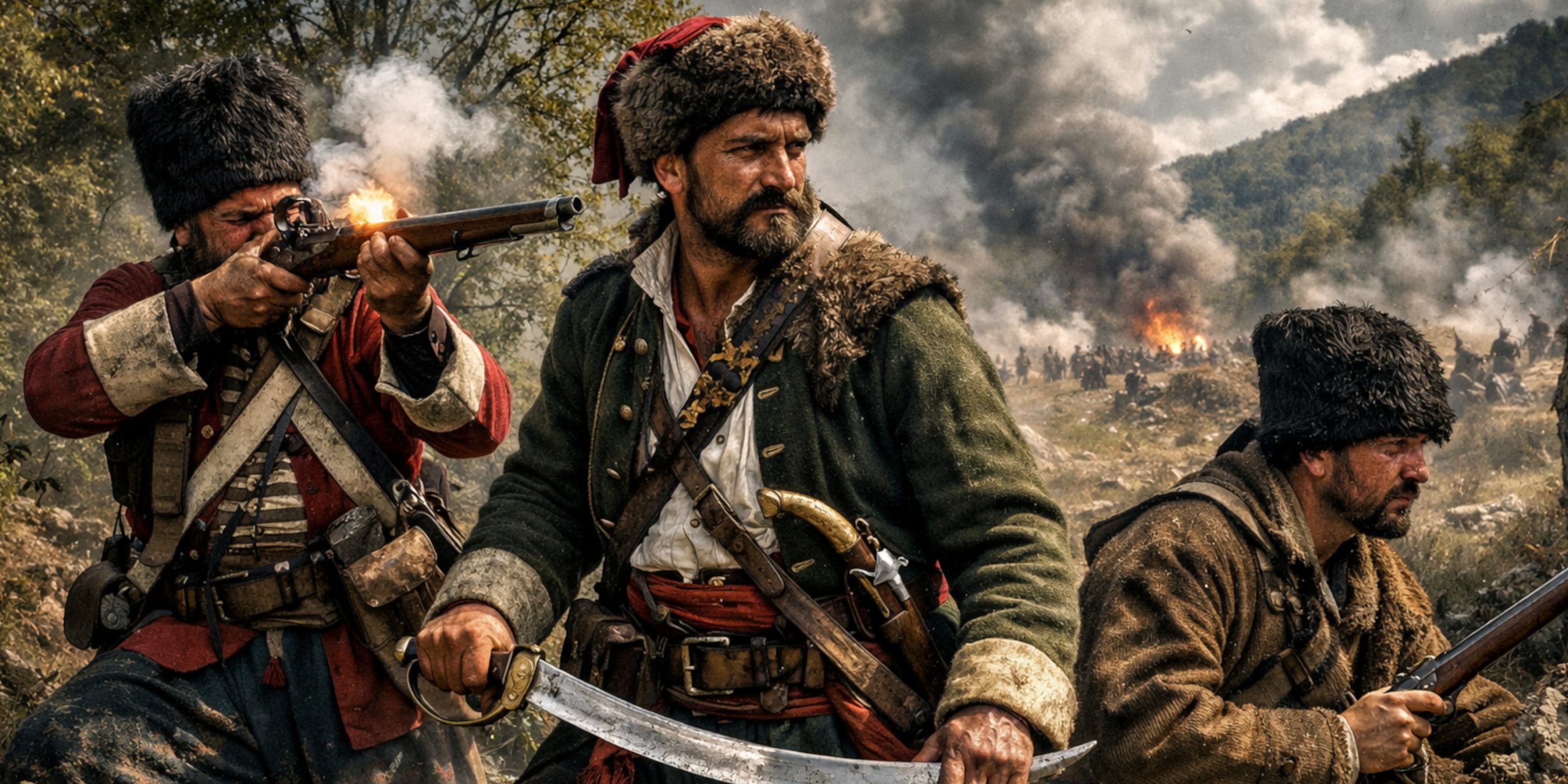
The Austrian Grenzers were frontier soldiers shaped by hardship, geography, and long familiarity with war. Raised along the volatile borderlands between the Habsburg world and the Ottoman sphere, they were neither parade ground regulars nor romantic rebels. They were practical fighters who knew the terrain better than any mapmaker and understood violence as a seasonal reality rather than a dramatic event. To study the Grenzers is to study how empires survived at the edges.
Origins on the Military Frontier
The Grenzers emerged from the Military Frontier, a long defensive zone stretching through modern Croatia, Serbia, and parts of Hungary and Romania. This was not a neat border but a living barrier, populated by settlers who were expected to farm in peace and fight in crisis.
The Habsburg authorities offered land, tax exemptions, and religious freedoms in exchange for military service. Many Grenzers were South Slavs, Croats, Serbs, and Vlachs. Loyalty here was contractual rather than sentimental. Serve well, keep your land. Fail, and history moved on without you.
What fascinates me is how little illusion existed on either side. Vienna knew these men were rough. The Grenzers knew Vienna was distant. Both accepted the arrangement because it worked.
Organisation and Daily Life
Grenzer units were organised territorially rather than socially. A man fought with neighbours, cousins, and people who had borrowed his plough the week before. Training was continuous but informal, shaped by skirmishes rather than manuals.
Officers were often locally raised, bilingual by necessity, and pragmatic to the core. Discipline existed, but it bent when survival required it. European observers alternated between admiration and alarm. One Prussian officer described them as fearless and undisciplined, which in frontier warfare was not an insult.
Arms and Armour
4
Grenzers were lightly equipped, favouring mobility over protection. Their arms reflected both imperial supply and local tradition.
Firearms were typically flintlock muskets, often shorter than line infantry pieces and easier to manage in woodland or broken ground. Accuracy mattered more than drill-perfect volleys.
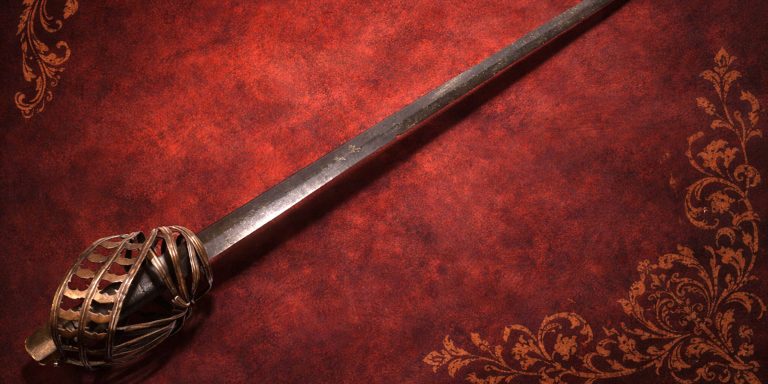
Edged weapons tell us more about identity. Common sword types included:
• Balkan style sabres with a moderate curve, influenced by Ottoman forms
• Hungarian sabres, lighter than heavy cavalry blades but quick in the hand
• Short cutlasses or hangers used as secondary weapons
These were tools, not parade items. Blades were often personalised, repaired repeatedly, and passed down. Armour was minimal. A felt cap or fur hat replaced helmets, and thick coats did the work mail once did. The Grenzer philosophy was simple. Do not get hit.
Tactics and Battlefield Reputation
Grenzers excelled at skirmishing, reconnaissance, ambush, and pursuit. They screened advancing armies, harassed retreating ones, and made enemy foraging miserable. In linear battles they were useful but restrained. In broken terrain they were lethal.
During the Seven Years’ War, Austrian commanders relied heavily on Grenzers to counter Prussian movement. Frederick the Great complained bitterly about them, which is usually a good sign you are doing your job.
One Austrian officer wrote that Grenzers fought “as if the forest itself were their ally”. He was not wrong.
Relations with Regular Armies
Regular troops often mistrusted Grenzers. Their appearance was untidy, their discipline flexible, and their methods uncomfortable for officers raised on drill books. Yet when campaigns turned ugly, Grenzers were suddenly indispensable.
There is a recurring pattern in military history where armies criticise irregulars in peace and rely on them in war. The Grenzers lived permanently in that contradiction.
Archaeology and Material Evidence
Archaeological finds along former frontier zones reveal musket parts, sabre fragments, uniform fittings, and domestic items repurposed for war. Excavations of abandoned frontier settlements show fortified farmsteads, cellars used as shelters, and watch posts positioned for visibility rather than aesthetics.
What strikes me most is how little separation there was between civilian and military life. A Grenzer musket found beside farming tools is not symbolic. It is literal.
Decline and Absorption
By the mid nineteenth century, the Ottoman threat receded and centralised armies became the norm. The Military Frontier was gradually dismantled, and Grenzer units were absorbed into the regular Austrian army.
Something was lost in the process. Standardisation improved efficiency but erased a fighting culture shaped by centuries of necessity. Empires prefer neat systems. Borders rarely cooperate.
Legacy
The Grenzers left a lasting mark on European light infantry doctrine. Their influence can be traced in later rifle units and border troops across the continent. Culturally, they remain symbols of frontier resilience in Croatia and neighbouring regions.
From a historian’s point of view, the Grenzers matter because they remind us that warfare is not always decided by grand tactics or polished uniforms. Sometimes it is decided by people who know where the path bends, where the ground sinks, and when to disappear quietly into the trees.
Contemporary Voices
An Austrian general noted that Grenzers were “unfit for parade, invaluable for war”.
A Prussian observer complained that fighting them felt like “being hunted by men who refuse to stand still”.
Neither intended praise. Both delivered it anyway.
Watch the documentary: