As moments in the early sixteenth century go, the Conquest of Huexotzinco sits in a curious space. It shaped alliances, made enemies rethink their priorities and reminded everyone involved that the politics of central Mexico were far older and much sharper than anything the Spaniards imagined when they first trudged inland with all the enthusiasm of men who had not yet realised how unforgiving the land could be.
Huexotzinco, a Nahua city already locked in strategic rivalry with Tlaxcala and wary observation of the Aztec Triple Alliance, became an early partner of Hernán Cortés. This partnership was not born from blind hope. The Huexotzinca saw an opportunity to tilt old balances in their favour, and they acted with a frankness that I cannot help but admire. My colleagues sometimes describe them as opportunistic. I would counter that they were simply paying attention.
The campaign against their enemies, and later their support in the march toward Tenochtitlan, turned Huexotzinco into one of the most significant native allies of the Spanish conquest. The scale of the conflict, the military technology involved and the political consequences give this episode a lasting weight that still echoes through archaeology and legal testimony today.
Forces
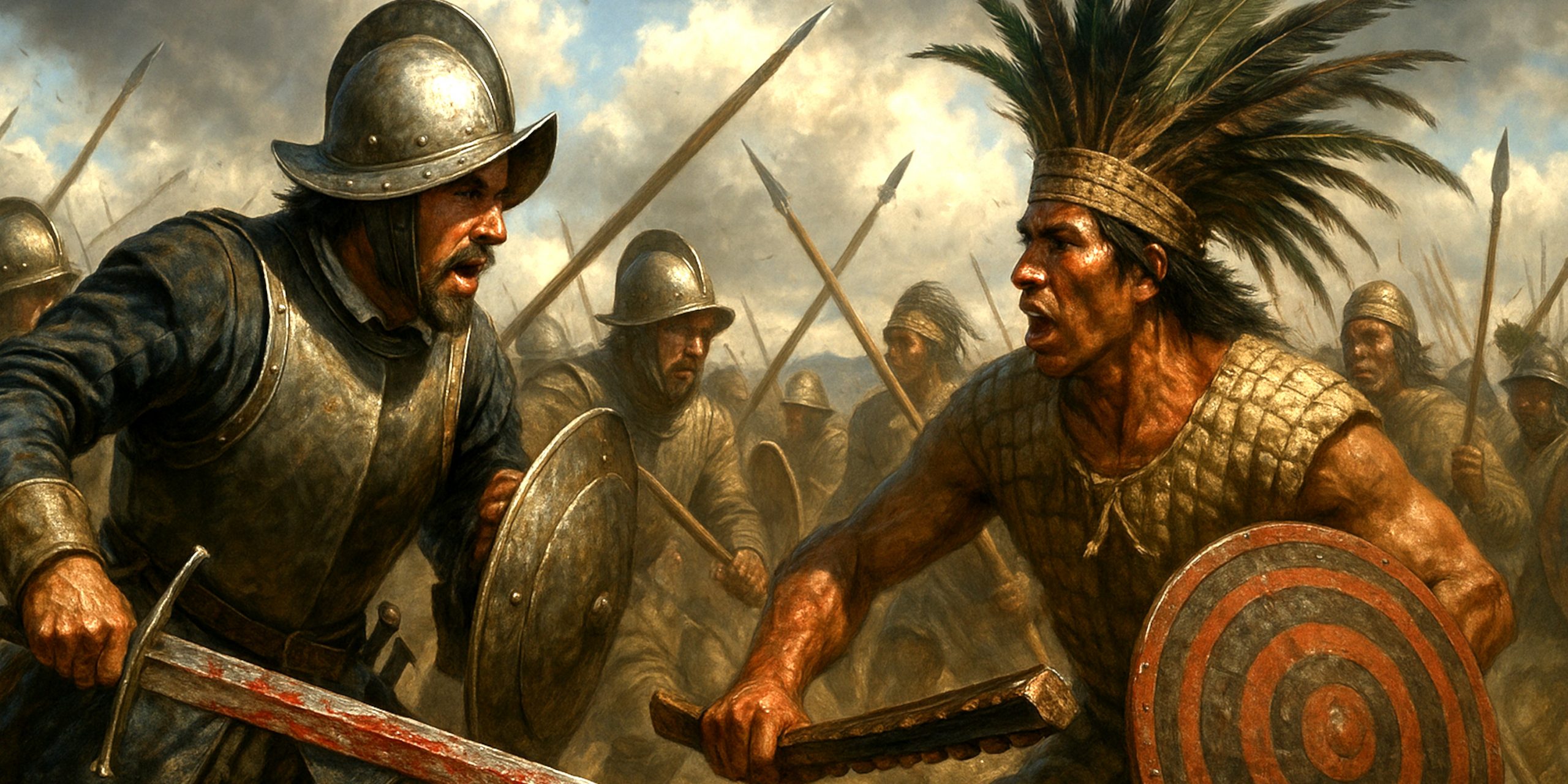
The conflict that unfolded around Huexotzinco drew in a striking variety of troops. You can almost picture the uneasy mix of Iberian steel, indigenous tactics and makeshift alliances stitched together with mutual suspicion.
Spanish Forces
| Category | Estimated Numbers | Notes |
|---|---|---|
| Infantry (swordsmen) | 80 to 120 | Heavy reliance on steel blades and crossbows. |
| Crossbowmen and Arquebusiers | 20 to 40 | Slow firearms but terrifying in psychological effect. |
| Cavalry | 10 to 15 | Horses caused panic among Aztec-aligned troops. |
| Artillery | 2 to 4 small field pieces | More noise than tactical utility at this stage. |
Huexotzinca Allied Forces
| Category | Estimated Numbers | Notes |
|---|---|---|
| Warrior companies | 5,000 to 8,000 | Experienced fighters accustomed to defensive warfare. |
| Slingers and archers | 1,000 to 2,000 | Effective at ranged disruption. |
| Officers and nobles | 200 to 300 | Carried prestige weapons and oversaw formations. |
Leaders
Spanish
- Hernán Cortés
- Pedro de Alvarado
- Cristóbal de Olid
- Andrés de Tapia
Huexotzinca
Name transmission is uneven, which is both frustrating and telling. Surviving indigenous testimonies refer mainly to the city’s collective councils, elder captains and district leaders rather than individual commanders. A reminder that Spanish chroniclers preferred personalities, while Nahua records emphasised polity and responsibility.
Troop Composition
A clearer sense of structure helps explain how the operation functioned in practice.
Spanish
- Heavy infantry with steel breastplates, sallets, morions, and cotton under-armour.
- Sword and buckler men forming the close-combat core.
- Mounted lancers whose presence alone could break enemy morale.
- Crossbowmen and arquebusiers providing ranged disruption.
Huexotzinca
- Veteran shield formations armed with obsidian-bladed macuahuitl.
- Spearmen with barbed tips designed for piercing cotton armour.
- Archers with hardwood bows.
- Slingers using baked clay projectiles for dense impact patterns.
Arms and Armour
The blend of Iberian and Mesoamerican equipment remains one of the richer aspects of the campaign.
Spanish Equipment
| Item | Description |
|---|---|
| Steel swords (falchions, cut-and-thrust blades) | Effective against unarmoured limbs and shields. |
| Lances | Carried by cavalry, used primarily for shock charges. |
| Crossbows | More accurate than early firearms but slower. |
| Arquebuses | Limited reliability but immense intimidation. |
| Metal armour | Breastplates, backplates, helmets, mail sleeves. |
Huexotzinca Equipment
| Item | Description |
|---|---|
| Macuahuitl | Wooden blade edged with obsidian flake, sharp enough to sever limbs. |
| Tepoztopilli | A spear with a broad obsidian blade, ideal for thrusting. |
| Bows and arrows | Range and accuracy varied by district craftsmanship. |
| Atlatl | Spear throwers used for high velocity strikes. |
| Quilted cotton armour (ichcahuipilli) | Surprisingly durable when layered properly. |
Archaeology
Huexotzinco has produced a steady trickle of revealing finds. Excavations around the ceremonial precinct and residential terraces have unearthed:
- Obsidian flakes consistent with blade maintenance, suggesting rapid replacement during battle periods.
- Burn layers in several wards pointing to conflict damage rather than ritual burning.
- Ceramic fragments and pigments that match the iconography later recorded in the Huexotzinco Codex.
- Evidence of defensive palisades and temporary fortifications that align with Spanish descriptions of resistance in the early contact years.
The archaeological record, by its nature, prefers to whisper rather than clarify. Still, these finds support the idea of a city mobilised on short notice, its craftsmen and warriors responding to political shifts with remarkable speed.
Contemporary Quotes
Spanish chroniclers rarely resisted the temptation to dramatise. Yet even their embellishment reveals the awe they felt in the face of indigenous discipline.
Bernal Díaz del Castillo wrote:
The warriors of Huexotzinco marched with a quiet order that none of us expected, and their captains signalled as though on a field in Castile.
A later indigenous testimony recorded in the Huexotzinco Codex trial states:
We placed our shields before the strangers and stood with them, for the enemies were many and we guarded our city with the strength that belonged to our fathers.
For a historian, it is unusual to find both sides grudgingly impressed with each other. There is something oddly reassuring in that.
Battle Timeline
A simplified and web-friendly overview.
Early 1519
Cortés forms early alliances among discontented polities. Huexotzinco expresses caution but interest.
Mid 1519
Envoys meet Spanish captains. Joint military operations begin against regions aligned with Tenochtitlan.
Late 1519
Huexotzinca warriors accompany Spanish forces in conflicts near Tlaxcala and Cholula. The political die is cast.
Early 1520
Huexotzinco becomes a staging base for the approach toward the Valley of Mexico. Supplies and warriors are provided in significant numbers.
1521
Huexotzinca contingents participate in the siege of Tenochtitlan. Their skill in close combat earns repeated mention in Spanish accounts.
Legacy
The Conquest of Huexotzinco reshaped alliances and left a long legal footprint. The most famous example is the Huexotzinco Codex, submitted in a lawsuit against Spanish officials in the 1530s. The document preserved not only the grievances of the community but also rare indigenous artwork showing their role in the conquest. Historians owe an unusual debt to this litigation. Without it, the story would be far harder to trace.
Huexotzinco’s alliance helped Cortés dismantle the Aztec Empire. Yet the city did not escape the steep costs of Spanish tribute demands. Their later appeals to the Crown show a population keenly aware that promises made in war seldom survive peacetime accounting. As I read their petitions, I sense a wryness that any modern bureaucrat would recognise.
Closing Thoughts
The Conquest of Huexotzinco deserves more attention than it usually receives. It captures a moment when indigenous politics, Spanish ambition and local military traditions collided with an energy that reshaped a continent. The Huexotzinca were not passive allies. They were calculating actors navigating a dangerous landscape. I find their clarity refreshing, especially when compared to the Spaniards, who often behaved as if divine favour excused poor planning.
Understanding this campaign requires acknowledging its complexity, and sometimes its uncomfortable proximity to opportunism on all sides. That is what makes it such a rewarding study.