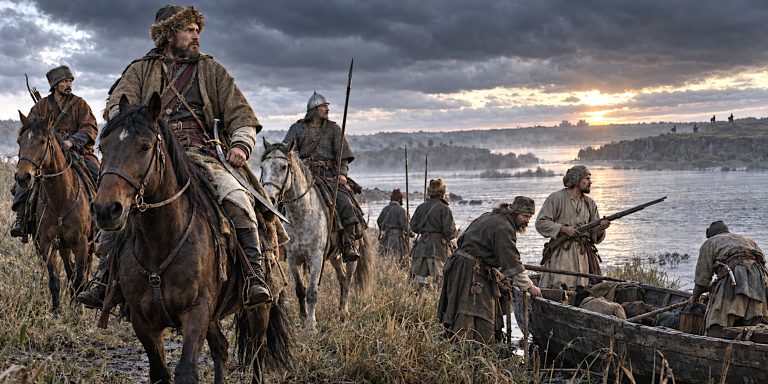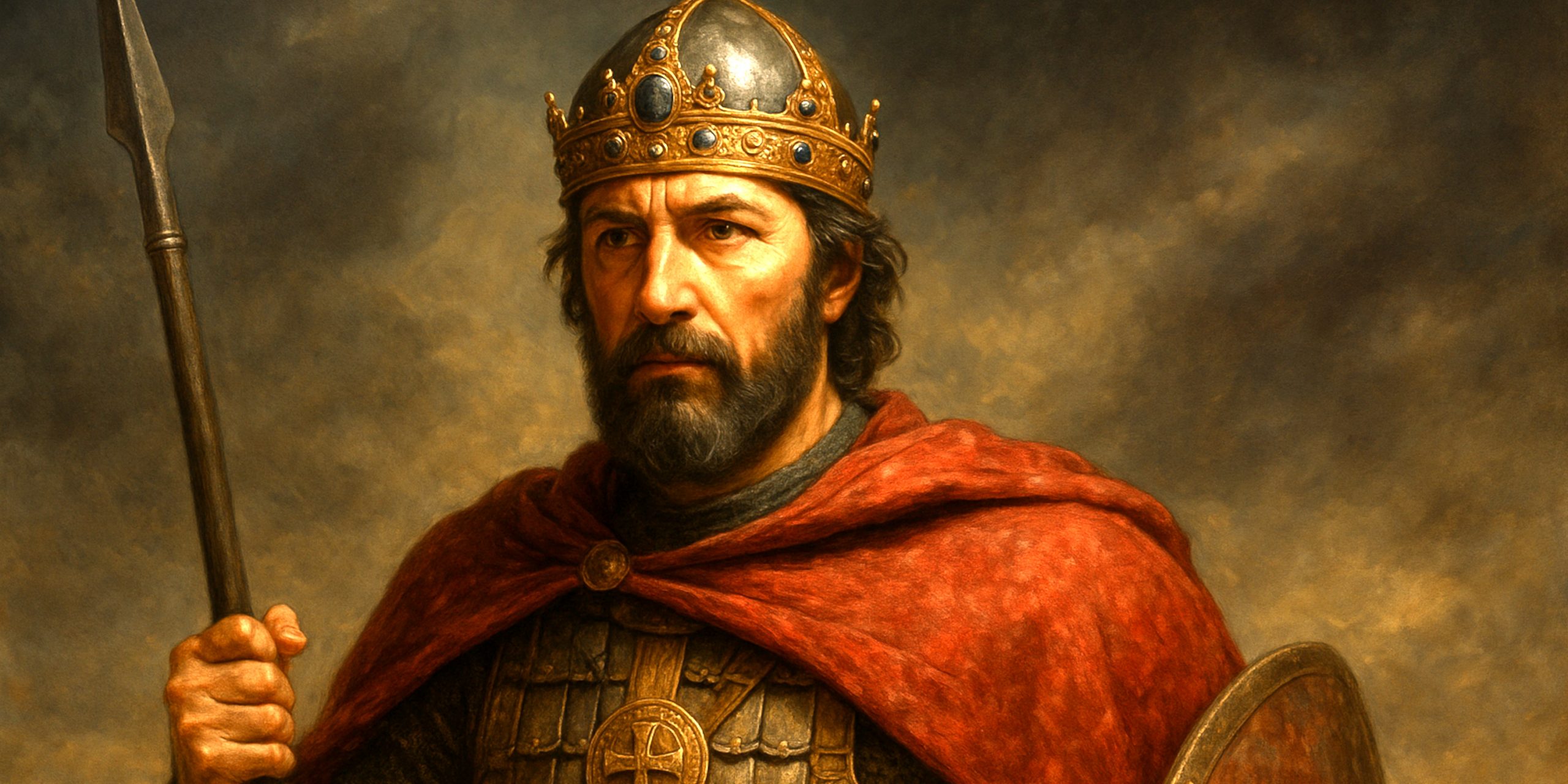
Human history has a habit of producing rulers who stride into the record with a certain theatrical energy. Manuel I Komnenos is one of them. He comes across as a man who believed fortune truly did favour the bold, and he acted accordingly. His reign pulled Byzantium toward a heroic self image that sometimes matched the world as it was, and sometimes wrestled with the sharp edges of political reality. Yet his energy never feels dull. It is the energy of a sovereign who thought the empire could still stand as the arbiter of Mediterranean politics, provided its ruler refused to accept limitations
Manuel I Komnenos ruled the Byzantine Empire from 1143 to 1180. He belonged to the Komnenian dynasty, a family that tried, through a blend of military talent and administrative focus, to steer the empire out of the crises that defined the eleventh century. Manuel was the third Komnenian emperor and arguably the most outward facing. While his father John II had been the empire’s quiet master craftsman, Manuel behaved more like a knightly monarch of the Latin west. Chroniclers recognised this shift, sometimes with admiration and sometimes with irritation.
He cultivated a court that dazzled foreign ambassadors, pushed back against regional rivals, and tried to place Byzantium firmly at the centre of European diplomacy. Yet his reign was long enough for the flaws in his vision to take shape. The later Komnenian world was brilliant, but it was also stretched thin. When I read sources like Choniates, I sense a faint unease, as though the empire’s grandeur depended on Manuel’s personal force of will more than on stable foundations.
Arms and Armour of Manuel’s Era
The Komnenian army remained a complex mix of traditional Byzantine units and newer influences drawn from the Latin west, the Balkans, and steppe nomads. Manuel himself seems to have appreciated western martial culture. He trained in heavy cavalry techniques and was noted for his interest in jousting. His personal kit reflected the blend of cultures that defined his court.
Typical arms and armour associated with elite cavalry in his era included:
- Mail hauberks covering torso and limbs, sometimes reinforced with lamellar plates.
- Komnenian lamellar cuirasses that continued older Byzantine traditions but were shaped to be lighter and more flexible.
- Western style shields used by cavalry who adopted Latin fighting methods, often almond shaped.
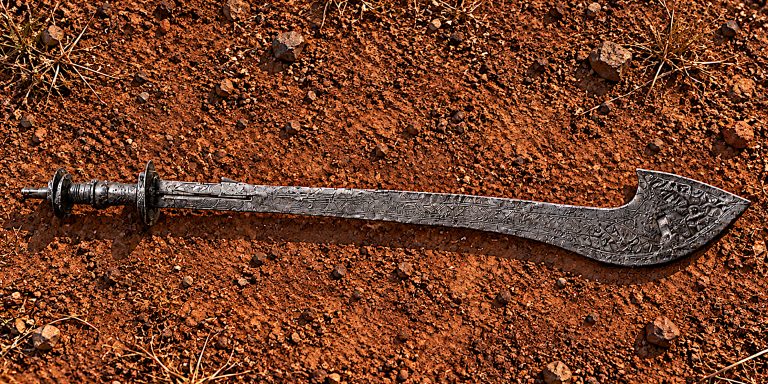
- Swords of spatha form that had long been common in Byzantine arsenals, with some influence from western arming swords.
- Kontarion lances, central to heavy cavalry charges, held underarm in a fashion increasingly similar to Latin knights.
- Composite bows used by cavalry archers drawn from Turkic or steppe groups.
- Helmets varied widely. Some retained the older Byzantine iron domes with nasal guards, while others showed western inspiration.
Manuel’s personal fascination with western chivalric culture is a rare moment where Byzantium looks outward with something close to admiration. It reminds me that medieval battlefields were never as culturally tidy as textbook diagrams.
Battles and Military Accumen
Manuel I was an active commander. Whether his tactical skill matched his ambition is another matter, but few can deny his courage or his willingness to confront danger directly.
The Battle of Sirmium, 1167
This was one of the empire’s clean military successes. Under the command of Andronikos Kontostephanos, Byzantine forces defeated the Hungarians. The victory strengthened Manuel’s influence in the Balkans. Manuel shaped the campaign, even if he did not personally lead the final engagement. The triumph allowed the empire to assert dominance in the region for a time.
The Italian Campaigns
Manuel dreamed of restoring Byzantine power in southern Italy. These campaigns involved alliances, naval operations, and a great deal of money. Although they produced some successes, they ultimately failed to reestablish long term authority. Manuel’s persistence speaks volumes about his ambition, but the logistics of projecting power across the Adriatic remained complex.
The Battle of Myriokephalon, 1176
This is the battle that overshadows his military legacy. Manuel marched against the Seljuk Sultanate of Rum, hoping to achieve a decisive blow reminiscent of his grandfather Alexios’s triumphs. Instead, the Byzantine army found itself trapped in the narrow Tzibritze Pass. Seljuk archers devastated the column. Manuel managed to extract the remnants, but the loss echoed loudly. I often think of this moment as a turning point, not because the empire collapsed, but because it revealed the limits of the Komnenian military machine.
Naval Power
Manuel invested heavily in the fleet. The navy supported diplomatic displays, anti Norman campaigns, and the protection of trade routes. In many ways, his naval expenditure was more successful than his land offensives, although it added to the fiscal strain of his reign.
Manuel’s military record is a mixture of invigorating victories and sobering defeats. In that sense he resembles other medieval rulers who relied on their personal charisma to drive the state forward. Once charisma meets the stubbornness of geography, the result is usually complicated.
Diplomatic and Administrative Approach
Manuel cultivated a western facing diplomatic strategy. He forged alliances with Crusader states, negotiated with the papacy, and hosted foreign dignitaries with theatrical splendour. His court became famous for its lavish protocol. Some saw this as a revival of older imperial traditions. Others saw it as excess.
He also tried to manage a volatile frontier. The empire faced pressure in Anatolia, the Balkans, and occasionally from internal aristocratic factions. Manuel handled these challenges with varying degrees of success, but he maintained imperial cohesion throughout his reign, which is no small achievement.
Where to See Artefacts from His Reign
Material culture from Manuel’s period survives in several major collections.
- Hagia Sophia and the Topkapi collections in Istanbul hold seals, church furnishings, and fragments of liturgical metalwork dating to the Komnenian century.
- The Byzantine and Christian Museum in Athens preserves icons, manuscripts, and ecclesiastical items that reflect the artistic style favoured in Manuel’s court, which leaned toward rich colour and precise line work.
- The Treasury of San Marco in Venice includes spoils and diplomatic gifts from Byzantium, some attributed to the twelfth century. Venice and Manuel had a turbulent relationship, but artistic exchange endured.
- The British Museum possesses coins minted during Manuel’s reign, along with some carved ivories and small metal objects.
Seeing these pieces up close offers a far more intimate understanding of his world than any chronicle can provide. The craftsmanship of the twelfth century shows an empire still confident in its aesthetic identity.
Latest Archaeology and Research
Modern archaeology and scholarship continue to refine our view of Manuel’s reign.
- Excavations in Constantinople have revealed layers of twelfth century domestic architecture, suggesting a vibrant and densely populated capital.
- Studies of fortifications in western Anatolia show evidence of Komnenian repair and reinforcement, part of Manuel’s efforts to stabilise the frontier after years of pressure.
- Numismatic analysis has shed light on the economic demands of his military spending. His gold coinage fluctuates in purity, which raises questions about long term fiscal pressures.
- Reevaluation of Myriokephalon using topographical modelling suggests that Manuel’s column was more vulnerable than earlier historians assumed. The terrain likely dictated the outcome as much as Seljuk strategy.
I find that each new archaeological study adds nuance to his reign. Manuel was not simply a flamboyant warrior king. He was trying, sometimes successfully and sometimes not, to maintain a fragile imperial system against increasing odds.
Legacy
Manuel I Komnenos left a dazzling and conflicted legacy. His court culture influenced both Byzantine art and western perceptions of Constantinople. His military record, though uneven, reflected a ruler who refused inertia. His diplomacy reshaped Byzantium’s place in the twelfth century Mediterranean.
Yet it is impossible to ignore that the empire he handed to his successors was strained. The Komnenian revival shone brightly, but the infrastructure beneath it had begun to crack. The fall of Constantinople in 1204 was not Manuel’s doing, but his reign forms part of the sequence that led there.
Still, I have always admired the restless energy of Manuel. He stands as a reminder that medieval rulers were not cardboard figures repeating inherited policies. They were ambitious individuals wrestling with a world that did not always behave as they expected.
Watch the documentary: