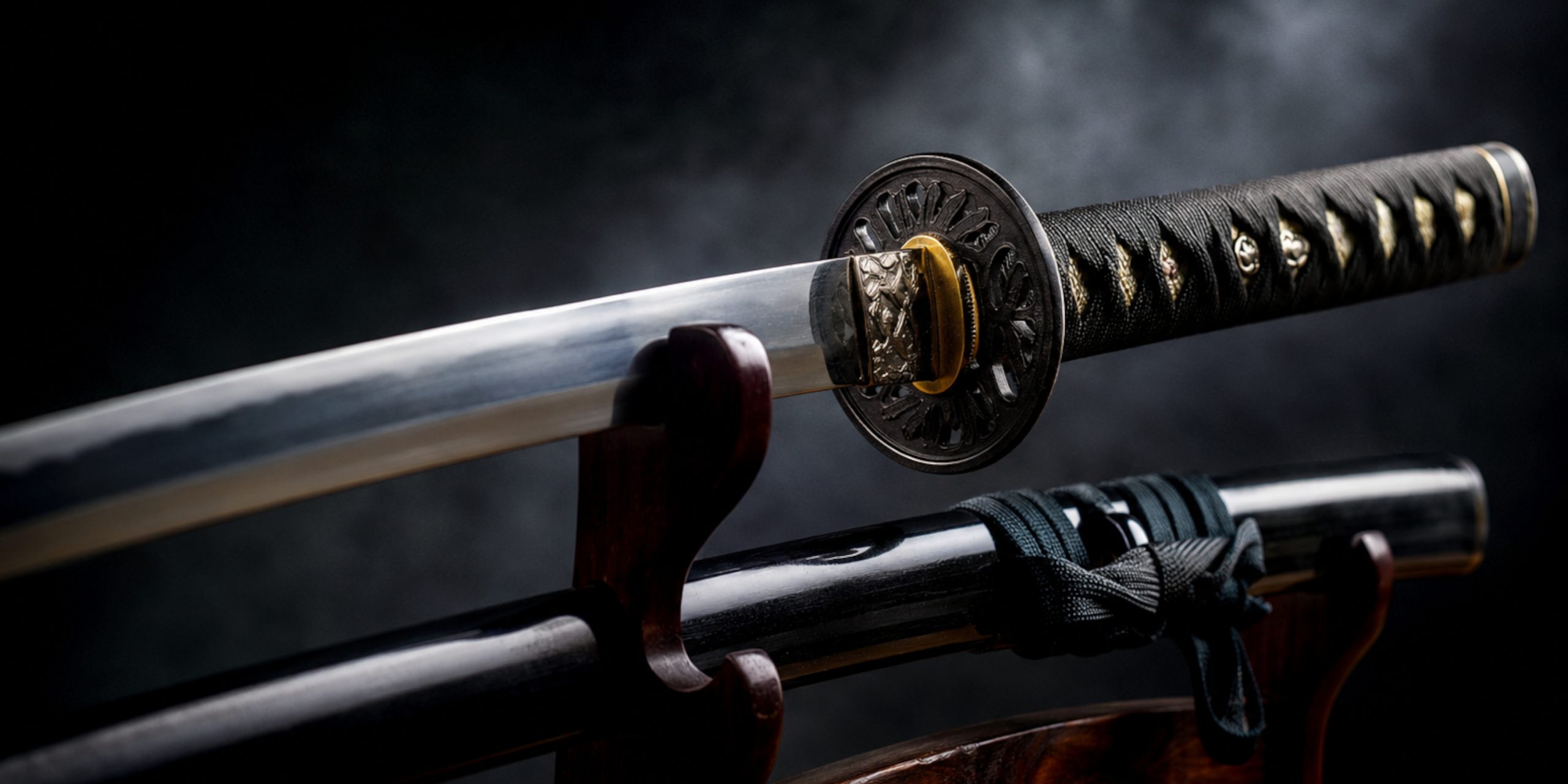
The katana is one of the most recognisable swords in history. Even people with little interest in weapons can usually picture the curved blade, circular guard and lacquered scabbard. It sits somewhere between historical weapon, cultural icon and object of obsession. Films, anime and video games have wrapped the katana in layers of myth, although the real story is arguably more interesting.
The katana was not simply a “perfect sword” dropped into history by divine blacksmiths. It evolved through centuries of warfare, changing armour styles, political upheaval and craftsmanship. At times it was a battlefield weapon. At others it became a symbol of rank and personal identity. In peaceful periods it transformed into art.
Some collectors spend decades searching for a single authentic blade with the right hamon pattern and provenance. Others just want to understand why samurai culture became so intertwined with this weapon. Both paths eventually lead to the same conclusion. The katana carries extraordinary historical weight.
Katana Specifications
| Feature | Typical Specification |
|---|---|
| Weapon Type | Japanese longsword |
| Origin | Japan |
| Blade Length | Usually 60 to 80 cm |
| Overall Length | Around 90 to 110 cm |
| Weight | Roughly 1.1 to 1.5 kg |
| Blade Shape | Curved, single edged |
| Grip | Two handed |
| Steel Type | Tamahagane traditionally |
| Mounting | Worn edge upward through sash |
| Primary Use | Slashing and cutting |
Key Features
- Curved single edged blade designed for powerful cuts
- Long grip allowing two handed control
- Differential hardening creating visible hamon line
- Lightweight compared to many European battlefield swords
- Extremely refined balance and handling
- Often paired with a shorter wakizashi
Origins of the Katana
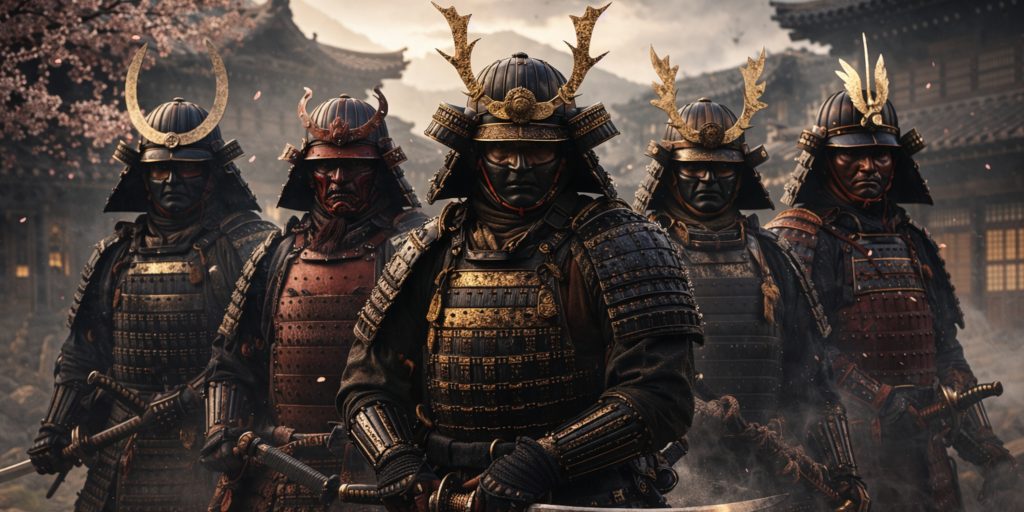
The katana emerged gradually rather than appearing overnight. Earlier Japanese swords such as the chokutō were straight bladed and heavily influenced by Chinese and Korean designs. Over time Japanese warfare changed, particularly during mounted combat in the Heian period.
This shift encouraged curved blades that cut more effectively from horseback.
The tachi became the katana’s direct ancestor. These swords were longer and more deeply curved, suspended edge downward from armour. During the Kamakura and Muromachi periods, fighting styles evolved again. Close infantry combat became increasingly common. Samurai needed a weapon that could be drawn quickly and used efficiently on foot.
That requirement produced the katana.
The new sword was worn edge upward through the belt, making rapid draw cuts possible. Contrary to popular fantasy depictions, samurai did not spend their entire lives duelling dramatically under cherry blossoms. Much of warfare involved mud, arrows, confusion and men shouting at each other while trying not to die in a ditch.
The katana simply adapted well to that environment.
History and Evolution
Heian Period (794 to 1185)
During the Heian period, elite mounted warriors relied heavily on bows. Swords existed as secondary weapons. Early curved blades began appearing during this era, particularly the tachi.
Characteristics included:
- Deep curvature
- Longer blades
- Mounted combat emphasis
- Decorative aristocratic fittings
Kamakura Period (1185 to 1333)
Many historians consider this the golden age of Japanese swordsmithing. The Mongol invasions exposed weaknesses in older blades, encouraging innovation in shape and construction.
Important developments included:
- Stronger blade geometry
- Improved heat treatment
- More practical battlefield designs
- Rise of famous smiths such as Masamune
The swords of this period are among the most valuable in existence today.
Muromachi Period (1336 to 1573)
Constant warfare during the Sengoku era accelerated sword production. Practicality became increasingly important.
Changes included:
- Faster mass production
- Standardised shapes
- Shorter blades for infantry combat
- Widespread adoption of the katana style
This period also saw the formal pairing of katana and wakizashi known as the daishō.
Edo Period (1603 to 1868)
Peace transformed the katana from battlefield weapon into status symbol. Samurai still carried swords daily, although many had limited real combat experience.
This era produced:
- Highly artistic mountings
- Sophisticated schools of swordsmanship
- Decorative rather than purely military blades
- Detailed sword etiquette traditions
Ironically, some of the most beautiful katanas emerged during a time when they were least likely to see actual warfare.
Meiji Restoration and Beyond
The abolition of the samurai class dramatically reduced sword carrying. Many blades were destroyed, exported or hidden away.
Later developments included:
- Military shin guntō officer swords
- Revival of traditional smithing in the 20th century
- Recognition of swordsmiths as cultural artisans
- Modern collecting and preservation movements
Today authentic Japanese swordsmithing survives under strict regulation.
Construction and Forging
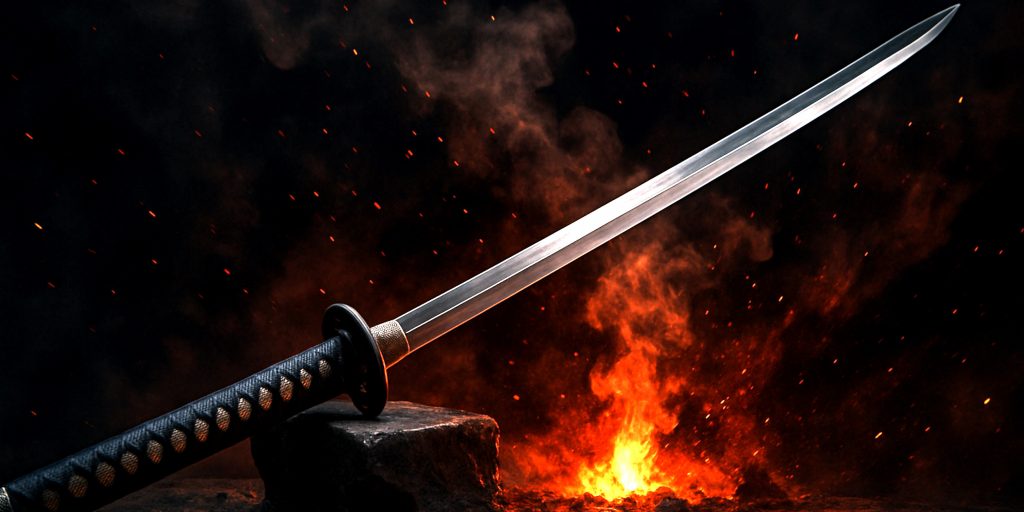
The forging process became legendary partly because it genuinely was difficult.
Traditional katana production involved:
- Smelting tamahagane steel from iron sand
- Folding steel repeatedly to distribute carbon
- Combining harder and softer steels
- Differential hardening using clay coating
- Polishing that could take weeks
The famous hamon line results from differential hardening rather than decorative engraving.
Popular culture sometimes claims folded steel created impossibly sharp “super weapons”. In reality, folding primarily compensated for inconsistent raw materials. Medieval Japanese smiths were masters of working within technological limitations rather than magicians bending physics.
Still impressive though.
Advantages of the Katana
| Advantage | Explanation |
|---|---|
| Cutting Ability | Excellent slicing performance |
| Speed | Fast draw and strike potential |
| Balance | Highly responsive handling |
| Craftsmanship | Extremely refined construction |
| Versatility | Effective in duelling and close combat |
| Cultural Prestige | Symbolic importance in samurai society |
Combat Strengths
- Effective against lightly armoured opponents
- Strong edge alignment during cuts
- Comfortable two handed grip
- Quick transition between attack and defence
- Relatively lightweight
Disadvantages of the Katana
| Disadvantage | Explanation |
|---|---|
| Limited Reach | Shorter than many polearms and some longswords |
| Edge Vulnerability | Can chip or bend if abused |
| Armour Limitations | Less effective against heavy plate armour |
| Complex Maintenance | Requires careful preservation |
| Production Cost | High quality blades extremely expensive |
Battlefield Weaknesses
- Spears often dominated mass combat
- Heavy armour reduced cutting effectiveness
- Narrow blade less forgiving during parries
- Required considerable training for mastery
The romantic idea of swords dominating battlefields tends to ignore how often spears, bows and eventually firearms determined outcomes. Samurai understood this perfectly well, even if modern cinema occasionally forgets.
Katana Compared with Similar Weapons
| Weapon | Region | Key Difference |
|---|---|---|
| Tachi | Japan | Longer and more curved, mounted edge downward |
| Wakizashi | Japan | Short companion sword |
| Nodachi | Japan | Massive battlefield sword with greater reach |
| Jian | China | Straight double edged blade |
| Dao | China | Curved sabre like sword |
| Longsword | Europe | Double edged cruciform weapon |
| Sabre | Europe | Cavalry focused curved sword |
Katana vs European Longsword
This debate never truly dies.
The katana generally excelled at clean cutting mechanics and refined handling. European longswords offered greater versatility in thrusting, half swording and armoured combat.
Both were sophisticated weapons shaped by their environments.
A knight fighting in plate armour at Agincourt needed something different from a samurai during the Sengoku wars. Historical weapons are products of context, not fantasy power rankings.
Famous Swordsmiths
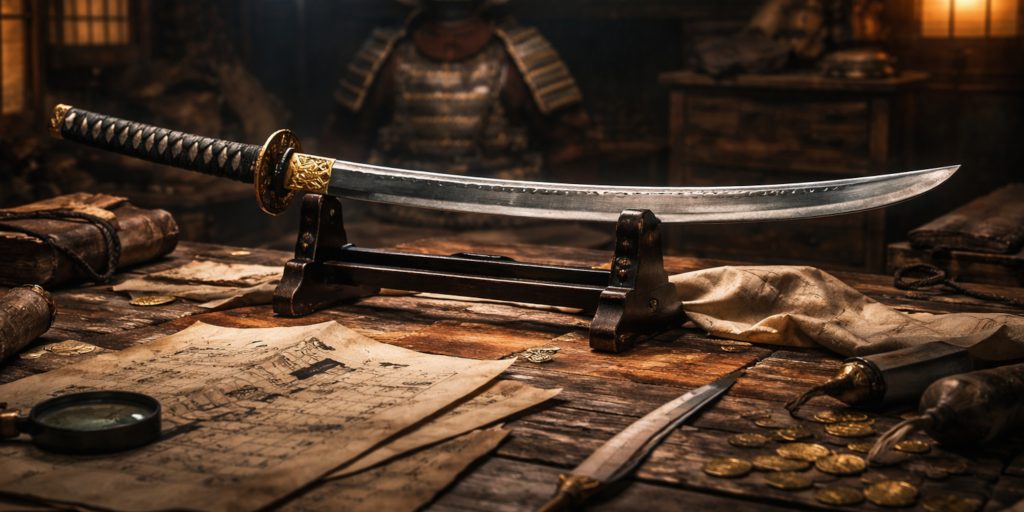
| Swordsmith | Reputation |
|---|---|
| Masamune | Legendary master smith |
| Muramasa | Notorious for deadly blades |
| Kanemitsu | Celebrated Bizen smith |
| Nagamitsu | Highly respected Kamakura craftsman |
| Kotetsu | Famous Edo period swordsmith |
Masamune
Masamune remains the most famous Japanese swordsmith. Authentic signed examples are extraordinarily rare and valuable.
Muramasa
Muramasa blades gained a dark reputation for bloodlust and misfortune. Tokugawa authorities reportedly distrusted them due to political associations.
Whether cursed or simply attached to violent owners remains open to interpretation. Historians tend to favour the second explanation. Slightly less dramatic, admittedly.
Legacy of the Katana

The katana became far more than a military tool.
Its influence extends across:
- Martial arts
- Cinema
- Anime and manga
- Video games
- Modern knife and sword design
- Japanese national identity
Films by Akira Kurosawa helped shape modern perceptions of samurai swords globally. Later franchises such as Kill Bill and Ghost of Tsushima pushed the katana even further into popular culture.
Despite endless fictional exaggeration, the historical katana remains compelling because genuine craftsmanship and cultural depth already provide enough fascination without mythology piled on top.
Where to See Authentic Katanas
Museums in Japan
- Tokyo National Museum
- Kyoto National Museum
- The Japanese Sword Museum
Museums Outside Japan
- British Museum
- Metropolitan Museum of Art
- Musée Guimet
Many museums rotate sword displays due to conservation concerns, so checking ahead is worthwhile.
Collectors Guide
Collecting Japanese swords quickly becomes expensive. Occasionally ruinously so.
Still, demand remains extremely strong.
What Collectors Look For
Important Factors
- Blade age
- Signature authenticity
- Historical provenance
- Condition
- Hamon quality
- School and smith
- Original fittings
Warning Signs
- Modern reproductions sold as antiques
- Artificial ageing
- Removed signatures
- Over polished blades
- Corrosion hidden beneath fittings
Documentation from recognised Japanese organisations significantly increases value.
Katana Price Guide
| Type | Approximate Value |
|---|---|
| Decorative replica | £100 to £500 |
| Modern functional reproduction | £500 to £3,000 |
| Antique unsigned katana | £3,000 to £15,000 |
| Signed historical blade | £15,000 to £100,000+ |
| Museum quality masterpiece | Several million pounds |
Famous Auction Sales
| Sword | Sale Value |
|---|---|
| Kamakura masterworks | Often exceed £500,000 |
| Signed Masamune blades | Potentially priceless |
| High grade Muramasa | Tens of thousands to hundreds of thousands |
Many elite swords rarely appear publicly because they remain in private collections or protected cultural holdings.
Preserving a Katana
Collectors must maintain blades carefully.
Essential Maintenance
- Store in dry conditions
- Avoid touching blade surfaces
- Apply appropriate oil lightly
- Use professional polishers only
- Never attempt amateur restoration
A bad restoration can destroy historical value permanently.
There is something quietly tragic about a 700 year old blade surviving wars, fires and political collapse only to meet its end through someone attacking it with sandpaper in a garage.
Takeaway
The katana occupies a strange place in history. It is both overrated and genuinely extraordinary at the same time.
Modern myth often inflates its battlefield supremacy beyond reality. Yet dismissing it entirely misses the remarkable craftsmanship, tactical evolution and cultural significance behind the weapon.
The best way to understand the katana is not as a fantasy object, but as the product of centuries of adaptation by highly skilled craftsmen living through periods of brutal warfare and profound social change.
That story is more than enough.