Who Was Sun Tzu?
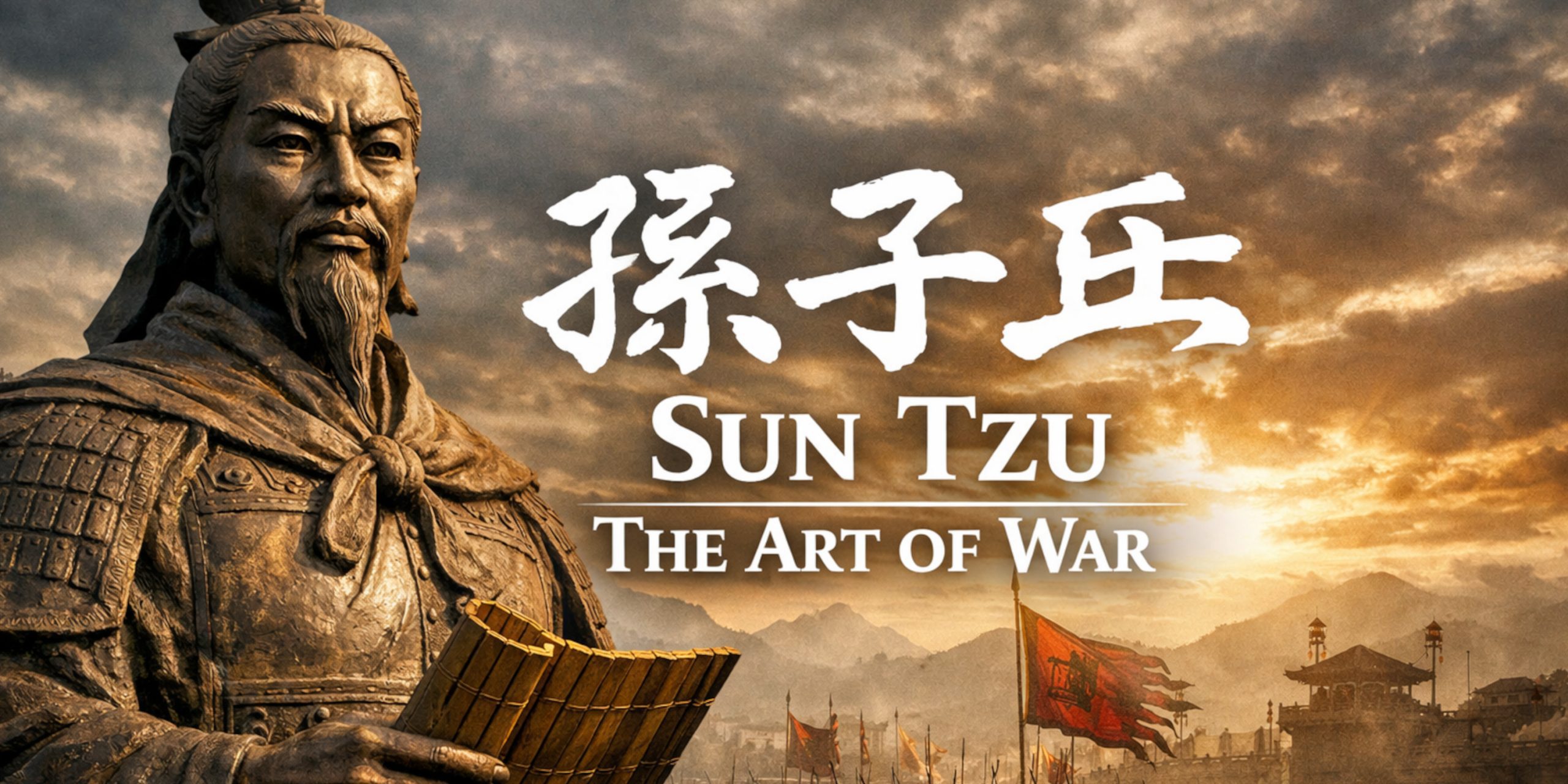
Sun Tzu is one of history’s most quoted figures and also one of its most elusive. According to traditional accounts, he lived during China’s late Spring and Autumn period, roughly the sixth century BC, and served as a military commander for the state of Wu. His name itself may not even be a personal name but an honorific, meaning Master Sun.
What we can say with confidence is that the figure we call Sun Tzu emerged from a violent and competitive age. China was fragmented into rival states, diplomacy was brittle, and warfare had become systematic rather than ritualised. This was an era where generals were expected to think, adapt, deceive, and survive. Sun Tzu fits this environment perfectly, whether as an individual or as the voice of a broader military tradition.
Later histories describe him as a commander who proved his theories in the field, most famously during campaigns against the state of Chu. These accounts were written centuries later and should be treated cautiously, though they do align well with the practical tone of the text itself.

The World That Shaped The Art of War
The Art of War was not written in a vacuum. It reflects the brutal logic of the Warring States mindset, even if it predates the formal Warring States period. Armies were growing larger, logistics mattered more than heroics, and commanders were expected to preserve their state’s strength rather than chase glory.
Bronze weapons were giving way to iron. Chariots were losing dominance to infantry formations. Warfare had become expensive, politically dangerous, and socially destabilising. In this environment, a philosophy that prioritised winning quickly and cheaply made sense.
Sun Tzu’s hostility to prolonged warfare feels almost modern. He understood that even victory could be ruinous if it drained manpower, morale, and legitimacy.
What Is The Art of War?
The Art of War is a compact text of thirteen chapters, each focusing on a core element of warfare, from planning and logistics to terrain, intelligence, and leadership. It is not a battle chronicle and it does not read like a heroic epic. Instead, it resembles a ruthless checklist written by someone who has seen things go wrong far too often.
The language is sharp and economical. Every chapter assumes that war is dangerous, uncertain, and deeply human. Fear, pride, exhaustion, and ambition are treated as weapons and weaknesses in equal measure.
Despite its brevity, the text is dense. You can read it in an afternoon and spend years arguing about what it actually means.
Core Ideas That Still Cut Deep
Sun Tzu’s most famous ideas are often reduced to slogans, but they gain weight when read together.
He insists that war is governed by calculation before combat begins. Victory is shaped long before armies meet. He places deception at the centre of strategy, not as a dirty trick but as an essential condition of survival. He treats information as more valuable than bravery and preparation as more important than numbers.
Perhaps most striking is his belief that the best victory is achieved without battle. This is not pacifism. It is cold pragmatism. Fighting is risky. Even a successful battle creates new enemies, drains resources, and destabilises rule. If you can collapse resistance through alliances, intimidation, or manoeuvre, that is the superior outcome.
As a historian, I find this refreshing. Sun Tzu has little patience for dramatic last stands. He would rather win quietly and go home alive.
Leadership According to Sun Tzu
Sun Tzu’s ideal general is not loud, glamorous, or impulsive. He values discipline, emotional control, and clarity of command. A general must be trusted by the ruler but not micromanaged. Once in the field, authority must be absolute.
He is also deeply aware of morale. Soldiers are not machines. They need structure, fairness, and confidence in their leadership. Abuse them and they will break. Confuse them and they will hesitate.
This emphasis on psychology explains why modern readers often apply The Art of War to management and politics. Strip away the spears and banners and much of it still applies.
Historical Use and Misuse
Chinese military thinkers returned to The Art of War again and again. It influenced later strategists during the Warring States period and beyond, particularly under the Qin and Han dynasties. The unification of China under Qin relied heavily on intelligence, logistics, and rapid decisive campaigns, all ideas Sun Tzu would have approved of.
In later centuries, the text became required reading for scholar generals. Its influence spread to Japan, Korea, and Vietnam, where it shaped samurai and court military education.
In the modern era, figures from Mao Zedong to business executives have claimed inspiration from Sun Tzu. Some applications are thoughtful. Others are frankly embarrassing. Quoting a line about deception does not make a hostile takeover a battlefield masterpiece.
Why The Art of War Refuses to Fade
The durability of The Art of War lies in its understanding of human behaviour under pressure. Technology changes. Politics shifts. Fear, ambition, pride, and uncertainty do not.
Sun Tzu does not promise easy victories. He promises fewer disasters if you think carefully, gather information, and avoid unnecessary risk. That message travels well across centuries.
As a historian, I am struck by how unsentimental the text is. There is no romance here, only consequences. That may be why it still feels uncomfortably relevant.
Was Sun Tzu One Man or Many?
Modern scholarship increasingly treats The Art of War as a composite work, refined over time rather than penned in isolation. This does not weaken its value. If anything, it strengthens it. The text reads like the distilled experience of generations of commanders arguing, refining, and correcting each other.
Sun Tzu, whether singular or symbolic, represents a school of thought that prioritised survival over spectacle. History has been kind to that approach.
The Takeaway
I have read The Art of War in libraries, on trains, and once during a truly dreadful academic conference. It improves every setting. The text does not shout. It does not flatter. It quietly reminds you that confidence without preparation is a liability.
If more leaders, military or otherwise, absorbed even half of its caution, history would be a slightly shorter and less bloody subject.