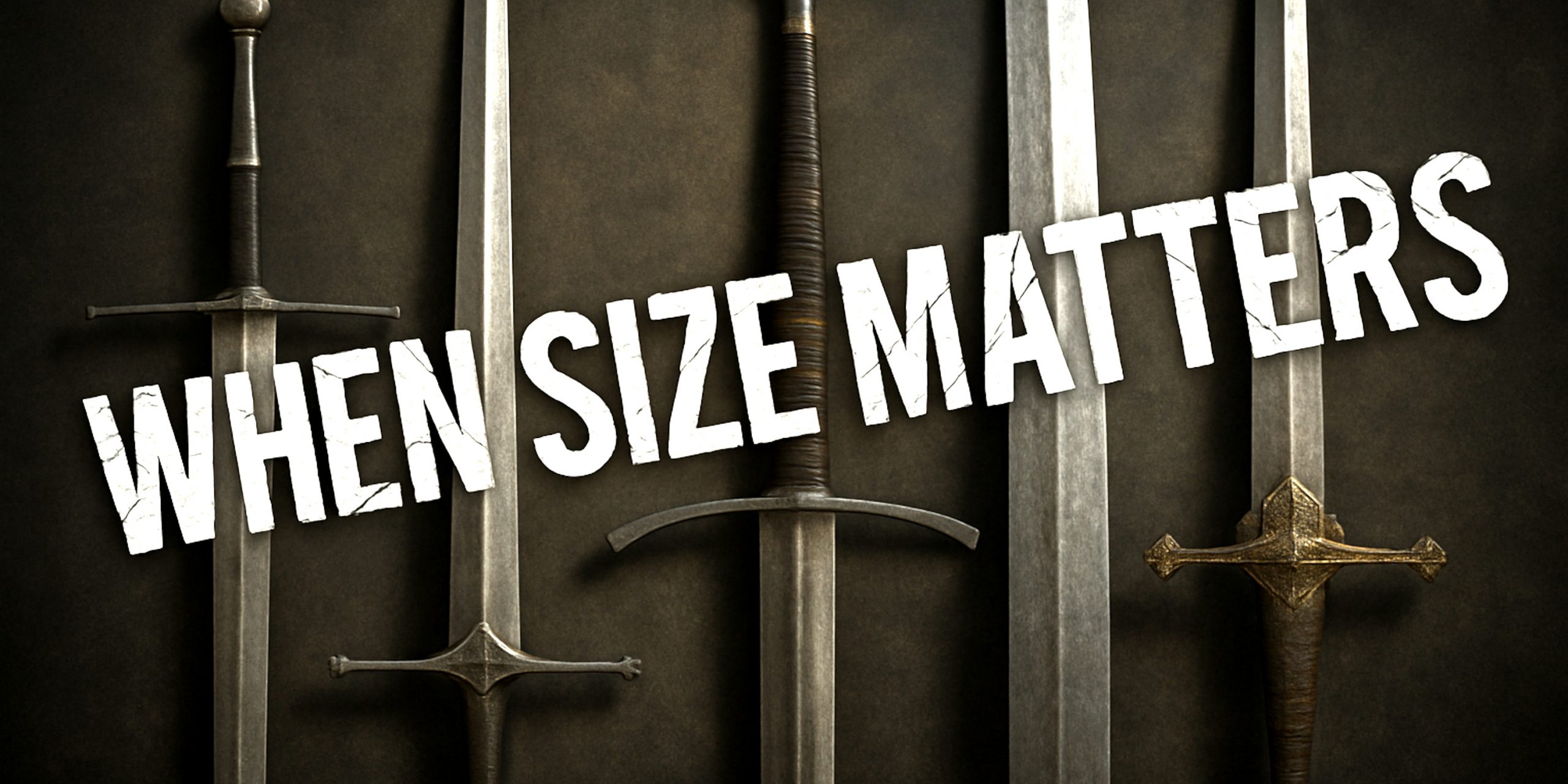
There is something about an enormous sword that pulls people in. Perhaps it is the promise of impossible strength, or the suspicion that nobody in recorded history actually used the thing. As a historian, I have spent more time than I ever expected explaining why medieval warriors did not wander around with weapons the size of flagpoles. Some blades were genuinely huge, but most obeyed the laws of physics, as even the keenest knight preferred not to dislocate a shoulder before reaching the battlefield.
This guide walks through the largest sword types history offers, what they were for, and how many myths have grown around them. The short version, if you are impatient, is this. Yes, some big swords existed, and yes, a few were swung in anger. The rest sat in armouries and impressed visitors while gathering dust.
Zweihanders, Scotland’s Claymores and Other Real Battlefield Giants
Zweihanders
German landsknechts are always the first to appear in conversations about oversized swords. Their zweihanders were usually around 150 to 180 centimetres. Large enough to look dramatic, not large enough to make their users collapse. A trained soldier could actually swing one, cut into pike formations, and still keep hold of his dignity. The myth of three metre-high examples persists because armouries loved to display ceremonial versions.
Scottish Great Claymores
Scotland is never shy about size when it comes to swords. The great two handed claymores ranged from 140 to 160 centimetres. Heavy, yes, but workable. They delivered long reaching cuts in the chaotic crush of Highland warfare. What they did not do was weigh as much as a farm gate, which is a rumour that refuses to die.
The Odachi of Japan
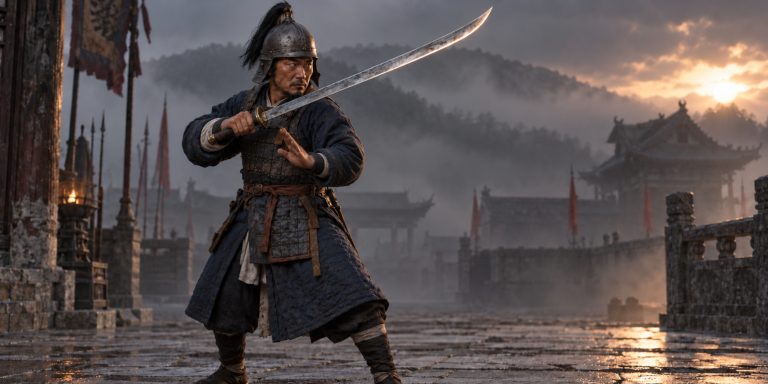
Japan produced some astonishing blades called odachi. Certain surviving examples exceed two metres. Before anyone panics, many were ceremonial or carried on the back as status objects. There is a long running argument about how many were truly swung in battle. My personal view is that some absolutely were, but likely by warriors far stronger and more determined than I will ever be.
Watch the documentary:
Swords That Cross Into Ceremony, Prestige and Theatre
Parade Zweihanders
Europe adored ceremonial showpieces. Armouries in Bavaria, Austria and northern Italy are full of towering display swords, some stretching beyond two and a half metres. They are beautifully decorated, wildly impractical and designed to be seen, not swung. They did their job, too, as visitors consistently left with the impression that the duke kept giants on the payroll.
Executioner’s Swords
Technically large swords, but not battlefield weapons. These broad, flat blades were designed to deliver a clean cut, not parry incoming iron. They ranged from 90 to 120 centimetres, with some outsized examples built more for symbolism than necessity. They remain some of the most solemn blades ever created.
Ritual Blades and Temple Odachi
Across Asia, especially in Japan and parts of China, giant blades served religious and ceremonial roles. Some were offerings, others were placed in shrines, and a few were meant to call on divine protection. The logic seems to be that if you want celestial help, it may as well be impressed by the size of your sword.
The Largest Swords Ever Made, What Evidence Shows
The Norimitsu Odachi
Often cited as the largest real sword, the Norimitsu odachi measures around 377 centimetres. It dates to the fifteenth century and weighs nearly fifteen kilograms. There is a temptation to imagine a superhuman samurai wielding it, but the craftsmanship and proportions say otherwise. It was a masterpiece for display and devotion, not combat.
Ceremonial Giants of Europe
Late medieval and early modern Europe produced several monstrous blades reaching between 250 and 300 centimetres. They appear in Swiss, German and Italian armouries, usually connected to civic parades or guard units. They demonstrate metalworking confidence more than combat practicality.
The Longest Medieval Battlefield-Usable Blades
Evidence points to a small number of functional two handed swords stretching close to two metres. These are rare and usually connected to elite troops or specialised battlefield roles. They sit on the upper limit of what a person can swing without immediately regretting every decision that led to that moment.
Could Anyone Actually Fight With Swords This Large
Short answer, some yes, most no. Human biomechanics are stubborn. Even the strongest fighters prefer something that can be recovered quickly after a strike. A weapon that takes several seconds to haul through the air is not a weapon that keeps its owner alive.
Real battlefield swords tend to follow predictable patterns. Manageable length, manageable weight, and enough leverage to control the edge. Once a blade grows beyond that range, it becomes useful for ceremony, intimidation or religious symbolism.
There is a dry irony in the fact that the most realistic giant swords belonged to landsknechts, who had a reputation for flamboyance and controlled chaos anyway. If anyone in Europe would attempt to swing something absurd, it was them.
Why We Love Giant Swords
There is a simple charm to them. They exaggerate everything people find heroic or terrifying about warfare. They inspire modern fantasy, yet they also sit quietly in museums, reminding us that medieval armourers occasionally indulged in artistic nonsense for the sake of spectacle.
As a historian, I enjoy them in measured doses. They are impressive, certainly, but they also give me more questions from museum visitors than any other category of weapon. The next time you see a three metre sword on display, remember that its greatest battle was convincing generations of onlookers that it once cleaved enemies in half. In truth, it probably battled humidity and careless tourists more than armies.
Seven Swords Takeaway
The world’s largest swords offer a curious cross between fact and fantasy. A handful were functional and fierce. Many were ceremonial, quasi religious or proudly theatrical. Every one tells a story about the culture that produced it, even if the story is simply that someone wanted a sword big enough to impress anyone who walked into the hall.