Achille Marozzo is one of those historical figures who quietly shaped an entire discipline, then spent the next five centuries being name checked by people holding swords in garages. A Bolognese fencing master of the early sixteenth century, Marozzo did not invent Italian swordsmanship, but he organised it, clarified it, and wrote it down with the patience of someone who had seen too many students doing the wrong thing with sharp steel.
What follows is a clear look at who he was, what he taught, and why his work still matters to anyone interested in historical European martial arts.
Bologna and the Business of Swordsmanship
Marozzo worked in Bologna, a city that took fencing seriously enough to formalise it. This was not swashbuckling theatre but a professional skill tied to duelling, civic defence, and personal reputation. Fencing masters operated schools, competed for prestige, and argued over technique with the enthusiasm of modern academics, but with more bruises.
By the early 1500s, Bologna had become a hub for the so called Bolognese school of fencing. Marozzo inherited this tradition rather than inventing it. His achievement was systematisation. He took a body of living practice and turned it into something that could be taught consistently.
Opera Nova and Why It Matters
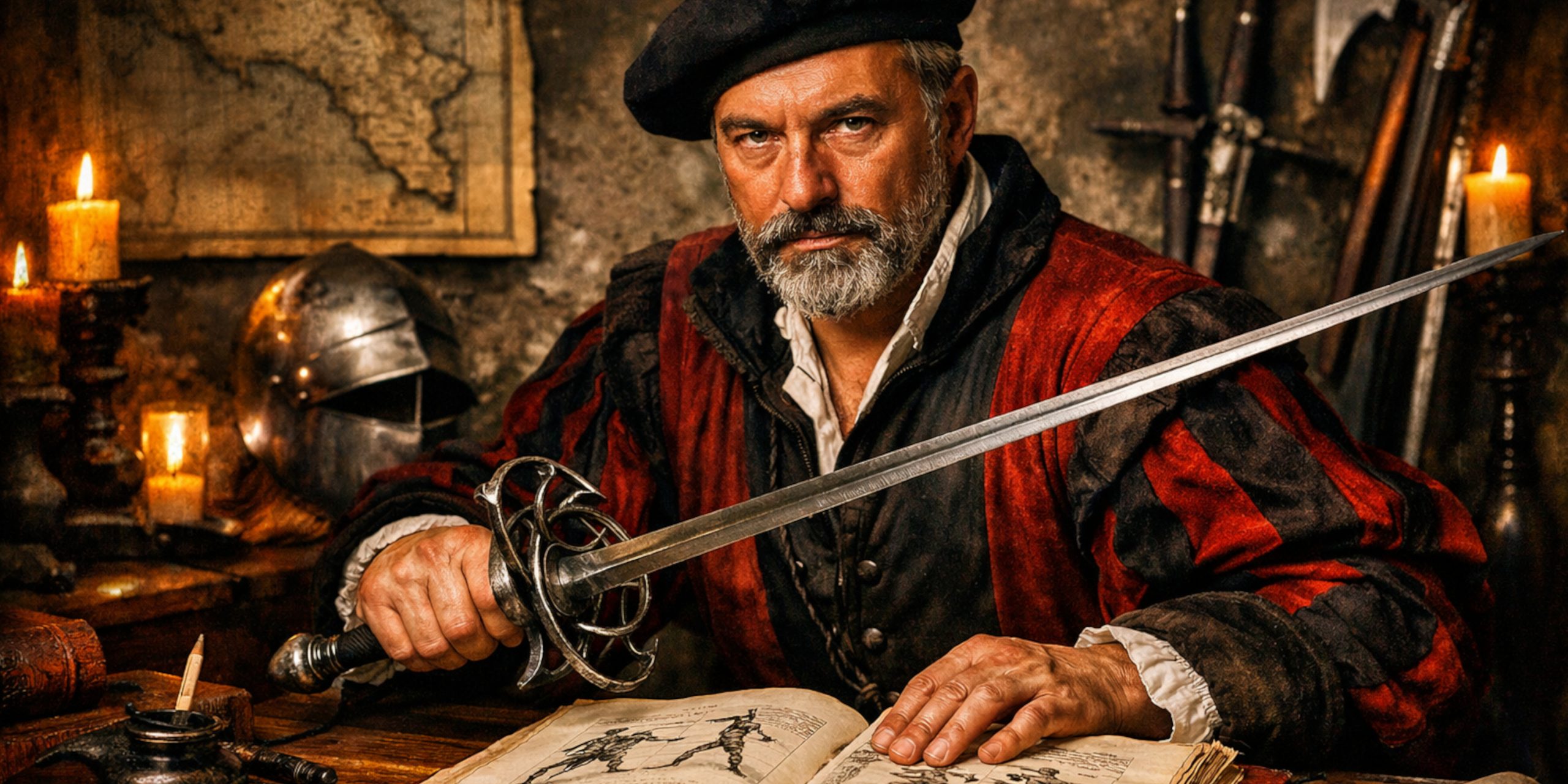
In 1536, Marozzo published Opera Nova Chiamata Duello, usually shortened to Opera Nova. This is the work that made his reputation immortal.
The treatise covers a wide range of weapons and contexts, including single sword, sword and buckler, sword and dagger, two handed sword, and polearms. It also addresses armoured and unarmoured combat, judicial duels, and civilian encounters. Marozzo was thorough to the point of obsession, which is exactly what you want from someone explaining how not to get stabbed.
His writing style is practical rather than poetic. There is little mysticism here. Guards are named, footwork is explained, and actions follow clear logic. Occasionally he digresses into etiquette or moral framing, as was fashionable, but the heart of the book is instruction.
Weapons and Techniques
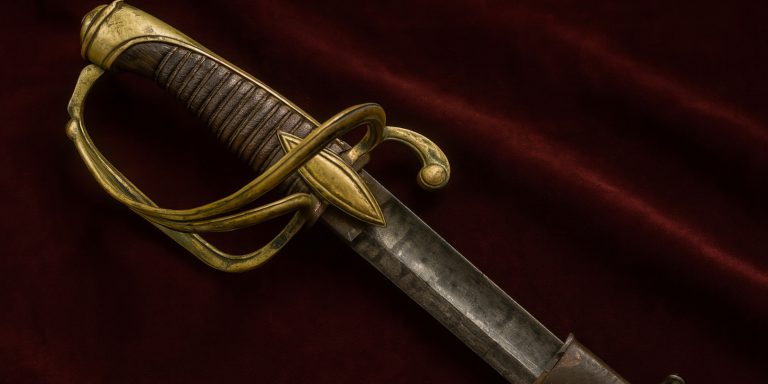
Marozzo’s world is one of transitional arms. Medieval swords are still present, but the civilian side sword is emerging as the dominant weapon. His system emphasises control of measure, timing, and line. Blows are delivered with structure rather than flourish.
One of his strengths is adaptability. The same underlying principles appear across different weapons, which suggests a teacher thinking in systems rather than tricks. He expects the reader to practice, reflect, and improve. There is no sense that reading alone will save you. Again, refreshing.
Duelling, Honour, and Reality
A notable portion of Opera Nova deals with duelling culture. Marozzo outlines how a duel should be conducted, who may act as seconds, and what behaviour is acceptable. This is not bravado. It is legal and social reality in Renaissance Italy.
From a modern perspective, these sections are both fascinating and faintly alarming. They remind us that fencing was not a sport first. It was a way of managing violence in a society that accepted personal combat as a legitimate solution to disputes.
Influence and Legacy
Marozzo’s influence spread well beyond Bologna. Later Italian masters drew heavily from his work, even when they disagreed with him. His treatise became a reference point, a baseline against which others defined their systems.
Today, historical European martial arts practitioners rely on Marozzo as a primary source for reconstructing sixteenth century Italian fencing. His clarity makes him unusually accessible, even five hundred years on. That alone is an achievement.
Where Marozzo Fits in Fencing History
Marozzo stands at a hinge point between medieval and early modern swordsmanship. He bridges the older chivalric tradition and the more refined, civilian focused fencing that would dominate the later Renaissance.
He is not flamboyant, not revolutionary, and not especially dramatic. He is methodical, experienced, and clearly tired of watching people fence badly. As a historian, I find that deeply reassuring.
Takeaway
Achille Marozzo did not promise invincibility. He offered structure, discipline, and a way to think about combat that rewards patience over bravado. His work survives because it works.
If that sounds unromantic, good. Swords are sharp, tempers are fragile, and Marozzo understood both.