James I of Aragon was one of those rulers whose nickname feels earned rather than inherited. “The Conqueror” was not courtly flattery but a reflection of real territorial change. During his long reign in the thirteenth century, the Crown of Aragon pushed decisively into the western Mediterranean, taking Mallorca and Valencia and reshaping the political map of Iberia. James was not a flawless hero and his rule was often messy, but few medieval kings left such a clear imprint on land, law, and memory.
Early Life and Rise to Power
James became king in 1213 at the age of five after the death of his father, Peter II, at the Battle of Muret. His childhood was turbulent, marked by captivity under Simon de Montfort and the constant pressure of rival nobles. Those early years bred a lifelong suspicion of overmighty magnates and a preference for personal authority, sometimes blunt, sometimes surprisingly pragmatic.
By the 1220s, James had asserted control over Aragon and Catalonia. From that point onward, his reign moved outward. Expansion was not an abstract ideal for him. It was a solution to internal tension, offering land, wealth, and purpose to restless nobles and towns.
Military Campaigns and Conquests
James’s reputation rests mainly on two great campaigns.
The conquest of Mallorca began in 1229. A large fleet drawn mostly from Catalan ports landed near Palma and fought its way inland against Muslim forces. The campaign was brutal, fast-moving, and decisive. Mallorca became a Christian kingdom under James, though later assigned to a cadet branch of his family.
Valencia followed between 1232 and 1245. This was a longer, more complex war of sieges, alliances, and negotiated surrenders. Cities such as Burriana and Valencia itself fell after sustained pressure rather than sudden assault. James showed a practical streak here, often allowing Muslim populations to remain temporarily under Christian rule, at least until demographic and political realities shifted.
What stands out, reading his own chronicle, is how personally involved he was. James rode, negotiated, threatened, prayed, and occasionally sulked. He was a king who wanted to be seen doing the work.
Arms and Armour of James I’s Era
James fought in a period when European warfare was changing but still deeply traditional in feel.
Typical arms and armour associated with his campaigns included:
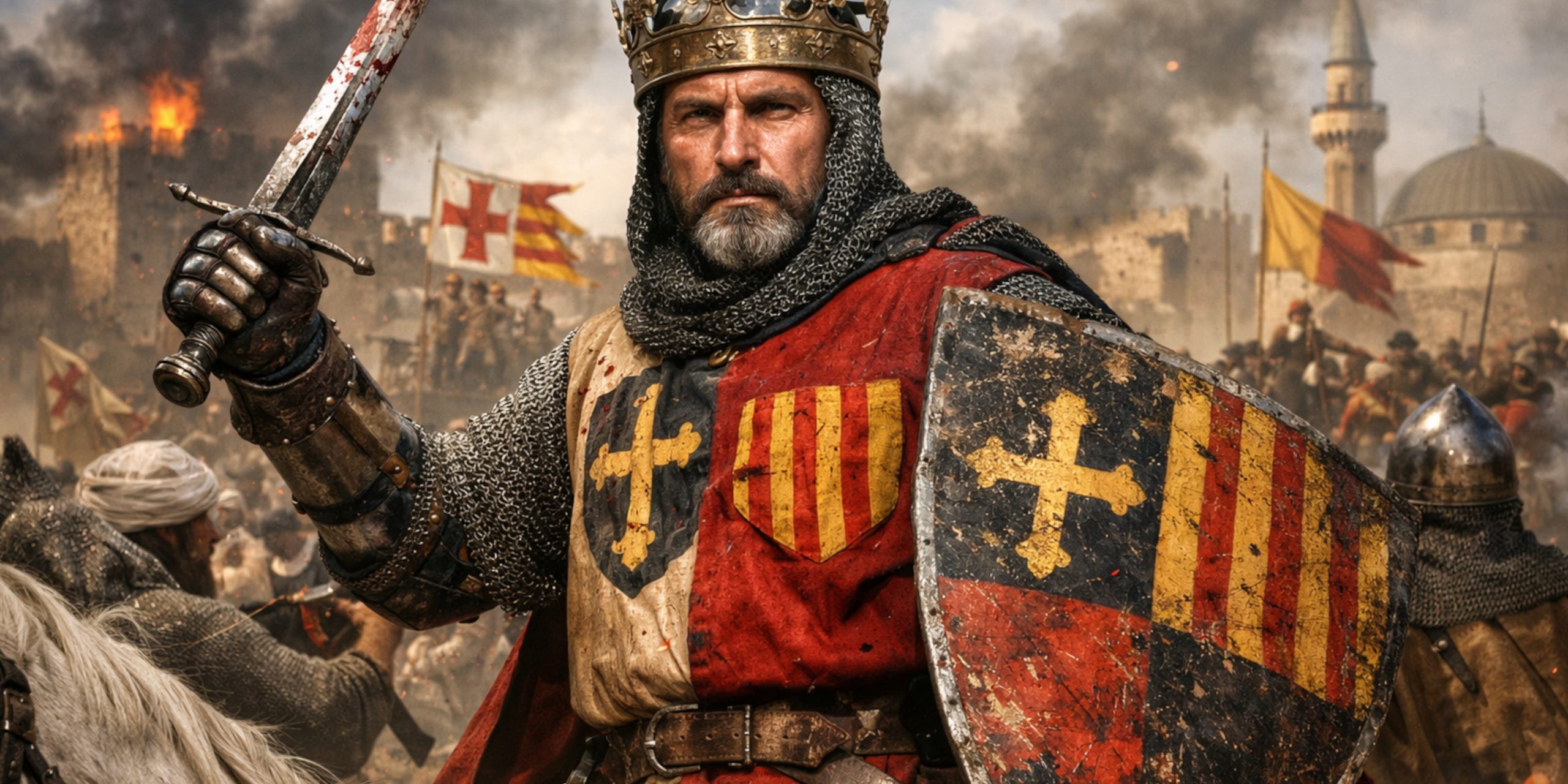
- Straight, double-edged knightly swords with simple crossguards and Brazil-nut or disc pommels.
- Kite shields early in his reign, gradually giving way to smaller heater shields.
- Mail hauberks with coifs, often worn with padded gambesons beneath.
- Conical or early great helms, offering more facial protection than earlier designs.
- Lances used in shock combat by mounted knights, especially during open-field encounters.
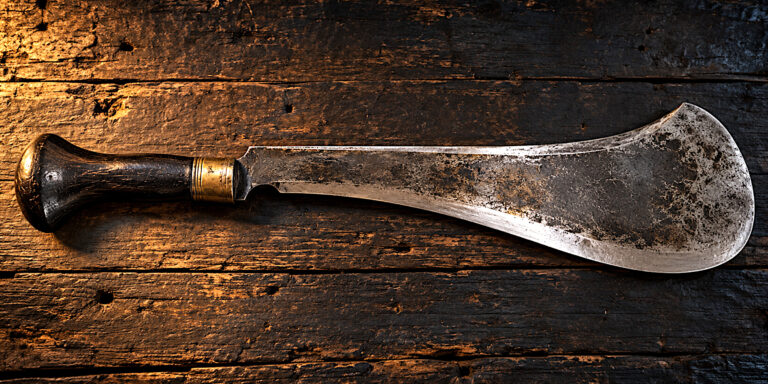
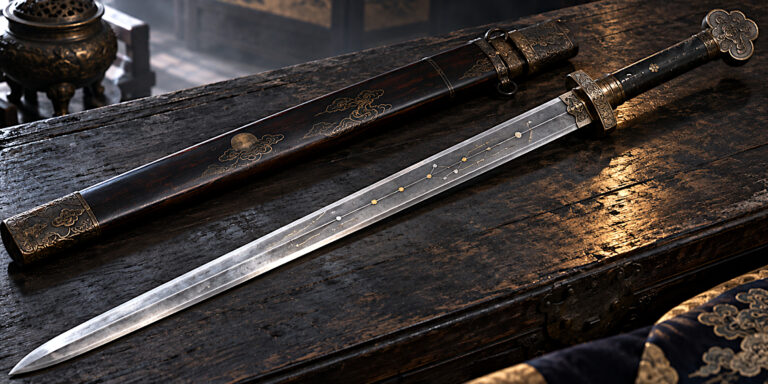
There is no surviving sword that can be securely identified as James’s own. Even so, contemporary descriptions and imagery place him firmly within the heavy cavalry culture of thirteenth-century Iberia, influenced by both northern European and local traditions.
Battles and Military Acumen
James was not a tactical innovator in the modern sense, but he was an effective commander.
His strengths lay in:
- Logistics, particularly naval transport and supply during the Mallorca campaign.
- Political warfare, keeping nobles invested through grants of land and privilege.
- Patience during sieges, resisting pressure for reckless assaults.
- Moral authority, reinforced by religious framing of his wars as divinely sanctioned.
He was less successful in internal warfare, where noble revolts flared repeatedly. James could win battles, but governing proud aristocracies required constant attention. As a historian, I find this tension revealing. His genius was expansive, not domestic.
Law, Governance, and Legacy
James did not just conquer. He organised.
In Valencia, he issued the Furs of Valencia, a legal code that blended local custom with royal authority. Similar privileges were confirmed elsewhere, creating a patchwork monarchy held together by negotiation rather than pure force.
His reign laid the foundations for Aragonese maritime expansion that later kings would exploit. Without James, there is no confident Crown of Aragon straddling Iberia and the Mediterranean.
Where to See Artefacts from His Reign
Material culture linked to James I can still be explored today.
Notable locations include:
- The Cathedral of Valencia, where objects associated with the Christian reconsecration of the city are displayed.
- The Museu d’Història de Catalunya in Barcelona, which holds arms, manuscripts, and contextual material from his era.
- The Royal Monastery of Poblet, James’s burial place, where his tomb and later royal monuments preserve the memory of his dynasty.
- Local museums in Palma de Mallorca, which display archaeological finds from the conquest period.
These artefacts do not glorify James alone. They show a society in transition, marked by conflict, coexistence, and cultural layering.
Latest Archaeology and Historical Research
Recent archaeological work in Valencia and Mallorca has focused on urban layers from the conquest period. Excavations have revealed:
- Destruction horizons linked to sieges in the 1230s.
- Rapid reorganisation of urban space, including new churches built over former mosques.
- Continued Muslim domestic material in early Christian phases, supporting written accounts of temporary coexistence.
Scholars also continue to reassess James’s own chronicle, the Llibre dels Fets. Long treated as straightforward autobiography, it is now read more critically as a crafted political text. That does not diminish its value, but it reminds us that James understood the power of narrative as well as the sword.
Final Thoughts
James I of Aragon was not subtle, and he was rarely gentle. Yet his achievements were real and lasting. He expanded borders, stabilised institutions, and left behind a kingdom that mattered on a Mediterranean scale. Reading about him, and walking the cities he reshaped, I am struck by how personal his rule feels. This was a king who wanted history to know he had been there, in the saddle, at the walls, and at the bargaining table.