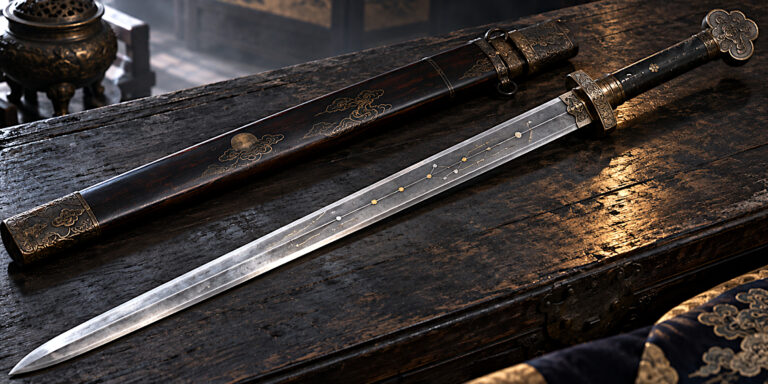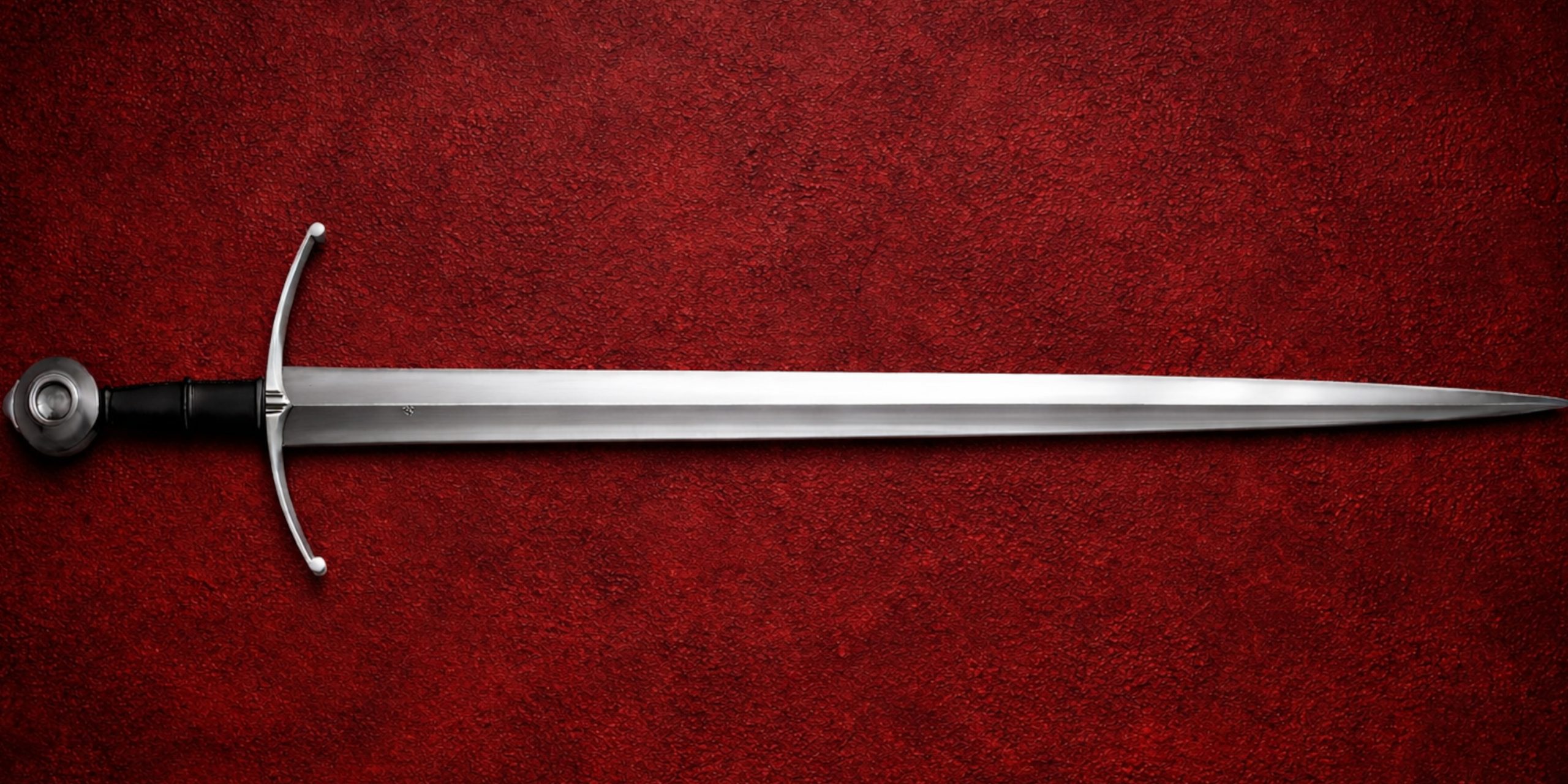
The Oakeshott Type XVIII sits at the sharp end of late medieval sword design. It appears in the fifteenth century, when armour was at its most confident and blades had to work harder for their living. These swords are refined rather than flashy, built to thrust through gaps while still cutting with authority. If earlier medieval swords feel broad and declarative, the Type XVIII feels precise, almost surgical
Defined by a stiff, tapering blade and a pronounced diamond cross section, the Type XVIII marks a clear shift in priorities. This is a sword designed for armoured opponents, judicial duels, and serious battlefield work. It rewards control and intent rather than wild cuts, and it reflects a period when swordsmanship had become highly technical.
The typology itself comes from Ewart Oakeshott, whose system remains the standard reference for medieval European swords.
Specifications
While individual examples vary, most Type XVIII swords share a common set of traits.
| Feature | Typical Characteristics |
|---|---|
| Blade length | 70 to 90 cm |
| Overall length | 95 to 120 cm |
| Blade profile | Strong taper from base to point |
| Cross section | Diamond, often with a reinforced midrib |
| Point | Acute and rigid |
| Grip | One or two handed, often waisted |
| Weight | 1.2 to 1.6 kg |
Key identifying points
- No fuller, or a very short one near the hilt
- Stiff blade optimised for thrusting
- Balanced close to the guard for control
History and Evolution
The Type XVIII emerges in the early fifteenth century and remains popular into the early sixteenth. Its rise tracks closely with improvements in plate armour. As mail gave way to hardened steel plates, wide cutting blades lost effectiveness.
Swordsmiths responded by narrowing blades, increasing stiffness, and sharpening points. The diamond cross section allowed for structural strength without excessive weight. This made the sword effective in half swording techniques, where the blade is gripped to drive the point into weak spots.
Subtypes such as XVIIIa and XVIIIb show further specialisation, with longer blades and grips suited to two handed use and judicial combat.
Advantages and Disadvantages
Advantages
- Excellent thrusting ability against armour gaps
- Strong blade with minimal flex
- Precise handling and point control
- Effective in both battlefield and duel contexts
Disadvantages
- Less cutting power than broader earlier types
- Requires trained technique to use effectively
- Narrow blade can feel unforgiving to beginners
Comparison with Similar Weapons
| Type | Key Difference | Best Use |
|---|---|---|
| Type XV | Even more rigid and spike like | Armour penetration |
| Type XVII | Heavier with hexagonal section | Battlefield durability |
| Type XVI | Broader blade with fuller | Mixed cutting and thrusting |
| Estoc | Minimal cutting edge | Dedicated thrusting |
Compared to these, the Type XVIII strikes a balance. It can still cut when needed, but its real strength lies in controlled, accurate thrusts.
Legacy
The influence of the Type XVIII is clear in later Renaissance swords. Its emphasis on point work feeds directly into civilian side swords and early rapiers. In historical fencing circles today, it is often seen as the perfect expression of late medieval swordcraft.
Collectors and practitioners value it for the same reasons medieval fighters did. It is honest, efficient, and unapologetically serious.
Where to See Examples
Original Type XVIII swords and close relatives can be found in several major collections.
- Royal Armouries, Leeds
- Wallace Collection, London
- Kunsthistorisches Museum, Vienna
- Metropolitan Museum of Art, New York
These examples show a wide range of fittings, from plain war swords to finely finished pieces made for nobles.
Collector’s Guide and Auction Prices
Authentic medieval Type XVIII swords are rare and command serious prices.
| Item | Typical Price Range |
|---|---|
| Original 15th century example | £25,000 to £80,000+ |
| Fragmentary blade | £8,000 to £20,000 |
| Museum quality reproduction | £1,200 to £3,500 |
| Custom modern smith commission | £3,000 to £7,000 |
Collector tips
- Verify provenance carefully, especially blade dating
- Watch for re hilted examples with later furniture
- Modern reproductions vary hugely in handling quality
- Prioritise reputable makers with historical research behind their work