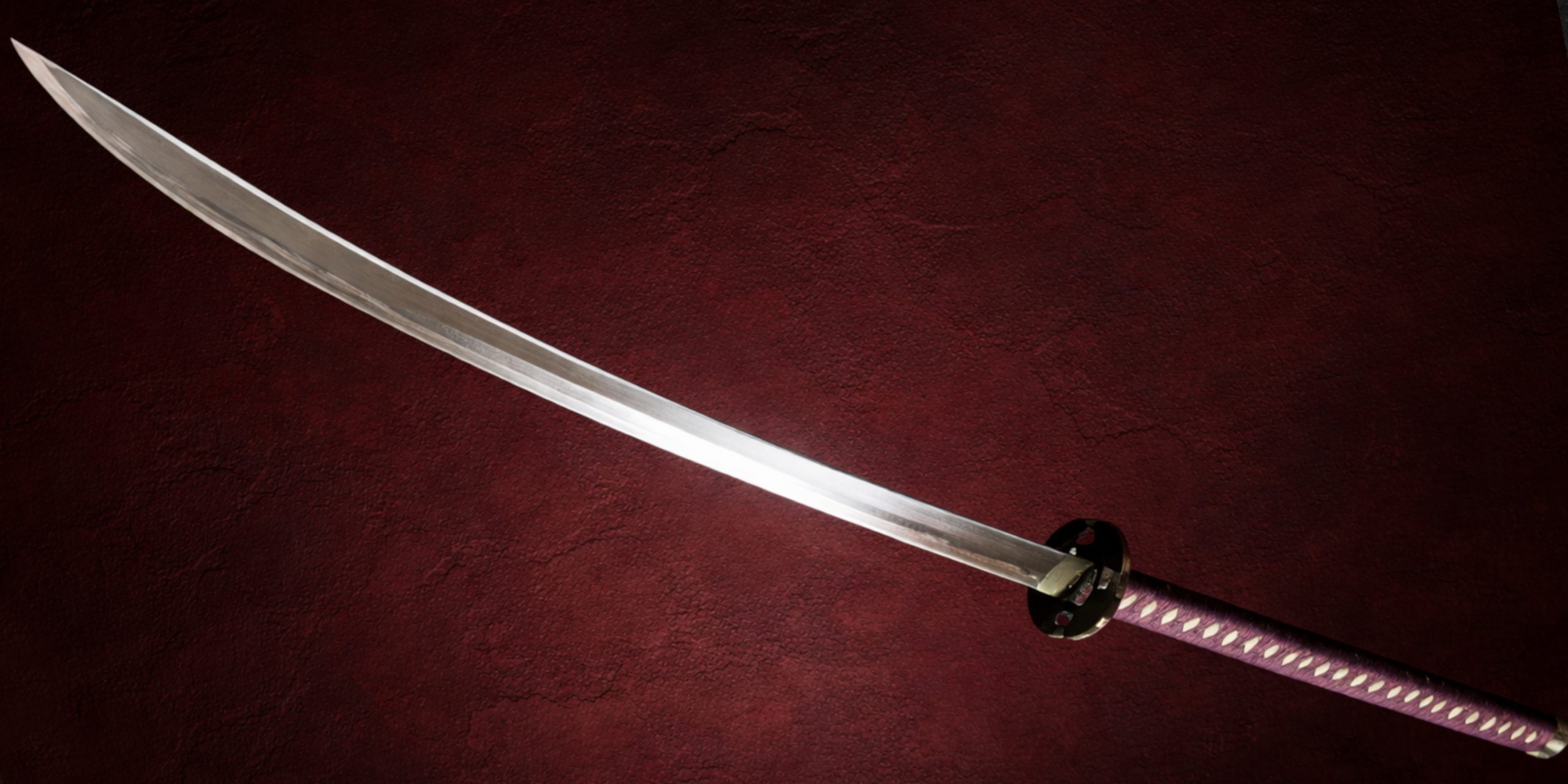
The nagamaki is one of those Japanese weapons that refuses to fit neatly into a box. Longer than a katana, shorter than a nodachi, and mounted with an unusually long handle, it sat somewhere between sword and polearm. It was built for leverage, reach, and authority on the battlefield. When a warrior drew a nagamaki, the intention was obvious. This was not a sidearm. It was a statement.
Specifications
Typical measurements varied by school and period, but surviving examples and period records give a clear profile.
| Feature | Typical Range |
|---|---|
| Overall length | 180 to 210 cm |
| Blade length | 60 to 90 cm |
| Handle length | 90 to 120 cm |
| Curvature | Moderate, similar to tachi |
| Mounting | Wrapped handle similar to katana |
| Weight | Heavier than katana, lighter than nodachi |
Key construction points
- Long tsuka wrapped like a sword rather than hafted like a spear
- Blade geometry closer to tachi traditions
- Balanced for two handed use with wide cutting arcs
History and Evolution
The nagamaki emerged during the late Kamakura and Nanbokucho periods, when battlefield conditions rewarded reach and cutting power. Infantry formations were denser, armour was improving, and mounted combat still dominated much of warfare.
Early nagamaki were closer to extended tachi with elongated handles. Over time, smiths refined proportions to improve balance and durability. By the Muromachi period, its role narrowed as yari and naginata became more practical for massed troops.
As warfare shifted toward ashigaru formations armed with spears and, later, firearms, the nagamaki faded from active service. Many blades were cut down and remounted as katana, a quiet afterlife for a weapon built for earlier wars.
Advantages and Disadvantages
Advantages
- Excellent reach without the extreme length of a nodachi
- Powerful cutting potential against lightly armoured opponents
- Two handed grip allowed strong control and leverage
- Psychological impact on the battlefield was significant
Disadvantages
- Heavy and tiring over extended engagements
- Less flexible than yari in formation fighting
- Required training and space to use effectively
- Poor choice in confined terrain or dense ranks
Comparison With Similar Weapons
| Weapon | Key Difference | Battlefield Role |
|---|---|---|
| Katana | Shorter handle, sidearm focus | Personal combat |
| Tachi | Mounted use, shorter grip | Cavalry weapon |
| Naginata | Pole mounted blade | Infantry formations |
| Nodachi | Longer blade, shorter grip | Anti cavalry, shock use |
The nagamaki sat awkwardly between categories. That awkwardness is part of why it disappeared as warfare became more standardised.
Legacy
The nagamaki survives more as an idea than a battlefield tool. It represents a transitional moment in Japanese warfare, when individual skill still mattered but mass tactics were closing in fast.
In popular culture, it is often misidentified or exaggerated, yet its real history is more interesting. It shows how Japanese swordsmiths adapted traditional blades to changing military realities without abandoning craft principles.
Martial arts schools rarely teach nagamaki today, but its influence can be seen in later long handled sword experiments and in the reverence collectors hold for surviving examples.
Where to See Nagamaki Today
Authentic examples are rare, but a few institutions hold genuine pieces.
- Tokyo National Museum
- Kyoto National Museum
- Metropolitan Museum of Art
Some regional Japanese museums also hold remounted blades originally forged as nagamaki, often identified through nakago length and curvature.
Collector’s Guide and Auction Prices
Original nagamaki in full koshirae are exceptionally scarce. Many blades survive only as shortened swords.
What collectors look for
- Clear evidence of original long handle mounting
- Uncut tang or documented remount history
- Quality of forging and hamon visibility
- Provenance or museum level documentation
Indicative auction values
- Remounted nagamaki blade: £8,000 to £20,000
- Original nagamaki with shortened handle: £15,000 to £35,000
- Fully intact nagamaki with period mounts: £40,000 plus
Prices fluctuate heavily based on condition, attribution, and papers. Fakes and misidentified nodachi are common, so caution is essential.
SEO Meta
Title
Nagamaki Sword Explained: History, Specs, and Collector Guide
Meta Description
An in depth guide to the nagamaki sword, covering history, specifications, battlefield use, comparisons, museum examples, and current collector prices.
URL Slug
nagamaki-sword-history-guide
Primary Keywords
nagamaki, nagamaki sword, Japanese long sword
Secondary Keywords
samurai weapons, Japanese swords, nagamaki vs naginata, historical Japanese arms