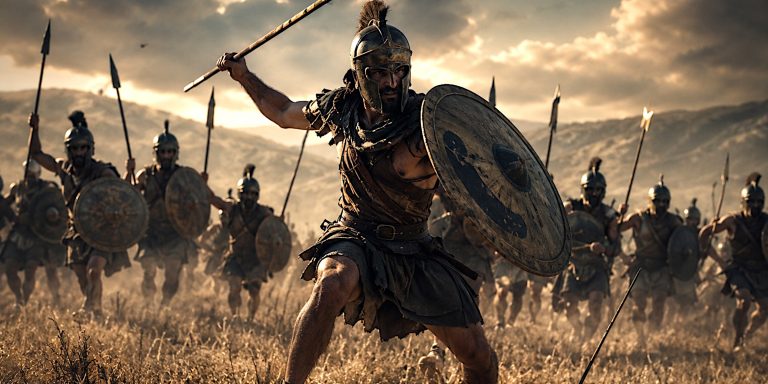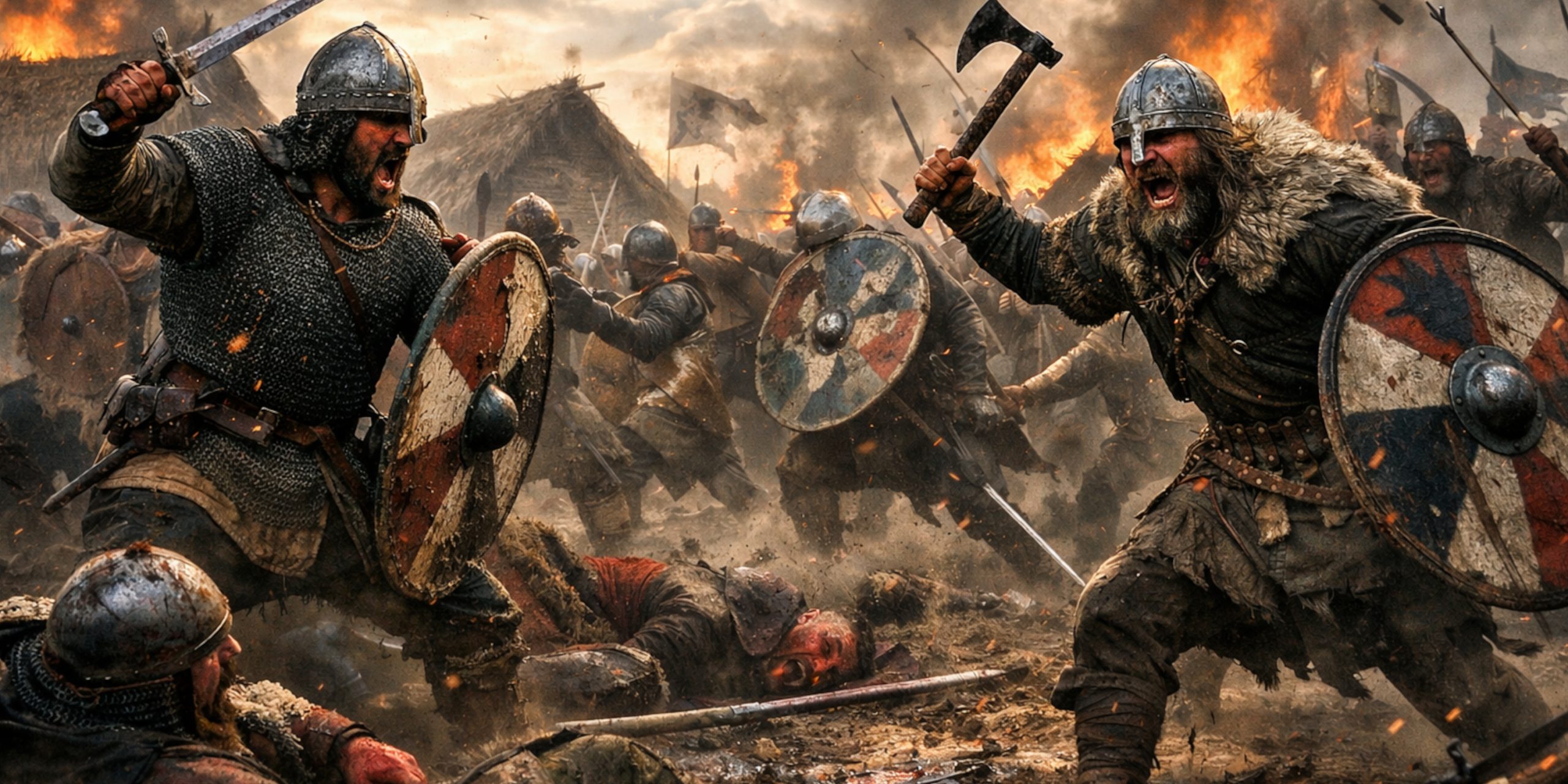
The Battle of Meretun in 871 sits in that uncomfortable middle ground of early English history where the sources are thin, the names repeat, and the consequences quietly matter. It was one of a sequence of hard fights between the West Saxons and a Viking army that refused to go home. Meretun did not decide the war, but it drained men, confidence, and time. As a historian, I find those battles more revealing than the famous victories. They show how fragile survival really was.
Background and Strategic Context
By early 871, the Viking Great Army had been active in England for years, pushing south after consolidating in Northumbria and East Anglia. Wessex was next. A series of engagements followed in quick succession, including Reading, Ashdown, Basing, and finally Meretun.
The West Saxon leadership was stretched. Kingship changed hands during the campaign, alliances were improvised, and armies were raised again and again from the same communities. Meretun belongs to this grinding phase, where neither side could land a clean blow.
Forces
West Saxons
The West Saxon army was drawn primarily from Wessex, with probable support from Mercia.
- Composition focused on the fyrd, a levy of free men
- Core of experienced retainers around the king and ealdormen
- Morale tested after repeated engagements
Leadership is traditionally associated with Æthelred of Wessex, with his brother Alfred the Great already playing a prominent military role.
Viking Army
The opposing force formed part of the Great Army operating in southern England.
- Battle-hardened troops with experience from earlier campaigns
- Likely a mix of Danish and Norse warriors
- Tactical flexibility, particularly in counter-attacks
The army was probably under leaders connected to Olaf Guthfrithson, although the sources are frustratingly vague.
Leaders and Troop Composition
| Side | Key Leaders | Estimated Strength | Core Troops |
|---|---|---|---|
| West Saxons | Æthelred, Alfred | Several thousand | Fyrd infantry, royal hearth-troops |
| Viking Army | Olaf Guthfrithson and associates | Similar scale | Professional raiders, shieldwall infantry |
Early medieval numbers are always optimistic. If a chronicler gives you a figure, halve it, then halve it again for safety.
Arms and Armour
West Saxon Equipment
- Swords
- Pattern-welded Anglo-Saxon swords, often double-edged
- Broad blades suited to shieldwall fighting
- Spears
- The most common weapon, cheap and effective
- Shields
- Round wooden shields with iron bosses
- Protection
- Helmets and mail were rare and concentrated among elites
Viking Equipment
- Swords
- High-quality Viking swords, including Frankish-import blades
- Many with lobed pommels and broad fullers
- Axes
- Bearded axes for close combat
- Spears and Shields
- Similar shieldwall equipment to their opponents
- Armour
- Mail shirts and helmets more common among leaders
On the field, these armies would have looked uncomfortably alike. Training and cohesion mattered more than kit.
The Battle Timeline
- Morning
Initial deployment, likely on contested high ground near Meretun - Early Engagement
Shieldwalls meet, with heavy casualties on both sides - Midday Turn
West Saxons gain ground, possibly breaking part of the Viking line - Viking Counter-Attack
A renewed assault regains lost positions - Late Afternoon
West Saxon forces withdraw after sustained losses
The Anglo-Saxon Chronicle records that the Vikings held the field. That usually tells you everything you need to know.
Archaeology and the Location of Meretun
Meretun is most often identified with Marton in Wiltshire, though other locations have been suggested.
- No confirmed mass graves linked directly to the battle
- Scattered early medieval finds support long-term settlement and conflict
- Place-name evidence remains the strongest clue
This is typical for ninth-century battles. Wood, leather, and flesh leave little trace. Iron travels, and stories travel further.
Contemporary Sources and Quotes
The primary reference comes from the Anglo-Saxon Chronicle, which notes:
“And there was great slaughter on either side, and the Danes had possession of the field.”
It is not poetic, but it is honest. When a chronicler gives you no heroics, the day probably hurt.
Outcome and Significance
Meretun was a Viking victory, but not a triumphant one.
- Heavy losses weakened the West Saxon leadership
- King Æthelred died shortly after the campaign
- Alfred inherited a kingdom under severe pressure
Within a few years, Alfred would be paying tribute, regrouping, and eventually reforming Wessex’s defences. Meretun reminds us how close that story came to ending early.
Takeaway
This was not a battle of destiny. It was a battle of attrition, exhaustion, and survival.
As a historian, I find Meretun valuable precisely because it lacks grandeur. It shows early England not as a rising power, but as a battered one, improvising under fire. If Alfred the Great earned his title, it was on days like this, when things went wrong and he lived long enough to learn from them.