Oswiu stands as one of the most consequential rulers of early medieval Britain, though he rarely receives the attention given to flashier warrior kings. His reign in the mid seventh century shaped the political map of England, decided the future of Christianity in the north, and brought the old pagan order to a violent end. Oswiu ruled in an age where kingship was measured by survival, alliance, and bloodshed, and he proved adept at all three. From my perspective as a historian, he feels less like a romantic hero and more like a hard edged survivor who understood when belief, steel, and diplomacy needed to work together.
Early Life and Rise to Power
Oswiu was born into the Bernician royal house, son of Æthelfrith, a king whose own career ended violently. Exile shaped Oswiu’s early life. After his father’s death, he spent years among the Irish and the Picts, absorbing not only military experience but religious ideas that would later matter deeply. When his brother Oswald fell at the Battle of Maserfield in 642, Oswiu inherited a fractured kingdom under constant threat from Mercia. Northumbria itself was divided between Bernicia and Deira, and Oswiu never fully escaped the instability that division created.
Arms and Armour
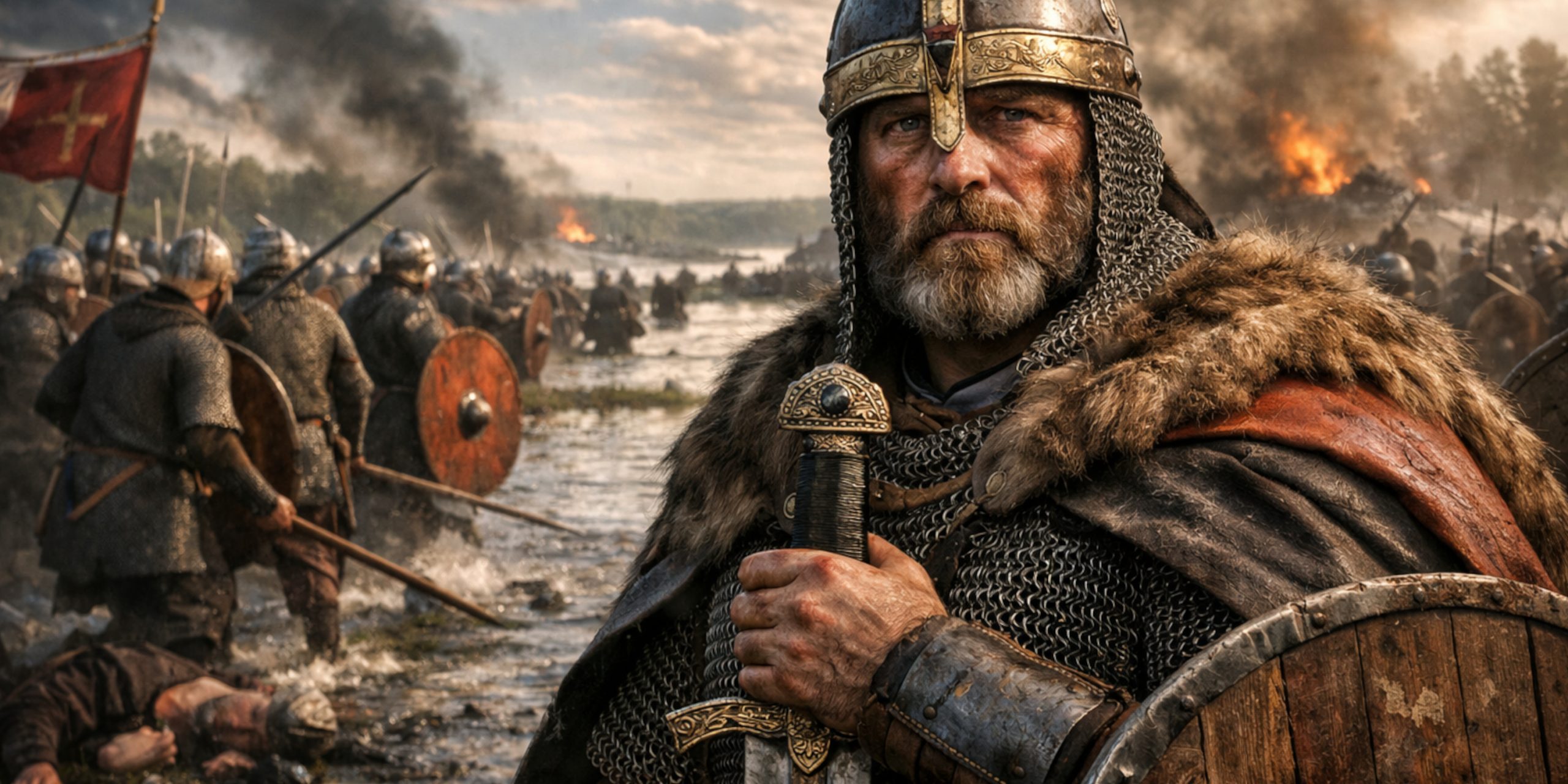
Oswiu’s warriors would have looked familiar across the Anglo Saxon world. Kings fought alongside their hearth troops, and equipment reflected status rather than uniformity. Oswiu himself likely wore a mail byrnie of riveted iron rings, costly and rare, paired with a conical helmet. While no helmet can be tied directly to him, finds like the Sutton Hoo helmet show the level of craftsmanship elite warriors expected.
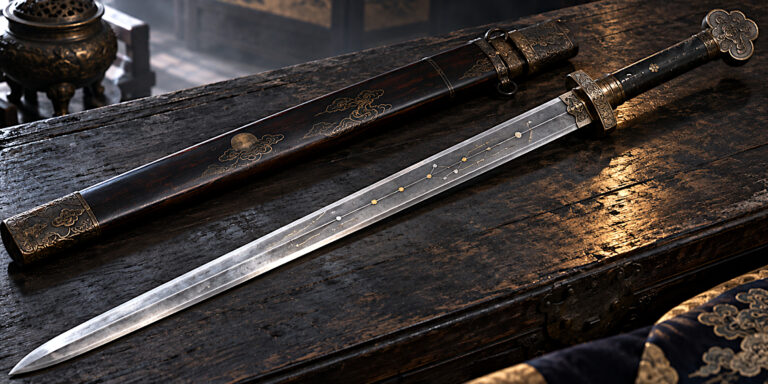
Swords were the primary symbols of authority. Pattern welded blades with organic hilts were common among the elite, while spears dominated the battlefield numerically. Shields were round, wooden, and iron bossed, essential for the shield wall tactics that defined warfare of the period. There is little doubt that Oswiu fought as a king should, visible, armoured, and at the centre of his warband. He ruled in a culture where a king who could not fight did not rule for long.
Battles and Military Acumen
Oswiu’s defining military moment came in 655 at the Battle of Winwaed. Facing Penda of Mercia, the most powerful and aggressive pagan king in Britain, Oswiu was badly outnumbered. Sources suggest desperation rather than confidence drove him into battle. His victory was decisive. Penda was killed, and Mercian dominance collapsed overnight.
What stands out is not tactical brilliance in the modern sense, but judgement. Oswiu chose the ground, likely near flooded rivers, which neutralised Mercia’s numerical advantage. He also understood the political aftermath. By installing client rulers and pushing Christianity into Mercia, he ensured that the victory reshaped England rather than remaining a single bloody episode. Oswiu’s warfare was purposeful. He fought to finish conflicts, not merely to survive them.
Religion, Power, and the Synod of Whitby
Oswiu’s authority extended beyond the battlefield. His decision to convene the Synod of Whitby in 664 settled the dispute between Roman and Irish Christian practices in Northumbria. While often framed as a religious debate, it was also a political act. Aligning with Rome brought Northumbria into the wider Christian world of Europe and strengthened royal authority over the church.
I find this moment particularly revealing. Oswiu was raised in the Irish tradition, yet chose Rome. It suggests pragmatism over sentiment, a ruler willing to disappoint allies if it meant long term stability.
Artefacts from Oswiu’s Reign
No artefact can be confidently identified as Oswiu’s personal possession, which is typical for the period. However, material culture from his reign survives in important collections. The British Museum holds seventh century Northumbrian metalwork that reflects the elite culture Oswiu ruled. The Sutton Hoo assemblage, while earlier and East Anglian, remains our best window into the world of kings like Oswiu, showing how power, warfare, and belief were expressed through objects.
Coins from his reign are extremely rare, as Northumbria had not yet developed widespread coinage. Instead, wealth was measured in land, livestock, and loyalty, all harder to preserve in museum cases.
Latest Archaeology and Research
Recent archaeology in Northumbria has focused less on individual kings and more on royal landscapes. Excavations at sites such as Yeavering suggest large scale halls and ceremonial spaces that fit Oswiu’s period closely. These were not mere residences but stages for kingship, where feasting, justice, and diplomacy occurred.
Burial archaeology continues to refine our understanding of elite warfare. Advances in metallurgical analysis have revealed just how sophisticated Anglo Saxon sword making had become by Oswiu’s lifetime. Isotope analysis of human remains also hints at the mobility of warriors and elites, reinforcing the idea that Oswiu’s court was shaped by exile, travel, and cultural exchange.
Death and Legacy
Oswiu died in 670, leaving a stronger and more unified Northumbria to his son Ecgfrith. His legacy is not one of poetry or legend, but of structure. He broke Mercian supremacy, aligned northern England with Rome, and proved that kingship could be as much about decision making as personal bravery.
From a historian’s viewpoint, Oswiu feels profoundly modern in his instincts. He understood systems of power and how to bend them. In an age that rewarded violence, he knew when belief could be the sharper weapon.
Watch the documentary: