Michel le Basque exists in a corner of pirate history where the evidence is thin, the rumours are loud, and later writers have enjoyed themselves a little too much. As a historian, particularly one used to dealing with men who preferred aliases to baptismal names, you learn to live with this. What follows is a careful reconstruction rather than a tavern tale, with occasional dry amusement where the sources invite it.
Origins and Early Life
Michel le Basque almost certainly came from the French Basque coast, likely from Saint Jean de Luz or Bayonne. These ports produced sailors in bulk and pirates in smaller but persistent numbers. Basque seamen were valued for their skill, endurance, and general unwillingness to panic in unpleasant situations. They were also deeply entangled in privateering during France’s long maritime wars with Spain and England.
There is no firm birth date. The best estimates place his birth in the late seventeenth century, making him active during the peak of Caribbean piracy rather than its romanticised aftermath.
What matters more than his childhood is his profession. He was a sailor first. Piracy came later.
From Privateer to Pirate
Like many of his contemporaries, Michel le Basque appears to have started as a privateer. This was piracy with paperwork, sanctioned violence so long as the right flags were flying and the right enemies were targeted.
When wars ended or commissions expired, experienced crews found themselves unemployed but still heavily armed. Some returned home. Others recalibrated their moral compass.
Le Basque chose the latter.
By the early 1700s, he was operating in the Caribbean, moving between the coasts of Hispaniola, Cuba, and the Spanish Main. His transition into outright piracy was likely gradual, pragmatic, and not especially dramatic.
Ships and Seamanship
Michel le Basque did not command a legendary flagship with a name designed to frighten children. He operated smaller, fast vessels suited to interception and escape.
Commonly reported vessels include:
- Small sloops and brigantines
- Lightly armed ships prioritising speed
- Crews drawn from French, Basque, and Caribbean sailors
These ships were ideal for ambushing merchantmen and disappearing before naval patrols could respond. It was not glamorous, but it was effective.
Le Basque’s reputation suggests a capable navigator and organiser rather than a reckless showman. He survived long enough to matter, which already places him above average.
Weapons and Fighting Style
Accounts of Michel le Basque’s arms are sparse but consistent with the period.
Typical equipment would have included:
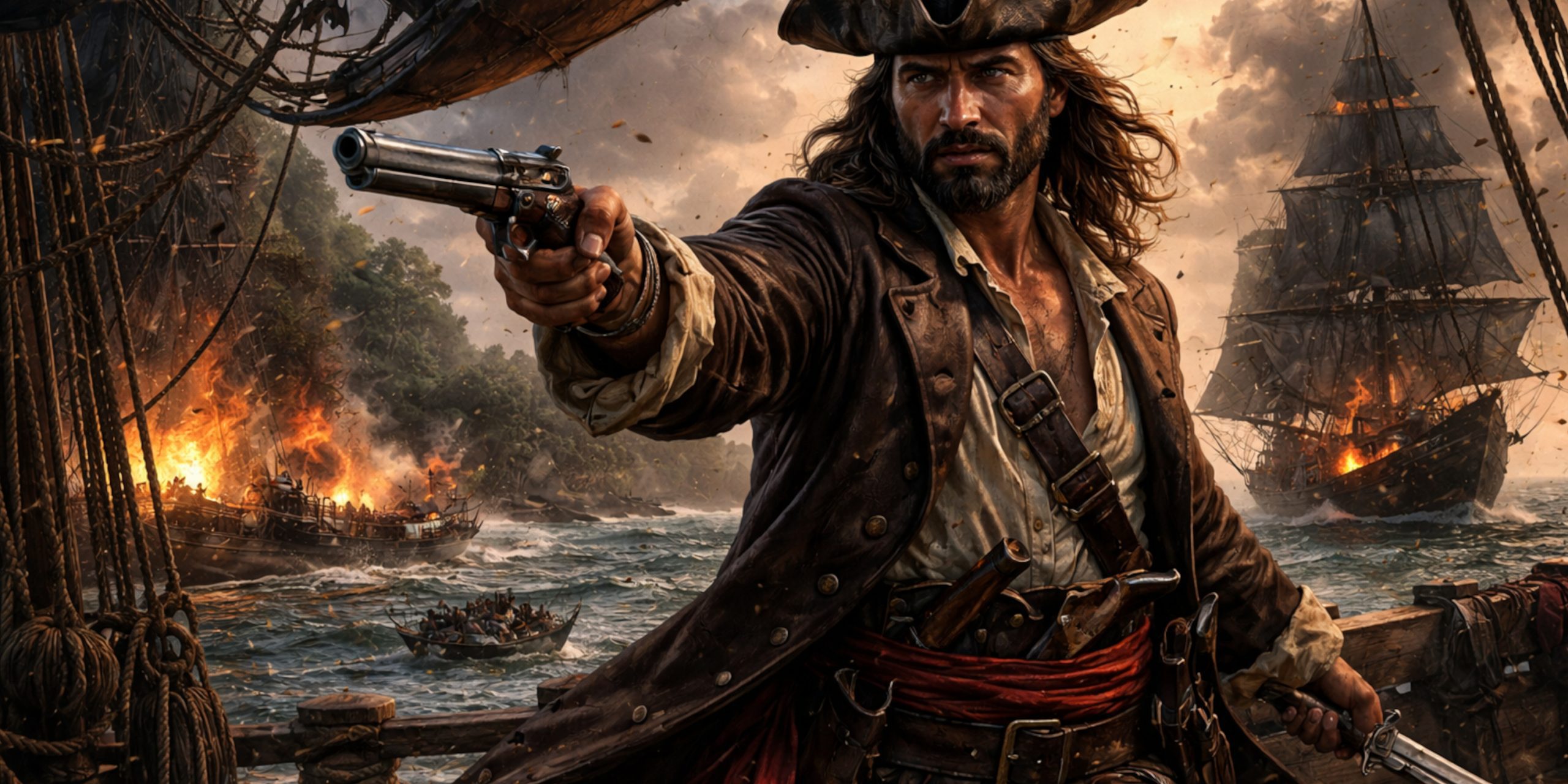
- Flintlock pistols, often carried in pairs
- A cutlass or short sabre
- Daggers for close quarters
- Muskets for ship to ship intimidation rather than precision
There is no evidence he favoured exotic or ceremonial weapons. His violence, where documented, appears functional rather than theatrical. This is not a man swinging on ropes for effect.
One contemporary description refers to him as “armed like the rest, but quicker than most.” Historians take compliments where they can get them.
Known Associates and Pirate Circles
Michel le Basque did not operate in isolation. He is most often mentioned alongside other French and Franco Caribbean pirates active in the same waters.
He is sometimes linked to Pierre Le Picard and other lesser known figures who appear in Spanish colonial complaints rather than English adventure narratives. This alone suggests he was more nuisance than legend, which again makes him more believable.
There is no credible evidence that he sailed with the largest pirate fleets or took part in major multi ship actions.
Bounty and Plunder
Precise figures do not survive, and anyone claiming exact sums should be regarded with suspicion.
That said, Michel le Basque targeted Spanish merchant shipping, particularly vessels moving:
- Silver and coin from regional trade
- Cocoa, tobacco, and hides
- Provisions intended for colonial garrisons
His takings were likely modest by pirate standards, spread across multiple raids rather than concentrated in one spectacular haul.
He does not appear in records of great treasure seizures, and there is no surviving legend of buried hoards tied convincingly to his name. Sensible pirates spent their money. Dead ones buried it.
Battles and Engagements
Michel le Basque is not associated with any single defining battle. Instead, his career is reconstructed from scattered Spanish reports describing raids, seizures, and escapes.
Typical encounters involved:
- Surprise attacks on lightly defended merchant ships
- Brief exchanges of fire
- Boarding actions decided quickly
- Withdrawal before reinforcements arrived
Spanish officials complained repeatedly about “French Basques” operating with irritating efficiency. One report describes them as “appearing without warning and vanishing just as quickly.” This is not the language of someone impressed, but it is the language of someone losing cargo.
Contemporary Quotes and Descriptions
Primary sources mention Michel le Basque indirectly rather than glorifying him.
A Spanish colonial report from the early eighteenth century refers to “a Basque called Michel, bold but cautious, who does not linger where cannon may follow.”
Another account describes him as “more fox than lion,” which may not be flattering but does suggest a survival instinct.
There are no speeches, no last stands, and no evidence he cultivated a public persona. This absence is itself revealing.
Treasure Myths and Later Embellishment
Later pirate writers occasionally inflate Michel le Basque into something grander. He acquires imaginary treasure, exaggerated cruelty, and a dramatic flair absent from the sources.
None of this survives contact with archival material.
There is no confirmed treasure cache linked to him. No island, no map, no coded confession. If he buried anything, it was probably intended for retrieval and quietly recovered.
Historians must disappoint treasure hunters from time to time. This is one of those moments.
Fate and Disappearance
The end of Michel le Basque’s life is unknown.
He does not appear in execution records, which suggests he was not captured by colonial authorities. He also does not resurface as a reformed citizen or naval officer.
The most plausible conclusions are also the least dramatic:
- He retired quietly with sufficient funds
- He died at sea without record
- He faded into anonymity under another name
For a pirate, this is not failure. It is almost success.
Historical Assessment
Michel le Basque matters not because he was famous, but because he was typical. He represents the working reality of piracy, stripped of later romance.
He was skilled, cautious, and opportunistic. He avoided grand gestures and survived long enough to leave a paper trail of irritation rather than awe.
As a historian, one develops a certain respect for men like this. They rarely make good films, but they make excellent footnotes. Sometimes, those footnotes tell us more than the legends ever could.
Watch the documentary: