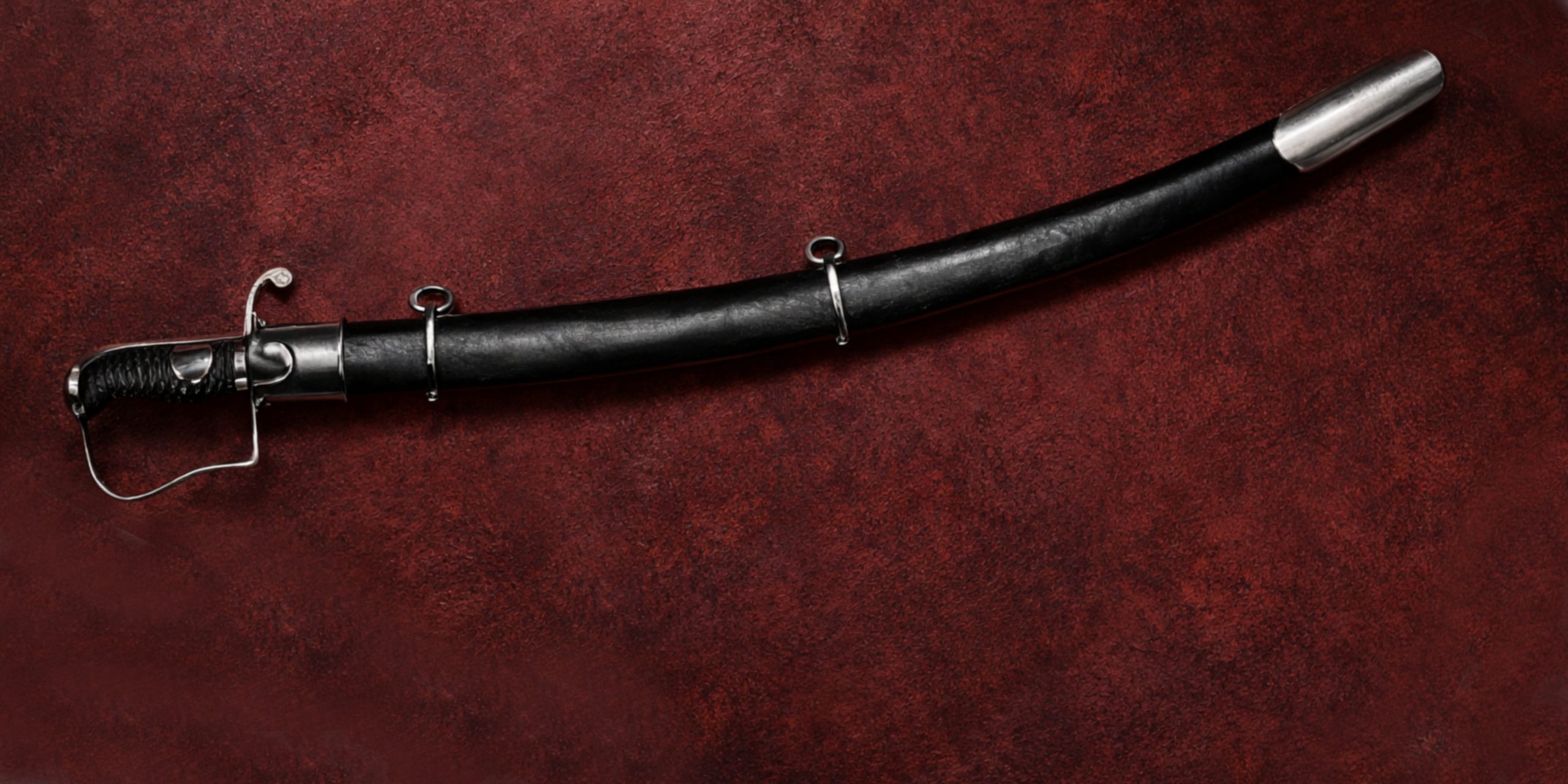
The Spada da Cavalleria 1796 sits at an awkward and interesting crossroads. It belongs to the late eighteenth century, yet it fights in the early Napoleonic world. This is a cavalry sword shaped by older European traditions but forced to adapt quickly to modern, mass warfare. Compared with later Italian service sabres, it feels less standardised and more transitional, which is exactly why collectors find it appealing.
The 1796 pattern is often associated with the Italian states and client forces operating during the French Revolutionary and early Napoleonic wars. It reflects strong French influence while retaining distinctly local construction details.
Specifications
General characteristics
- Type: cavalry sword for mounted troops
- Blade: curved, single-edged, usually with a broad profile
- Intended use: powerful cutting from horseback
- Hilt: simple but robust, prioritising grip security over refinement
Typical dimensions and features
| Feature | Spada da Cavalleria 1796 |
|---|---|
| Blade length | approx. 85 to 88 cm |
| Overall length | approx. 100 to 105 cm |
| Blade curvature | pronounced, cutting-focused |
| Blade section | broad with shallow fuller on many examples |
| Hilt material | iron or steel, plain utilitarian finish |
| Scabbard | steel or iron, suspension rings common |
Exact measurements vary widely. This period predates true industrial standardisation, so variation is normal rather than suspicious.
History and evolution
Context of adoption
The year 1796 places this sword firmly in the shadow of the French Revolutionary Wars. Northern Italy, in particular, became a major theatre of conflict, with armies reorganised at speed and equipped using whatever designs could be produced efficiently.
Italian cavalry swords of this era often echo French patterns but are not strict copies. Local workshops, military arsenals and regional traditions all left their mark.
Design influences
- Strong French stylistic influence, especially in blade curvature and cutting emphasis
- Retention of older guard forms seen in late eighteenth-century European swords
- Practical construction suited to rapid wartime manufacture
The Spada da Cavalleria 1796 represents a moment before later nineteenth-century models became fully regulated and predictable.
Advantages and disadvantages
Advantages
- Excellent cutting power due to broad, curved blade
- Lighter and more responsive than later heavy cavalry sabres
- Historically rich context tied to the Revolutionary and Napoleonic campaigns
- Noticeable hand-crafted character compared with later mass-produced swords
Disadvantages
- Less hand protection than later bowl-guard designs
- Variability makes identification more complex for new collectors
- Surviving examples are often heavily worn or repaired
- Replacement scabbards are common and not always period-correct
Comparison with similar weapons
| Weapon | Similarities | Key difference |
|---|---|---|
| French cavalry sabres of the 1790s | blade shape and cutting doctrine | Italian examples show more regional variation |
| British 1796 light cavalry sabre | strong cutting emphasis | British pattern is more standardised and better documented |
| Austrian late 18th-century cavalry swords | transitional design period | Austrian swords often retain straighter blades |
| Later Italian cavalry sabres (1860 onwards) | mounted role | later models are heavier and more regulated |
Legacy
The Spada da Cavalleria 1796 belongs to a short but decisive phase in European military history. It marks the shift from aristocratic cavalry traditions to the demands of revolutionary mass armies. While later Italian sabres appear more refined and uniform, the 1796 sword feels closer to the battlefield reality of its time.
For many collectors, that raw, transitional quality is its greatest strength.
Where to see examples
- Italian regional museums with Napoleonic collections, particularly in northern Italy
- Military history museums holding arms from the French Revolutionary and Napoleonic wars
- Archival collections documenting the armies of the Cisalpine and related Italian republics
Publicly displayed examples are less common than later nineteenth-century sabres, which adds to the appeal.
Collector’s guide and auction prices
What to check before buying
- Blade profile and curvature consistent with late eighteenth-century manufacture
- Construction techniques such as hand-forged fullers and uneven grinding
- Patina and wear patterns rather than mirror polishing
- Scabbard fit and period correctness
Typical market behaviour
| Condition and type | Typical price range |
|---|---|
| Incomplete or heavily worn examples | £300 to £600 |
| Complete but mixed components | £600 to £1,000 |
| Well-preserved, coherent examples | £1,000 to £2,000+ |
Prices fluctuate widely due to rarity, attribution and overall condition.
Common pitfalls
- Confusing later nineteenth-century sabres with earlier Napoleonic pieces
- Overpaying for aggressively cleaned blades
- Ignoring regional variation and expecting uniform specifications