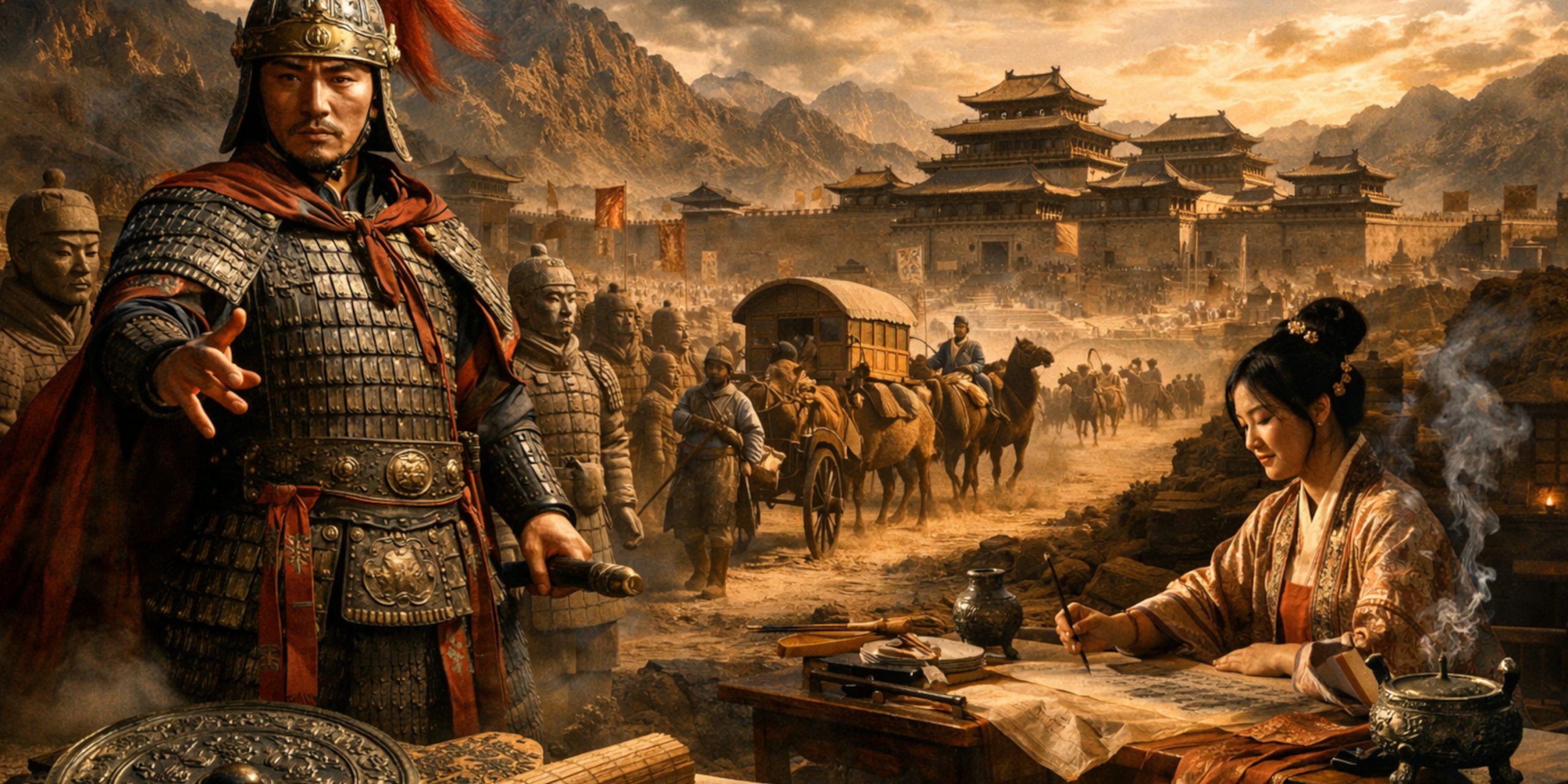
The Han dynasty sits at the point where early China stops feeling experimental and starts looking recognisably imperial. When people today speak about “Han culture,” “Han script,” or “Han people,” they are leaning on foundations laid more than two thousand years ago. That is an intimidating legacy for any dynasty, and the Han mostly lived up to it.
As a historian, I find the Han fascinating not because they were flawless, but because they were stubbornly practical. They borrowed ideas, tested systems, abandoned what failed, and quietly kept what worked. It is less romantic than epic conquest narratives, but far more impressive in the long run.
Origins and the Fall of Qin
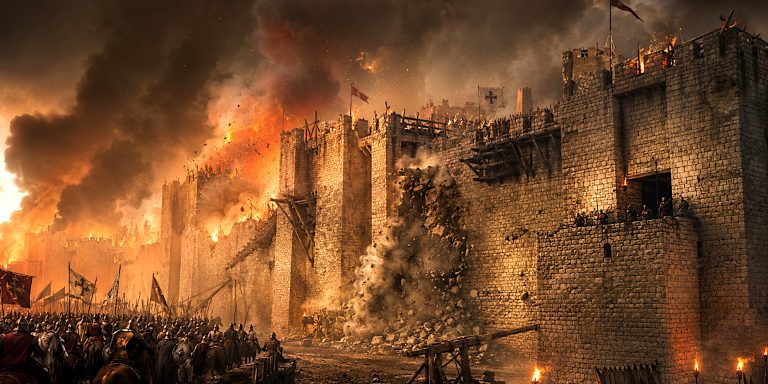
The Han emerged from the wreckage of the Qin state, which unified China with admirable efficiency and collapsed with equal speed. Qin rule was legally strict, brutally centralised, and deeply unpopular. When it fell apart in 206 BCE, China did not politely queue for stability. It fractured into warlord conflict.
Out of this chaos stepped Liu Bang, a former minor official with limited aristocratic pedigree and considerable political instinct. He defeated his rival Xiang Yu and founded the Han dynasty. It is worth noting that this was not destiny at work. Liu Bang survived through compromise, timing, and a talent for listening to clever advisers. Historians tend to admire that sort of thing.
Early Han Rule and Political Structure
The early Han emperors softened Qin centralisation without dismantling it. The empire was divided into commanderies governed by officials appointed from the centre, alongside semi-autonomous kingdoms ruled by imperial relatives. This hybrid model caused friction, rebellions, and eventually reform. The kings lost power. The centre quietly won.
Confucian ideas gradually replaced Legalist severity as the guiding philosophy of government. This did not mean the Han became gentle. It meant authority learned how to justify itself with moral language. Confucianism offered hierarchy, duty, and social order, which are very attractive concepts when ruling millions of people.
Emperor Wu and the Height of Han Power
The reign of Emperor Wu of Han marked the dynasty’s most ambitious phase. Emperor Wu expanded the empire aggressively, pushing into Korea, Vietnam, and Central Asia. He strengthened the state, centralised power, and promoted Confucianism as official ideology.
He also spent staggering amounts of money. Military campaigns, court rituals, and immortality experiments are rarely cheap. Emperor Wu’s reign is impressive, but it is also a reminder that expansion comes with invoices that someone else eventually has to pay.
The Silk Road and Foreign Contact
The Han dynasty formalised long-distance trade routes that later scholars would label the Silk Road. Silk moved west. Horses, glassware, and ideas moved east. The Han court was aware it was not the centre of the universe, although it would have preferred otherwise.
Contact with Central Asian states reshaped diplomacy and warfare. The acquisition of superior horses alone had a significant impact on military capability. Trade was not just economic. It was strategic, cultural, and occasionally irritating when foreign envoys failed to observe correct court etiquette.
Society, Family, and Daily Life
Han society was rigidly hierarchical but deeply domestic. The family was the basic unit of moral order. Filial piety mattered. Ancestral rituals mattered. Women were expected to manage households, raise heirs, and maintain family harmony.
That said, women were not invisible. Elite women could wield considerable influence, particularly within the palace. Ban Zhao, a historian and scholar, reminds us that women could write, teach, and shape intellectual life, even while being told to be modest about it. A familiar contradiction, unfortunately.
Economy, Agriculture, and Technology
Han economic strength rested on agriculture. Iron tools, improved ploughs, and state-managed granaries increased productivity. Taxes were paid in grain and labour, tying peasants tightly to imperial administration.
Technological innovation flourished. Paper emerged in rudimentary form. Advances in metallurgy, crossbow design, and hydraulic engineering supported both civilian and military life. The Han were practical engineers, not dreamers, which is why their systems endured.
Law, Punishment, and Administration
Despite Confucian rhetoric, Han law remained strict. Punishments could be severe, although less theatrical than under the Qin. Bureaucracy expanded dramatically. Officials were assessed on performance, not birth alone, although aristocratic advantages never fully disappeared.
This was an empire run on documents, seals, reports, and inspections. Anyone who enjoys administrative history will find the Han deeply satisfying. Anyone else may wish to sit down.
Religion, Belief, and the Supernatural
Han religious life blended ancestor worship, cosmology, and emerging Daoist thought. Omens mattered. Portents mattered. A suspiciously shaped cloud could spark court debate.
Emperors sought harmony between Heaven and Earth. When floods or famines struck, it was interpreted as cosmic criticism. This placed moral pressure on rulers, which is admirable in theory and inconvenient in practice.
Decline and Internal Strain
By the late Eastern Han period, the dynasty struggled under corruption, factionalism, land concentration, and court intrigue. Eunuchs and officials competed for influence. Regional warlords gained autonomy.
Peasant uprisings, most famously the Yellow Turban Rebellion, exposed deep social stress. The central government weakened. Authority fragmented. By 220 CE, the Han collapsed, giving way to the Three Kingdoms period, which is far more famous in popular culture and far less stable in reality.
Legacy of the Han Dynasty
The Han dynasty defined what a Chinese empire should look like. Its administrative systems, cultural norms, and political ideals shaped later dynasties for centuries. Even today, the name “Han” carries ethnic and cultural meaning.
From my perspective, the Han succeed not because they were perfect, but because they learned. They adapted Qin structures, moralised power, embraced bureaucracy, and tolerated contradiction. That may not sound glamorous, but it is how empires survive longer than a generation.
History rarely rewards brilliance alone. It favours endurance, paperwork, and people willing to compromise. The Han understood that. They probably would not have phrased it that way, but then again, they were busy running an empire.
Han Dynasty Timeline with Major Military Campaigns
206 to 202 BCE | War of Chu and Han
The collapse of Qin rule leads to a prolonged civil war between rival powers. Liu Bang defeats Xiang Yu after years of shifting alliances, attrition, and strategic patience. The conflict ends at Gaixia, where Xiang Yu is encircled and commits suicide. The Han dynasty is founded not through brilliance alone, but through endurance and an ability to let rivals exhaust themselves.
202 to 180 BCE | Internal Pacification Campaigns
Early Han rulers focus on suppressing remaining warlords and rebellious kings. Military action is limited and deliberate. The goal is stability, not spectacle. Garrisons are placed across the empire to discourage renewed fragmentation, which proves wise given human nature.
154 BCE | Rebellion of the Seven States
Several semi autonomous kingdoms rise against central authority. Imperial forces mobilise quickly, defeating the rebels after a series of regional campaigns. The outcome reshapes the dynasty. Kingdoms lose military independence, and the emperor gains direct control over most armed forces. This is a turning point where compromise gives way to centralisation.
133 to 89 BCE | Han–Xiongnu Wars
Under Emperor Wu of Han, the Han launch sustained campaigns against the nomadic Xiongnu confederation along the northern frontier.
Early expeditions rely on defensive fortifications and tribute. Later campaigns become aggressively offensive, using cavalry, crossbows, and long supply lines. Han generals push deep into the steppe, securing territory and weakening Xiongnu power. Victory comes slowly and at enormous cost, both financial and human. Emperor Wu gets his borders. The treasury quietly suffers.
138 to 119 BCE | Western Expeditions and Central Asia
Diplomatic missions led by Zhang Qian evolve into military-backed expeditions. Han armies secure routes through the Hexi Corridor and establish commanderies in modern Gansu and Xinjiang. These campaigns protect trade routes and extend imperial influence into Central Asia. Military necessity and commercial ambition overlap neatly here.
111 BCE | Conquest of Nanyue
Han forces invade the southern kingdom of Nanyue, incorporating parts of modern southern China and northern Vietnam. Naval operations, river warfare, and tropical logistics challenge Han commanders. The campaign succeeds, expanding imperial reach into subtropical regions and reshaping southern administration.
109 to 108 BCE | Campaigns in Korea
Han armies move against Wiman Joseon in the Korean Peninsula. After prolonged fighting, the Han establish commanderies, including Lelang, extending Chinese political and military influence into northeast Asia. Control is maintained through garrisons and local cooperation rather than constant campaigning.
1st Century CE | Frontier Defence and Limited Expansion
During the early Eastern Han period, military activity becomes more defensive. Fortifications are strengthened, border commanderies reinforced, and expeditions limited. The emphasis shifts from conquest to containment, partly due to budget realities and partly due to court politics that discourage bold generals.
73 to 102 CE | Renewed Xiongnu Campaigns
Eastern Han generals, most notably Ban Chao, conduct long term operations in Central Asia. These campaigns reassert Han authority along trade routes and suppress hostile states. They rely heavily on diplomacy backed by force, a combination the Han had learned to value.
184 CE | Yellow Turban Rebellion
A massive internal uprising erupts across northern China. Although eventually suppressed, the rebellion forces the court to rely on regional generals and locally raised armies. This decision solves the immediate crisis and creates a long term one.
189 to 220 CE | Warlord Conflicts
As central authority weakens, military power shifts to regional commanders. Campaigns become personal, political, and increasingly detached from imperial control. Figures such as Cao Cao dominate the battlefield, while the emperor becomes a symbolic presence rather than a commanding one.
220 CE | End of Han Rule
The last Han emperor abdicates. The empire fragments into competing states, each claiming Han legitimacy. The dynasty ends, but its military systems, strategic geography, and administrative habits continue shaping Chinese warfare for centuries.