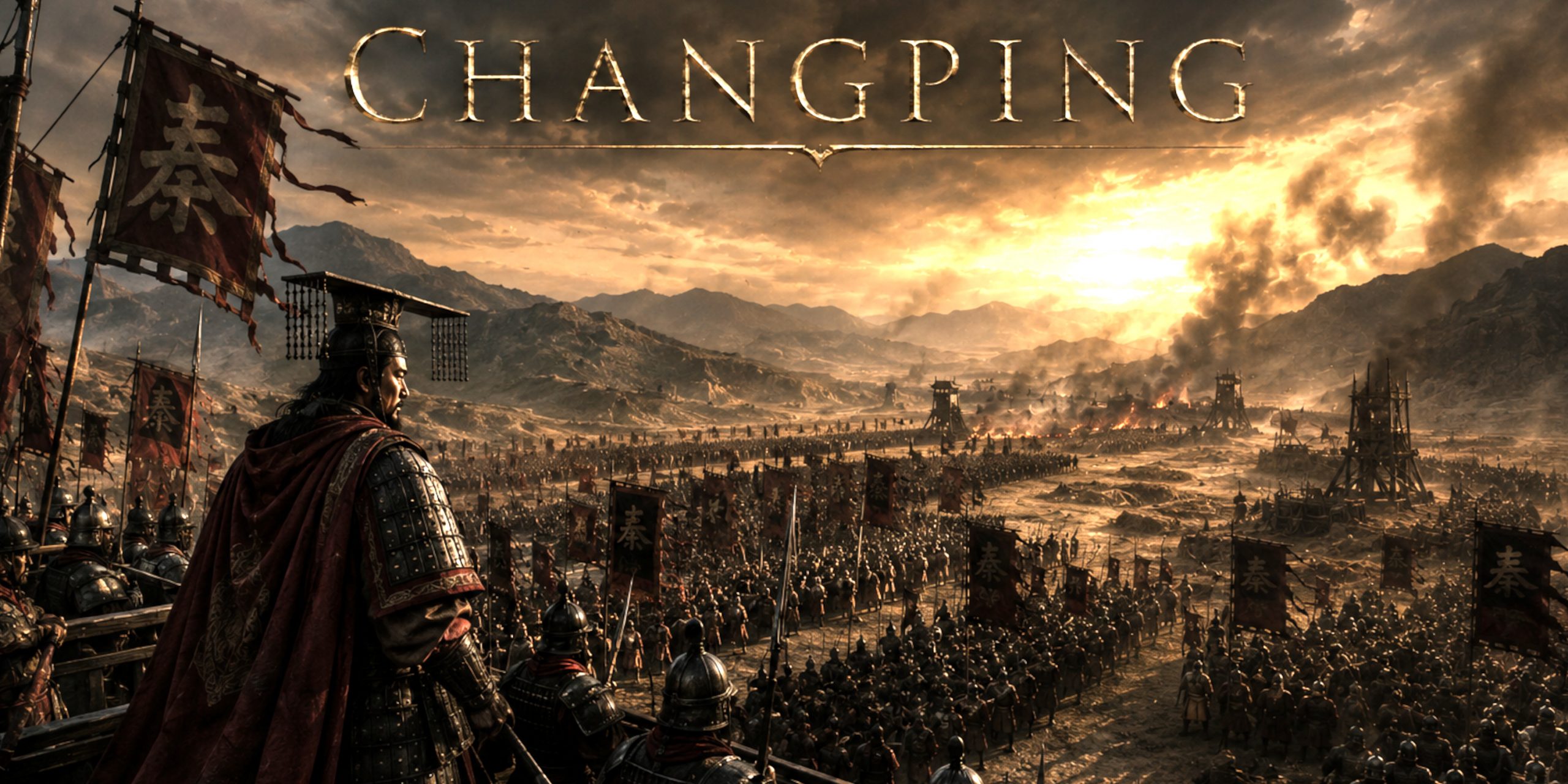
The Battle of Changping, fought between the states of Qin and Zhao in 260 BCE, was one of the decisive military confrontations of China’s Warring States period. It was also one of the most infamous.
Later Chinese histories describe an extraordinary campaign involving armies numbering in the hundreds of thousands, ending with the destruction of Zhao’s field army and the killing of enormous numbers of prisoners. The traditional figure of around 400,000 Zhao captives killed after surrender has made Changping a byword for massacre.
Those numbers need handling carefully. Our fullest narrative comes from Sima Qian’s Records of the Grand Historian (Shiji), written more than a century after the battle. Archaeology around the traditional battlefield has established that serious fighting and mass death occurred in the region, but it cannot simply certify every figure or dramatic detail preserved by later historians.
What is far harder to dispute is Changping’s strategic importance. Zhao lost an army it could scarcely replace. Qin survived an exhausting campaign, retained its military ascendancy and moved another considerable step towards the eventual conquest of the rival states.
As battles go, Changping has almost everything a military historian could ask for: political miscalculation, deception, logistics, competing generals, fortifications and a spectacular encirclement. Unfortunately, it also has several hundred thousand dead.
Battle of Changping at a Glance
| Detail | Battle of Changping |
|---|---|
| Date | 260 BCE, following campaigning that began in 262 BCE |
| Period | Warring States period |
| Location | Changping region, around modern Gaoping, Shanxi |
| Belligerents | Qin and Zhao |
| Qin commanders | Wang He initially, later Bai Qi |
| Zhao commanders | Lian Po initially, later Zhao Kuo |
| Result | Decisive Qin victory |
| Traditional Zhao strength | Around 450,000 |
| Traditional Qin strength | Often reconstructed as comparable or larger |
| Traditional Zhao losses | Around 450,000 killed or captured across the campaign |
| Strategic significance | Catastrophic weakening of Zhao and strengthening of Qin |
The traditional figures are ancient literary numbers rather than modern military returns and should be treated accordingly.
Why Was the Battle of Changping Fought?
Changping was part of a much larger struggle for control of northern China.
During the third century BCE, Qin had become increasingly formidable. Reforms traditionally associated with Shang Yang had strengthened central government, taxation, agricultural production and military organisation. Qin could mobilise large armies and, equally importantly, sustain campaigns beyond its traditional heartlands.
The immediate crisis concerned Shangdang, a strategically important region controlled by Han.
Qin pressure had effectively isolated Shangdang from the rest of Han. Rather than surrender the territory to Qin, local officials offered it to Zhao. Zhao accepted.
It was a tempting prize, but accepting it meant inheriting Han’s confrontation with Qin.
The Zhao court was divided over the decision. According to the Shiji, Pingyang Jun warned that taking the territory would bring greater disaster than benefit. Pingyuan Jun argued that acquiring an entire commandery without fighting for it was too valuable an opportunity to refuse.
The second argument prevailed.
One suspects Qin was unlikely to appreciate this piece of opportunistic property acquisition. It did not.
The Campaign Before the Decisive Battle
Qin invaded the disputed region and drove inhabitants of Shangdang towards Zhao territory.
Zhao deployed an army under Lian Po, an experienced commander whose approach would define the first phase of the campaign.
Initial encounters favoured Qin. Rather than continue exchanging casualties in open battle, Lian Po adopted a defensive strategy. Zhao troops fortified their positions and refused repeated Qin attempts to provoke a major engagement.
This has sometimes been portrayed as cowardice or excessive caution. Militarily, it made considerable sense.
Qin was operating offensively and had to maintain an enormous army in hostile territory. A prolonged stalemate therefore imposed substantial logistical costs on the attacker.
Lian Po was effectively asking Qin a rather awkward question: how long can you afford to stay here?
Forces at Changping
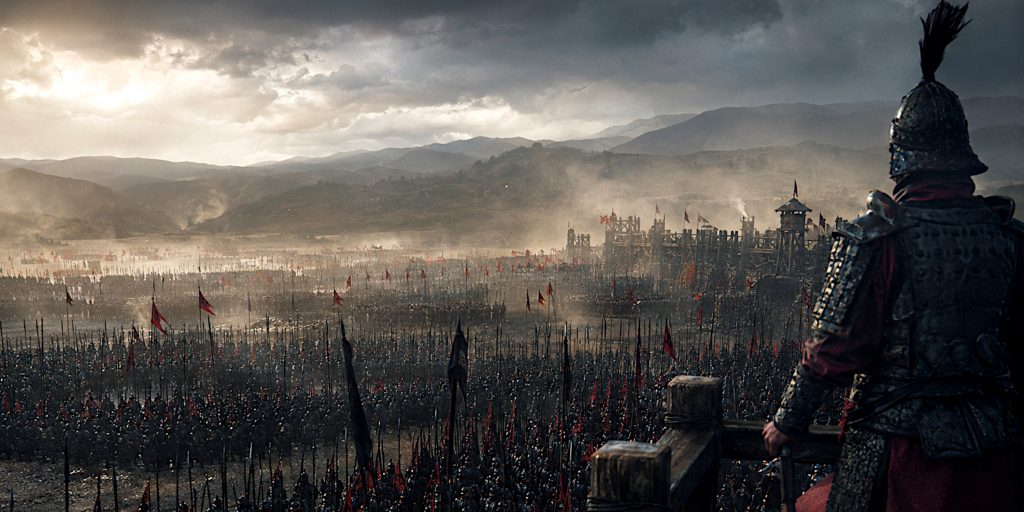
Ancient accounts give enormous numbers for the armies involved. Zhao is traditionally credited with around 450,000 troops, while later reconstructions sometimes place Qin strength at roughly 500,000 or more.
Such precision is misleading.
Warring States governments possessed remarkable mobilisation systems, and armies numbering well into six figures were certainly possible. Yet ancient historians also used large numbers rhetorically, particularly when describing catastrophic defeats.
A safer assessment is that both states committed exceptionally large forces and that Changping represented mobilisation on a national rather than merely regional scale.
| Force | Command | Likely composition | Strength |
| Qin army | Wang He, later Bai Qi | Mass infantry, crossbowmen, spearmen, halberd troops, cavalry and mobile detachments | Traditionally several hundred thousand |
| Zhao army | Lian Po, later Zhao Kuo | Infantry, crossbowmen, spear and halberd troops, cavalry | Traditionally around 450,000 |
| Qin reserves | Qin central mobilisation | Reinforcements and troops used to block Zhao relief | Unknown |
| Zhao reserves | Zhao state forces | Reinforcements and supply troops | Unknown |
Qin Troop Composition
Qin’s forces probably included:
- Massed infantry formations
- Crossbowmen equipped with mechanically triggered crossbows
- Spearmen
- Ge dagger-axe troops
- Ji halberd troops
- Cavalry used for reconnaissance, pursuit and manoeuvre
- Officers and close-combat troops carrying jian swords
- Specialist detachments used to seize passes and sever communications
Zhao Troop Composition
Zhao probably fielded:
- Large formations of infantry
- Crossbowmen and archers
- Spearmen and halberd troops
- Significant cavalry elements
- Sword-armed officers and infantry
- Troops occupying prepared defensive works
- Supply and support personnel necessary to maintain such a large army
Zhao had a particularly strong cavalry tradition following earlier military reforms, although Changping was ultimately decided less by a heroic mounted charge than by logistics and encirclement. History can be terribly inconsiderate towards cinematic expectations.
Commanders and Leaders
| Commander | State | Role at Changping | Assessment |
| Bai Qi | Qin | Took secret command for the decisive phase | One of the outstanding generals of the Warring States period |
| Wang He | Qin | Commanded earlier Qin operations | Successful in applying pressure against Zhao positions |
| Lian Po | Zhao | Initial Zhao commander | Experienced general who adopted a deliberate defensive strategy |
| Zhao Kuo | Zhao | Replaced Lian Po | Aggressive commander defeated during the decisive encirclement |
| King Zhaoxiang of Qin | Qin | Directed mobilisation and reinforcements | Personally supported efforts to isolate the Zhao army |
| King Xiaocheng of Zhao | Zhao | Replaced Lian Po with Zhao Kuo | His intervention had disastrous consequences |
Lian Po and the Defensive Strategy
Lian Po deserves rather more credit than he sometimes receives.
After suffering setbacks in preliminary engagements, he recognised that continuing to meet Qin aggressively suited his enemy. He therefore constructed fortified camps and refused battle.
Qin repeatedly challenged Zhao.
Lian Po stayed put.
The Zhao king became increasingly frustrated by the apparent lack of progress. Qin then exploited the situation through political warfare.
According to Sima Qian, Qin agents circulated the suggestion that Qin had little fear of Lian Po but was deeply concerned about the prospect of facing Zhao Kuo, son of the celebrated Zhao general Zhao She.
It was clever because it told the Zhao court precisely what frustrated rulers enjoy hearing: the problem was not the strategy, but the man carrying it out.
Lian Po was removed.
Zhao Kuo took command.
Was Zhao Kuo Really an Incompetent General?
Traditional Chinese historiography has been merciless towards Zhao Kuo.
He became associated with the expression “discussing warfare on paper”, meaning someone possessing theoretical knowledge without practical ability. Later stories claim his father had warned that Zhao Kuo understood military theory but lacked the judgement required for command.
There is probably some hindsight at work here.
Zhao Kuo inherited an extremely difficult strategic position against one of the strongest military states in China. Qin also concealed Bai Qi’s appointment as commander, reportedly threatening anyone who revealed it with execution.
Zhao Kuo certainly made the crucial decision to abandon Lian Po’s defensive strategy and attack. That decision proved disastrous.
But reducing Changping to “experienced genius defeats foolish amateur” gives Bai Qi too little credit and history rather too tidy a plot.
Bai Qi Takes Command
When Qin learned that Zhao Kuo had replaced Lian Po, Bai Qi secretly assumed command.
Bai Qi was already one of Qin’s most successful generals. His earlier victories had demonstrated a preference for destroying enemy field armies rather than simply capturing territory.
At Changping he faced an opponent willing to leave fortified positions.
That was precisely the opportunity Qin had been trying to create.
Bai Qi prepared a trap.
Arms and Armour at Changping
The Battle of Changping occurred during a period of rapid military development. Bronze remained important, while iron weapons were becoming increasingly common.
Swords
The principal sword associated with Chinese warfare of this period was the jian, a straight, double-edged weapon.
Warring States jian varied considerably in length and construction. Bronze swords remained sophisticated weapons, particularly in regions with strong bronze-working traditions, while iron examples increasingly appeared.
At Changping, swords would primarily have served as close-combat weapons and sidearms rather than the main battlefield weapon of mass infantry.
Specific sword types and forms relevant to the period include:
- Bronze jian, straight double-edged swords with cast bronze blades
- Iron jian, increasingly important as iron technology developed
- Longer Warring States jian, reflecting the gradual increase in sword length during the period
- Shorter bronze jian used as practical sidearms
The later single-edged dao should not be casually projected backwards onto every Warring States soldier. The straight jian is the safer sword to associate with Changping.
Polearms
Polearms remained central to Chinese warfare.
The ge, usually translated as dagger-axe, had a blade mounted at an angle to the shaft and had been used in China for centuries.
The developing ji combined stabbing and hooking capabilities and became another important infantry weapon.
Spears were simpler but no less useful, particularly in organised infantry formations.
Crossbows
The crossbow was one of the defining weapons of Warring States warfare.
Sophisticated bronze trigger mechanisms allowed powerful weapons to be manufactured with relatively standardised components. Archaeological finds from Warring States and Qin contexts demonstrate just how technically developed these mechanisms had become.
Crossbow formations allowed states to field large numbers of troops capable of delivering concentrated missile fire.
Armour
Soldiers could wear combinations of:
- Lacquered leather armour
- Lamellar armour
- Leather or metal helmets
- Protective neck and shoulder elements
- Wooden or leather-covered shields
Armour quality varied according to rank, wealth, period and military function. The image of every Qin infantryman marching around in identical full armour belongs more comfortably to modern illustration than archaeological reality.
How the Battle Was Won
Zhao Kuo abandoned the defensive posture and launched an attack against Qin.
Bai Qi ordered his forces to give ground deliberately.
Zhao troops pursued.
The apparent Qin retreat drew Zhao away from its established positions towards the Qin defensive line. When Zhao encountered stronger resistance than expected, the situation changed rapidly.
Bai Qi sent approximately 25,000 troops, according to the Shiji, around the Zhao rear to sever communications. Another force of 5,000 cavalry reportedly moved between Zhao positions.
The Zhao army was divided.
More importantly, its food supply was cut.
This was the decisive moment of Changping.
Bai Qi did not need to destroy hundreds of thousands of enemy soldiers in direct hand-to-hand combat. He needed to prevent them eating.
The Encirclement
Zhao Kuo attempted to stabilise the situation by constructing defensive positions and waiting for relief.
Qin tightened the blockade.
When King Zhaoxiang learned that Zhao’s supply route had been severed, he travelled to Henei and ordered an extraordinary mobilisation. Sima Qian states that local men aged fifteen and above were granted rank and sent towards Changping to prevent Zhao reinforcements and supplies from reaching the trapped army.
If broadly accurate, it demonstrates how seriously Qin regarded the battle.
This was no effortless victory. Qin was committing additional manpower simply to ensure the encirclement held.
Forty-Six Days Without Supplies
According to the Shiji, the Zhao army remained cut off for 46 days.
Starvation followed.
Sima Qian’s account contains the particularly horrifying claim that starving Zhao soldiers secretly killed one another for food.
Eventually Zhao Kuo attempted to break out.
He divided his remaining forces and launched repeated attacks against the Qin encirclement.
They failed.
Zhao Kuo then personally led elite troops in another attempt to escape and was killed by Qin missile fire.
With their commander dead and the encirclement intact, the remaining Zhao army surrendered.
Battle of Changping Timeline
| Date or phase | Event |
| 262 BCE | Qin pressure on Han isolates Shangdang |
| 262 BCE | Shangdang is offered to Zhao rather than surrendered to Qin |
| 261 BCE | Qin operations intensify in the region |
| 260 BCE, spring | Qin forces under Wang He attack Zhao positions around Changping |
| Early campaign | Lian Po suffers local setbacks and adopts a fortified defensive strategy |
| Following months | Qin repeatedly attempts to provoke Zhao into battle |
| 260 BCE | Qin conducts political and psychological operations encouraging Zhao to distrust Lian Po |
| 260 BCE | Zhao Kuo replaces Lian Po |
| 260 BCE | Bai Qi secretly replaces Wang He as Qin’s principal commander |
| Decisive phase | Zhao Kuo launches an offensive |
| Decisive phase | Qin feigns retreat and draws Zhao forward |
| Encirclement | Qin detachments sever Zhao’s route to its camps and supplies |
| Next 46 days | Zhao remains trapped as food runs out |
| September 260 BCE | Zhao Kuo attempts to break the encirclement and is killed |
| Aftermath | Remaining Zhao troops surrender |
| After surrender | Bai Qi orders the killing of the majority of the prisoners according to the Shiji |
The Massacre of the Zhao Prisoners
This is the part of Changping that has dominated its reputation for more than two thousand years.
Sima Qian states that approximately 400,000 Zhao soldiers surrendered.
Bai Qi then considered what to do with them.
The Shiji attributes to him the reasoning that people from the recently conquered Shangdang region had resisted Qin rule and supported Zhao. Releasing such a vast enemy army could therefore create another rebellion.
His solution was annihilation.
The text states that the prisoners were deceived and “keng” killed, with only 240 younger men supposedly released to carry news of the disaster back to Zhao.
The traditional translation often says the prisoners were “buried alive”. That requires qualification. The Chinese term keng is associated with mass killing and disposal in pits, but does not necessarily establish that hundreds of thousands of living prisoners were literally placed underground and buried.
That distinction hardly makes the event humane. It does make the history more accurate.
How Many People Really Died at Changping?
The Shiji gives total Zhao casualties and prisoners across the campaign at approximately 450,000.
This figure cannot be independently verified.
Ancient Chinese sources regularly describe armies and casualty totals on an enormous scale. Warring States governments were capable of extensive mobilisation, so dismissing the figures simply because they seem large is equally unsatisfactory.
The sensible position lies somewhere between credulity and scepticism.
Changping was clearly a very large campaign. Zhao suffered catastrophic manpower losses. Mass killing occurred. Whether precisely 400,000 surrendered soldiers were executed is another matter.
| Claim | Historical assessment |
| Zhao fielded around 450,000 men | Ancient tradition, possible exaggeration |
| Qin deployed around 500,000 or more | Uncertain and heavily dependent on reconstruction |
| Zhao was surrounded for 46 days | Specifically stated by Sima Qian |
| Zhao Kuo was killed during a breakout | Strong literary tradition |
| Around 400,000 prisoners were killed | Traditional figure, impossible to verify precisely |
| Prisoners were literally buried alive | Common translation but probably too literal |
| Only 240 Zhao prisoners were spared | Recorded by Sima Qian, not independently verifiable |
For me, this uncertainty makes Changping more interesting rather than less. Ancient numbers should be questioned, but scepticism should not become a convenient method for making uncomfortable events disappear.
Archaeology of Changping
The traditional battlefield lies around modern Gaoping in Shanxi Province, where archaeological discoveries have added a physical dimension to the literary accounts.
Human remains have been discovered at sites associated with the battle, including mass burial contexts. Finds from the wider Changping area have also included weapons and other material belonging to the Warring States period.
The archaeological evidence is important because it confirms that this landscape experienced substantial military violence.
It does not, however, provide a convenient archaeological receipt reading “400,000 casualties”.
Mass graves can demonstrate violent death and organised disposal. They cannot automatically verify casualty totals preserved in a text written generations later.
What Archaeology Can Tell Us
- Large-scale violent death occurred in the Changping region
- Human remains have been found in mass burial contexts
- Warring States weapons have been recovered from the wider battlefield area
- The landscape corresponds with a prolonged military campaign rather than a single isolated clash
- Archaeological evidence broadly supports Changping’s identification as a major battlefield
What Archaeology Cannot Yet Prove
- The precise number of soldiers killed
- That all traditionally associated burials belong to one event
- That 400,000 prisoners were executed
- That the prisoners were literally buried alive
- Every tactical detail described in the Shiji
That distinction matters. Archaeology is most useful when it tests historical texts, not when it is recruited to salute them.
What the Ancient Sources Actually Say
There are no surviving eyewitness accounts of Changping.
That needs stating plainly because Sima Qian is sometimes described as a contemporary source for the battle. He was not. He lived during the Han dynasty, more than a century later.
His Records of the Grand Historian nevertheless preserves the fullest surviving narrative and probably drew upon earlier court histories, traditions and records now lost.
One of its most important passages describes Zhao’s final predicament:
“The Zhao soldiers had been without food for forty-six days.”
The account then describes Zhao Kuo’s attempts to break through the Qin lines and his death.
Sima Qian also records Bai Qi’s reasoning after the surrender, explaining his fear that the Zhao soldiers would rebel unless eliminated. He consequently states that Bai Qi:
“deceived them and completely killed them.”
The moral consequences appear later in Bai Qi’s biography. Before his own forced suicide, Bai Qi is made to reflect upon Changping:
“The Zhao soldiers who surrendered numbered several hundred thousand.”
He then acknowledges that he deceived and killed them and concludes that this alone was sufficient reason for his death.
Whether those words genuinely preserve Bai Qi’s speech is impossible to establish. Ancient historians were quite fond of supplying dead statesmen with suspiciously appropriate final remarks. Yet the passage is revealing because it shows how later Chinese historical tradition judged Changping.
The victory was celebrated strategically.
The massacre was not forgotten morally.
Why Zhao Lost
It is tempting to blame everything on Zhao Kuo, but Changping was more complicated.
Zhao’s Principal Problems
- The decision to accept Shangdang made confrontation with Qin extremely difficult to avoid
- Zhao was fighting an opponent with formidable mobilisation and logistical capacity
- Political frustration undermined Lian Po’s defensive strategy
- Qin successfully manipulated the Zhao court
- Zhao Kuo abandoned prepared positions and pursued the Qin withdrawal
- Qin successfully severed Zhao communications and supplies
- Zhao relief efforts failed to break the encirclement
Zhao Kuo made the decisive battlefield mistake, but Qin had spent months creating the conditions in which such a mistake became possible.
Why Bai Qi Won
Bai Qi’s victory is a striking example of operational warfare rather than simple battlefield aggression.
He combined:
- Deception
- Controlled withdrawal
- Rapid manoeuvre
- Cavalry deployment
- Attacks on communications
- Encirclement
- Logistical isolation
- Reinforcement of blocking positions
- Psychological pressure
His greatest achievement was turning Zhao’s numerical strength into a liability.
Hundreds of thousands of soldiers require hundreds of thousands of mouths to be fed. Once surrounded, the enormous Zhao army became a logistical prisoner of its own size.
Bai Qi understood that perfectly.
Casualties and the Cost to Qin
Changping is usually presented as the destruction of Zhao, but Qin paid heavily too.
Later in the Shiji, Bai Qi himself argues that although Qin had broken Zhao at Changping, more than half of Qin’s own soldiers had died and the country had been depleted.
The precise figure is again uncertain, but the broader point is significant.
Changping was not a cheap victory.
Qin had stretched its manpower, supply system and finances enormously to destroy Zhao’s army. This helps explain why Qin did not immediately eliminate Zhao altogether.
Victory had left the winner exhausted.
Ancient warfare has an irritating habit of doing that.
What Happened After Changping?
Zhao was devastated but not destroyed.
Bai Qi apparently favoured exploiting the victory, but Qin diplomacy and court politics intervened. Qin temporarily accepted territorial concessions and withdrew.
When Qin later attacked the Zhao capital of Handan, circumstances had changed.
Zhao fought desperately. Other states recognised the danger posed by further Qin expansion and intervened. Qin suffered serious setbacks.
Bai Qi refused to command the renewed campaign, arguing that the opportunity created at Changping had already been lost.
His relationship with King Zhaoxiang deteriorated and he was eventually ordered to commit suicide.
Zhao survived for several more decades.
Qin eventually conquered it in 228 BCE.
Did Changping Make Qin Unification Inevitable?
No.
That interpretation gives the battle too much power.
After Changping, Qin still suffered defeats. Zhao remained capable of resistance, while Chu, Wei, Yan and Qi continued to present serious political and military obstacles.
But the strategic balance had changed.
Zhao had been one of the few northern states capable of confronting Qin with a major field army. Changping destroyed much of that military strength and probably inflicted demographic damage that could not quickly be repaired.
When Qin began its final wars of unification decades later, Zhao was still dangerous.
It was no longer the Zhao that had marched into Changping.
Battle of Changping FAQ
Who Won the Battle of Changping?
Qin decisively defeated Zhao. The victory destroyed a major Zhao field army and considerably weakened Qin’s most dangerous northern rival.
When Was the Battle of Changping?
The decisive phase occurred in 260 BCE, although the struggle over Shangdang and the wider campaign developed over several years.
Who Commanded the Qin Army?
Wang He commanded Qin during the earlier campaign. Bai Qi secretly took command before the decisive confrontation with Zhao Kuo.
Who Commanded Zhao?
Lian Po initially commanded Zhao and pursued a defensive strategy. He was replaced by Zhao Kuo, who launched the offensive that ended in encirclement.
Were 400,000 Zhao Soldiers Buried Alive?
Ancient tradition states that roughly 400,000 surrendered Zhao soldiers were killed on Bai Qi’s orders. The frequently repeated description that all were literally buried alive is an uncertain interpretation of the Chinese terminology. Neither the precise casualty figure nor the exact method of killing can be independently confirmed.
How Long Was the Zhao Army Surrounded?
Sima Qian states that the Zhao soldiers were cut off from supplies for 46 days.
Why Was Changping So Important?
The battle inflicted catastrophic losses on Zhao and strengthened Qin’s strategic position. It did not make the later unification of China inevitable, but it removed much of the military strength of one of Qin’s strongest rivals.