Amerigo Vespucci remains one of the most influential figures of the Age of Discovery, even though his fame rests less on conquest and more on interpretation. He did not conquer empires or command armies, yet the continents of the New World carry his name. That fact alone has fuelled centuries of argument, admiration, and suspicion. What follows is a clear account of what we know, what we can reasonably infer, and where the historical ground still feels uncertain underfoot.
Early Life and Education
Vespucci was born in Florence in 1454 into a respectable, educated family with ties to banking and humanist scholarship. He grew up in a city obsessed with geometry, astronomy, and classical texts, which mattered more than any sword later in his life. His education included Latin, cosmography, and mathematics, the sort of training that shaped a mind comfortable with maps rather than battlefields.
Florence in the mid fifteenth century was a workshop of ideas. Vespucci absorbed this atmosphere deeply. It shows in his later letters, which read less like sailors’ yarns and more like attempts to understand the world as a coherent system.
Entry into Exploration
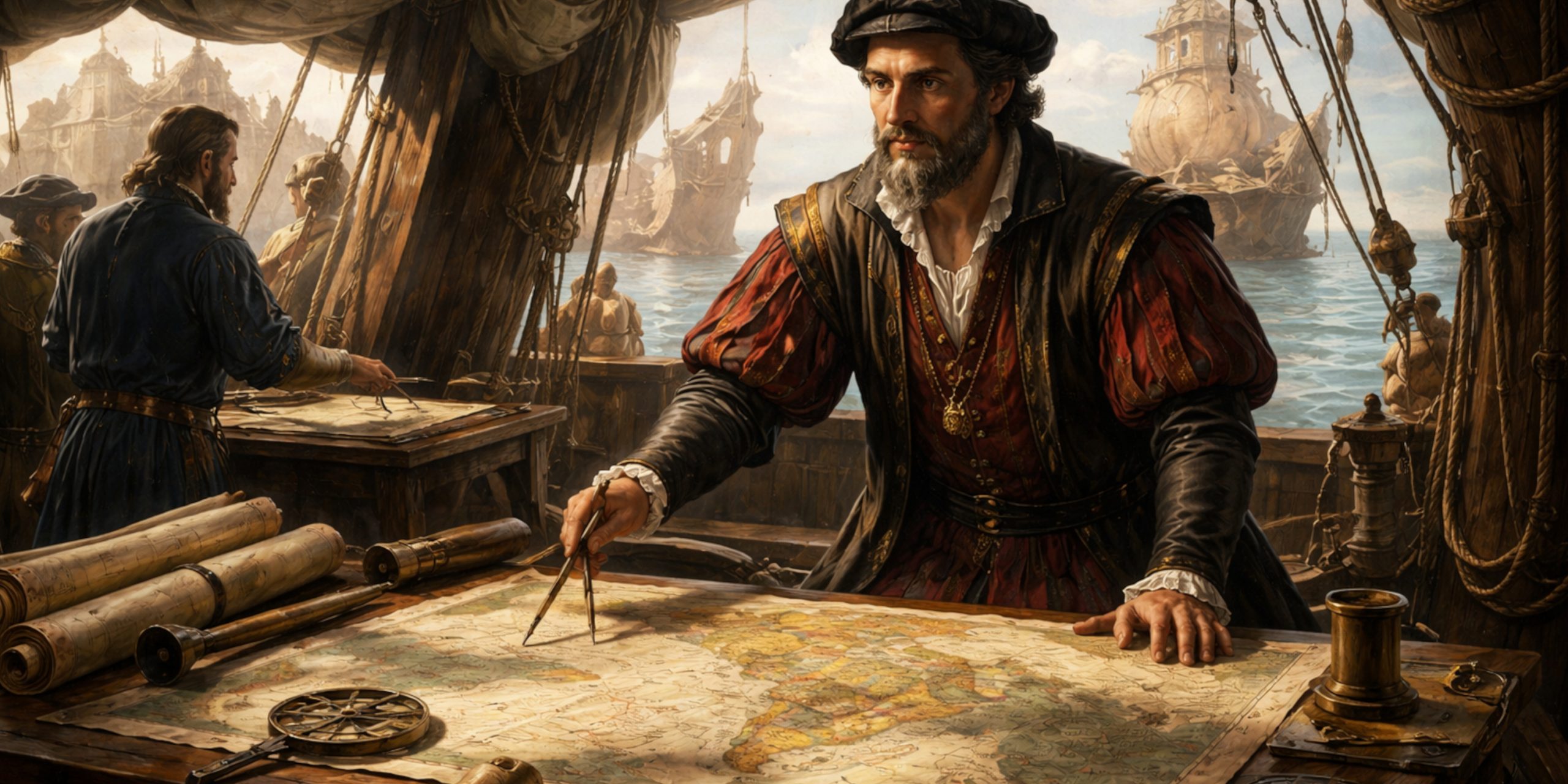
Vespucci did not begin as an explorer. He worked as a commercial agent, first in Florence and later in Seville, where Iberian expansion was becoming a full-blown industry. Through merchant networks, he became involved in provisioning voyages and advising on navigation.
By the late 1490s, Vespucci joined Atlantic expeditions, sailing under both Spanish and Portuguese auspices. His surviving letters describe voyages along the coast of South America between roughly 1497 and 1504. Some details remain disputed, especially the exact number of voyages and their dates, but there is little doubt he spent years at sea in unfamiliar waters.
Voyages and Geographic Insight
Vespucci’s lasting contribution was not discovery in the simple sense but recognition. He argued that the lands encountered across the Atlantic were not Asia, as Columbus believed, but an entirely separate continent. This was a conceptual leap, not a physical one, and it reshaped European understanding of the globe.
His descriptions of coastlines, stars, climates, and peoples circulated widely in Europe. They were read, copied, and sometimes exaggerated. As a historian, I find Vespucci’s voice unusually reflective. He tries to make sense of scale and distance, of where Europe fits in a far larger world. That intellectual clarity is why his name stuck.
Arms and Armour
Vespucci was not a soldier, but he lived and sailed in a world where violence was never far away. Like most explorers of the period, he would have been familiar with basic maritime arms.
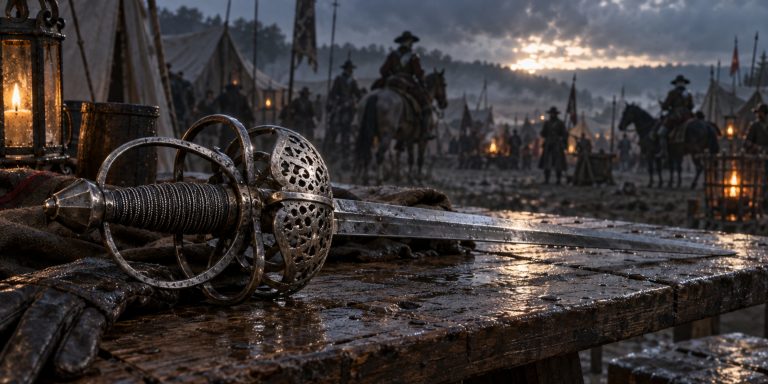
Personal equipment likely included a dagger or short sword for self defence, along with padded garments or simple mail rather than full armour. Onboard ships, crossbows and early arquebuses were common, intended for intimidation, defence, or skirmishes rather than set battles. Armour at sea prioritised mobility and protection against blades, not cavalry charges or battlefield formations.
This was practical gear, not ceremonial. Vespucci’s strength lay in navigation and observation, not in martial display.
Battles and Military Acumen
There is no evidence that Vespucci commanded troops or fought in pitched battles. His military acumen, such as it was, expressed itself in risk management, logistics, and survival. Keeping a ship alive on an unknown coast required judgement under pressure, discipline among crews, and an understanding of when not to fight.
In his letters, Vespucci often emphasises caution. He describes encounters with Indigenous peoples with a mix of curiosity and unease, aware that misunderstandings could turn fatal. This restraint sets him apart from many contemporaries who framed every encounter in terms of conquest.
Naming of America
The naming of the Americas after Vespucci remains controversial, largely because he did not name them himself. A 1507 world map produced in Saint Dié used the name “America” in his honour, based on his published accounts and the belief that he had identified a new continent.
The decision was cartographic, almost academic. It reflects how knowledge circulated at the time. Vespucci became associated with the idea of a New World, even if others reached it first. History is often less about who arrived and more about who explained.
Later Life and Official Role
In his later years, Vespucci served the Spanish Crown as chief navigator at the Casa de la Contratación in Seville. This was a critical post. He oversaw pilot training, map standardisation, and navigational data for Spain’s Atlantic empire.
By then, Vespucci had shifted fully from sailor to administrator and intellectual authority. It is an arc that feels fitting. He died in 1512, respected but not yet immortalised. That came later.
Where to See Artefacts Today
No personal weapons or clothing belonging definitively to Vespucci survive. However, places associated with his life preserve the context of his world.
Florence holds archival documents related to his family and education. Seville remains central, especially the former Casa de la Contratación, where navigational charts and instruments similar to those Vespucci used are displayed in regional collections. Early maps influenced by his writings can be seen in major European libraries and museums, offering a tangible sense of how his ideas spread.
Archaeology and Material Evidence
There are no archaeological finds directly linked to Vespucci as an individual. What archaeology offers instead is environmental context. Shipwrecks from the late fifteenth and early sixteenth centuries reveal the tools, arms, and daily objects of Atlantic sailors. These finds confirm much of what Vespucci described in writing, from navigational instruments to shipboard life.
Recent scholarship focuses less on excavation and more on textual archaeology, reexamining manuscripts, marginal notes, and print histories to untangle which words can truly be attributed to Vespucci and which were shaped by publishers.
Historical Assessment
Amerigo Vespucci was neither a conqueror nor a mythic hero. He was an interpreter of the world at a moment when interpretation mattered as much as action. His legacy sits at the crossroads of navigation, humanism, and early global awareness.
As a historian, I find Vespucci compelling precisely because he complicates the story of discovery. He reminds us that ideas can travel faster and last longer than ships. The fact that continents bear his name is less a triumph of ego than a testament to the power of explanation over mere arrival.
Watch the documentary: