Origins and Purpose
The British Army at the turn of the nineteenth century had a problem. Its infantry doctrine relied on disciplined volleys delivered in line, which worked well on parade and often less well in broken country. The solution came in green rather than red. The 95th Rifles, officially raised in 1800, were trained for skirmishing, marksmanship, and independent action. They were not meant to stand shoulder to shoulder waiting for orders shouted through gun smoke. They were meant to think, which was both their strength and the source of endless headaches for traditionalists.
The regiment grew out of earlier experimental rifle units, particularly the Experimental Corps of Riflemen. By the time the 95th earned its number, the idea of rifle armed infantry had moved from curiosity to necessity.
Training and Doctrine
Riflemen were trained very differently from line infantry. They learned to move in pairs, use cover, and judge distances with an eye sharpened by practice rather than parade ground measurement. Officers expected initiative, a word that made some senior generals reach for their brandy.
This independence paid off in the field. Riflemen screened advances, harassed enemy columns, and picked off officers and gunners. It was dirty, effective work, and it unsettled opponents used to more formal exchanges.
Campaigns and Combat Experience
The regiment’s reputation was forged in the Peninsular War. In Spain and Portugal, riflemen thrived in the hills, vineyards, and scrub where rigid formations struggled. They fought at Bussaco, Ciudad Rodrigo, Badajoz, Salamanca, and countless smaller actions that rarely make the paintings.
Under the steady hand of Arthur Wellesley, rifle units became an essential part of the British field army. Wellington valued them not for glamour but for results. He understood that battles were won as much by denying the enemy information and cohesion as by grand charges.
Arms and Armour
The heart of the regiment was the Baker rifle. Heavy, short, and stubbornly inaccurate beyond its sweet spot, it was still vastly superior to the smoothbore musket in trained hands. Its rifled barrel gave accuracy at ranges that shocked French officers who suddenly found themselves unsafe well behind their own skirmishers.
Riflemen carried a sword bayonet, essentially a short, heavy blade that could be fixed to the rifle. It turned the weapon into an ungainly spear, disliked by most who had to carry it, but useful when things went badly wrong.
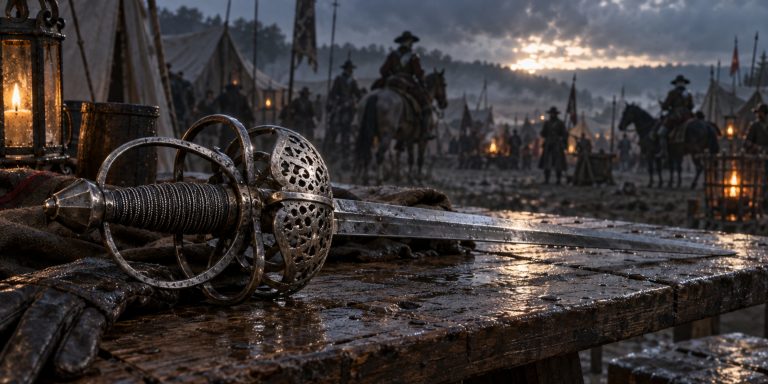
Sidearms varied by rank and period. Officers commonly carried the British 1796 infantry officer’s sword, a straight bladed weapon designed as much for appearance as utility. Some also favoured light sabres in the cavalry style, particularly those influenced by continental fashions. Serjeants might carry hangers or short swords, practical tools for close quarters and enforcing order rather than heroic duels.
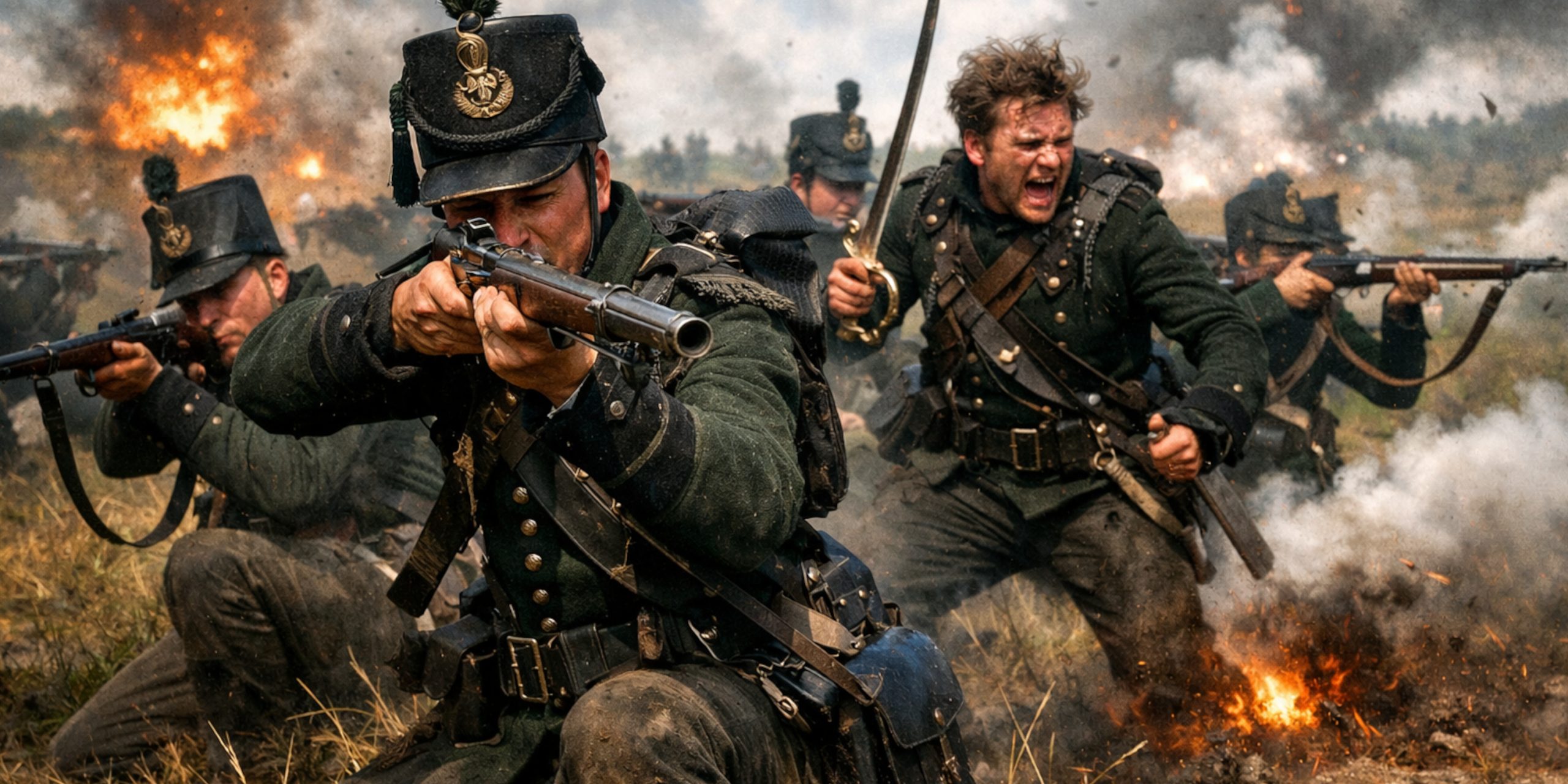
Uniform mattered too. The dark green jackets were chosen for concealment, not flair, although they aged poorly and showed wear quickly. Riflemen often looked scruffier than their red coated counterparts, a fact that worried inspectors and pleased anyone actually fighting.
Life in the Ranks
Service in the Rifles was hard and often isolating. Skirmishers spent long hours ahead of the main line, exposed to fire and weather alike. Pay was no better than elsewhere, but pride ran high. There was a sense of belonging to an elite, even if that elite was usually hungry and damp.
Discipline existed, though it was looser than in line regiments. A rifleman who could shoot straight and keep his head was forgiven much. One who could not was quickly weeded out.
Archaeology and Material Evidence
The physical traces of the 95th survive in scattered but telling ways. Baker rifle balls, often smaller than musket shot, have been recovered from Peninsular battlefields, sometimes showing deformation consistent with long range impacts. Rifle fittings, sword bayonet fragments, and uniform buttons marked with regimental numbers continue to surface through controlled excavation and chance discovery.
Museums in Britain and Spain hold surviving rifles and swords, many showing heavy wear. These are not pristine parade pieces. Stocks are chipped, blades nicked, and repairs are common. They speak of prolonged campaigning rather than ceremonial service.
Contemporary Voices
Riflemen left vivid accounts of their work. One soldier wrote of skirmishing as a trade where “a man must use his eyes as much as his legs, and his wits more than either.” It is a neat summary of the role.
Wellington himself noted their value with characteristic restraint, observing that riflemen were “most useful in covering the movements of the army.” Praise, from him, rarely came wrapped in poetry.
French officers were less polite. Complaints about unseen marksmen and unfair fighting appear regularly in correspondence, which rather proves the point.
Reputation and Legacy
The 95th Rifles left a lasting mark on British infantry doctrine. Their success accelerated the shift towards light infantry tactics and greater flexibility across the army. By the later Napoleonic period, skirmishing was no longer an experiment but an expectation.
Culturally, the regiment has enjoyed a long afterlife, helped by memoirs, fiction, and screen portrayals. Some of this romanticises the experience, smoothing over hunger, fear, and exhaustion. The reality was harsher and more interesting. These men were not rebels against discipline. They were specialists operating within it.
A Historian’s Closing Thought
The 95th Rifles matter because they show an army learning, slowly and sometimes grudgingly, how to fight a changing war. They were not perfect, and they were certainly not comfortable to command, but they worked. If there is a lesson here, it is that adaptability often arrives wearing muddy boots and looking faintly disreputable. That, in military history, is usually a good sign.
Watch the documentary: